Know Any Literary Animal Lovers?

Hi there PureJeevan readers! We wanted to let you know that Jim's new novel CHROO is available on Amazon. It's a crazy adventure involving a billionaire heiress, her Chihuahua BFF ("Chroo") and a host of human and animal characters. Find out more on Amazon! Here are some links:

There are many things to be thankful for in this life, but for our very first Thankful Thursday entry we'd like to stress how thankful we are for the vibrant health we now have. Consuming only fresh, organic raw fruits, vegetables, nuts and seeds has allowed our bodies to heal from the inside out. For this we will forever be thankful. In fact, we are so thankful that we are here, as Pure Jeevan, to spread the word about how raw, life-filled foods can bring you renewed health!
"... a warrior's life is not about imagined perfection or victory; it is about love. Love is a warrior's sword; wherever it cuts, it gives life, not death."
~ Dan Millman, The Way of the Peaceful Warrior
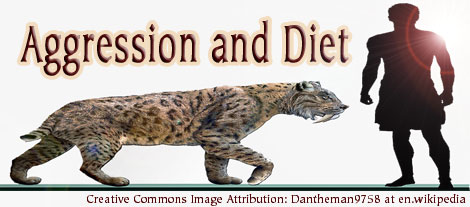
During some "highway philosophization" (my term for pondering everything and anything while driving) this afternoon, I eventually began to think rather deeply about human aggression, and specifically about how people hurt other people. Mainly, I was thinking about individual aggreession, although, as a group, humans are unfortunately rather prone to it.Wikipedia maintains a list of ongoing conflicts (i.e., wars), in fact. According to that page, there are seven major wars happenning right now and 15 additional significant ones. Of course, there are scores of unlisted ones ongoing as well, most of which the average person has never heard about.

Jim here... This post is for anyone who has turned to raw foods in an attempt to become healthy -- to lose weight, lower cholesterol, to lower blood pressure, to beat diabetes, or perhaps to overcome something even more serious. Let me ask you something (rhetorically): Have you ever, in your journey toward optimal health, looked at someone else -- someone else who eats "worse" than you do, yet who appears outwardly more healthy -- and thought, "Why is it so hard for ME and yet so effortless for that person "
Have questions run through your mind such as: ?How can that other person eat all of the wrong things, and yet look healthy? ?Why is it that I eat better than most people, and yet I'm the one facing a health problem Why is it that some people go raw and their issues clear up so quickly, and yet here I am still not feeling and looking 100% healthy? Why is it that physical health is not always bestowed on those who really deserve it?
Short post today... We're currently dealing w with a pesky kitchen drain issue that's wreaking havoc in our household. Fortunately, a very talented and power-tool-weilding local plumber just fixed the problem. In the process, he seems to have applied those power tools to our bank account -- $175 for less than one hour's work!? (Ouch!) And the kicker is that the current state of our kitchen is "absolutely atrocious."? I'm serious... we're at like DefCon 5 in terms of the disastrous nature of that room -- and as you well know, for a raw household, that's probably 10 times more frustrating than it is for others. (I smell a whole post coming soon on this topic ...)
Today, we mainly just wanted to say that, at the end of our post yesterday, we briefly asked what you would like to see more of here at Pure Jeevan. We have received some great comments and emails in return, and have decided to devote tomorrow's post to responding to / addressing some of the suggestions we received. So, if you have any further thoughts to share about raw foods content you'd like to see more or less of, please let us know either by commenting below, or by email. Wendi is at WendiDee [at] Pure Jeevan.com. Jim is at Rawdiant [at] gmail.com.
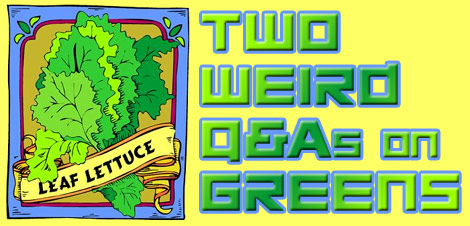
We all know what "greens" are in general. For example, no one questions whether lettuce, kale, spinach, or chard are greens. But on the other hand, all of those items *are* also clearly green in color. With that in mind, what would you make of the following two questions I (Jim) recently pondered -- tagged as "reader questions" so they're easily found in the future by other equally inquisitive people ;-) -- that seem bizarre, but are really quite interesting?
1. Are non-green greens (e.g., purple kale) still considered greens2. Are vegetables with green skins (e.g., cukes, zucchini) considered greens? (After all, they're green!)

A month has gone by since my last health update. At this point, I consider myself healed of lyme disease! In the past I asked the lyme specialist doctor if there's a way to test to see for certain the lyme is gone, but he said there isn't. So, I go on my inner wisdom, which tells me that it's gone and now I simply need to continue healing from all that the lyme brought with it.
We're still not comfortable sharing what we've been learning and doing to help move my body into an even healthier state, but it's obviously working. I've been able to go back to daily living, for the most part, without much assistance at all. I've organized the house again (Jim and KDcaT were busy caring for me and the house wasn't the top priority for the past half a year), caught up on all of the laundry, responded to all of my email that had been piling up, and I've been able to be more social again. The biggest improvements are that I can now prepare my own food without experiencing any pain, and I can dress myself with only minimal assistance at times! BIG improvements!

I hear the question all the time: "Don't you miss eating out at restaurants " My answer is always, "No. I prefer the fresher organic foods I can create for myself in my own home. I can pay the same amount for better food if I stay at home to eat." It's true, too. I don't miss eating out at restaurants. Sometimes I miss the convenience of someone else doing my food prep and cleaning up afterward, but as far as the actual food that I consume, I prefer the foods we eat at home. Besides, when you eat out as a raw foodist, your choices are limited to only a salad if you live in an area with no raw food restaurants.
Sometime last year, as a treat for Jim, we went to a restaurant. I got a huge salad that I used to love when I ate cooked foods at that particular restaurant. I remembered the greens were always dark, the onions were nice and flavorful, and the dressing was a simple oil and vinegar with salt. Well, after consuming only fresh foods in our home for quite some time, the salad that I used to think tasted so great now seemed to be lifeless and limp. It wasn't enjoyable to eat, and I sure didn't like paying so much for a nonorganic salad that didn't even taste good to me. So, we didn't eat out again after that.
Here's an impromptu interview with Matt Miller, the gourmet raw foods chef from Maggie's Mercantile, a vegan/raw restaurant in Pittsburgh, PA. We met Matt @ a recent Raw Foods Meetup here in Pittsburgh. In the video, we discuss Matt's famously addictive raw blue corn chips -- deemed by yours truly as the "holy grail" of raw foods. Below, I'll go over the ingredients, etc.
Read more: Jim from Pure Jeevan Interviews Raw Chef Matt Miller

We at Pure Jeevan enjoy eating salads. Each of us has our own way of dressing our individual salads, but we all thoroughly enjoy very large bowls of them at least once a day.In the past, salads were those "diet" meals that I'd consume when I was trying to lose weight. I'd sit at the table staring at my small plate of greens, feeling like I was missing out on the "great" food everyone around me was eating. I'd feel hungry after my meal and extremely unsatisfied.

I'm posting this at the end of a busy day, but let's see what I can call fun in just an ordinary day.
It was fun singing at the top of my lungs with KDcat in the car today--both of us over exaggerating the vocals and giggling a lot.
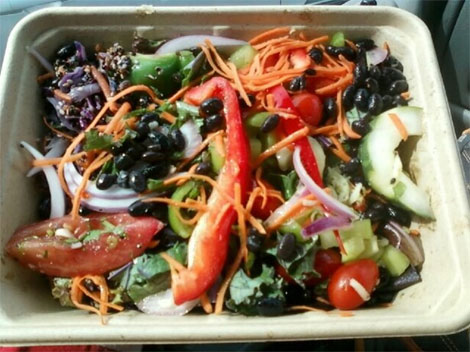
Jim here... As I hinted at last week, I decided to try changing things up a bit and seeing what I thought of it. The salad you see above included the first cooked food I've had in more than two years. If you look closely, you can see that I sprinkled on a few spoonfuls of black beans. Also, in the upper left corner, there's a small spoonful of quinoa. I don't want to give the wrong impression here: ?This blog will certainly remain a major go-to source for raw food nutrition information. It's just that, today, I want to talk about experimentation a little bit.
First, I think it's generally healthy to experiment with your diet -- especially when you get the sense that something isn't working in your current diet. The fact is, diet is a dynamic thing, not a static aspect of your life. It has to be this way because so many factors affect our physiology on a day-to-day basis. Off the top of my head, these include the facts that:
Read more: Experimentation: The 95% Raw Salad... A Good Idea or Not?