Know Any Literary Animal Lovers?

Hi there PureJeevan readers! We wanted to let you know that Jim's new novel CHROO is available on Amazon. It's a crazy adventure involving a billionaire heiress, her Chihuahua BFF ("Chroo") and a host of human and animal characters. Find out more on Amazon! Here are some links:

Jim here... A few months ago, I was in our local food co-op's juice bar. I'd ordered an apple juice and had cringed when I saw the barista chop up four Granny Smiths and nonchalantly toss the whole lot, seeds and all, into the juicer. That juice was for someone else. So, when my order came up, I politely requested that he cut the seeds out -- a request he reluctantly granted, although not without showing considerable annoyance. My thinking was: Hey, those seeds contain cyanide! Why would I want to consume that, even in small amounts
 But then... Have you ever known anyone who died from eating apple seeds? ?I know I haven't. Also, after mentioning this to a few people I know, I found that a number of them regularly ingest apple seeds. And, well, they're still living. So, is there any truth to the rumors? And, should we be concerned at all about this?
Read more: Should You Juice the *Whole* Apple, Seeds and All?

Jim here... Just wanted to say quickly that I'm heading off to the Raw Spirit Festival (RSF) today! I'll be carpooling (or, vanpooling) with our friends Melissa and Dave Sokulski, their daughter Ella, and our friend Bethany. We're all volunteering at RSF, which should not only be a lot of fun, but should also be a great way to get to know many other fellow raw foodies.
So, we'll be arriving Friday to help set up, enjoying the festival over the weekend, and staying Monday to help them "break it down." Since we need to leave Monday, we'll likely miss a fun-sounding party at Rawbin's place Monday night. But, I'm sure it'll be a blast overall, and it'll also be fun to camp out again, as I haven't done that in a while. I especially hope I'm also able to light something on fire, as I always love the fire aspect of camping most. Maybe I'll run into some of those raw foodies who spin fire-poi and can learn a new skill!
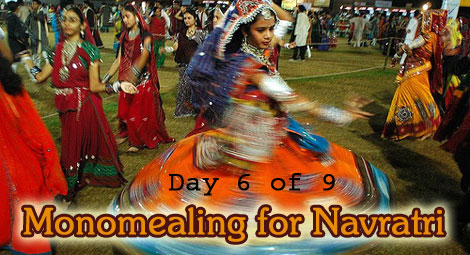
Day 6: Today is the final day of placing extra focus on the feminine qualities attributed to Goddess Lakshmi. For me, going within, shining light on the things that aren't so clear, the things that I've been avoiding, or the things that have been completely invisible is something I've revisited off and on my entire life. It's something that I often recommend to friends and family, as well. It's what has allowed me to continually improve my life (both physically, emotionally, spiritually, and intellectually), and something I'll always consider vital.
 The more we search within for answers, the more we'll learn about our true selves. The more we understand ourselves, the more authentic we become in our interactions with others. The more authentic we are with others, the more others can feel comfortable around us. The more others become comfortable around us, the more they can experience their own authentic selves. And the more others experience their true selves, the more we all wake up and truly begin living a life of beauty, grace, vibrancy, and love.
I receive many questions from our readers, and I am very happy to respond. I truly love helping others, but I don't do it just for them.When I was younger, many times I thought I was performing selfless acts of kindness whenever I'd help others. However, now I realize I am experiencing pleasure by helping others. I find it very rewarding, as though I am fulfilling my purpose in life.
Do you know what your life's purpose is? Do you believe there is such a thing These aren't rhetorical questions; I'm really interested in hearing your response. Well, I've known my life's purpose (actually, I have more than one) from a very young age, but it wasn't until recently that I began living it more fully. My purpose in life is to love others---to connect with others through an immensely deep and genuine love.One way I've found for spreading my love and realizing my purpose is by helping others.
When I answer questions for our readers, I speak from my heart. I think it's important to realize, however, that the answers we receive from others are *their* answers to similar questions. Maybe their answers will work for us, but maybe they won't.I've stressed this many times, but it never hurts to repeat it: Listen to others, hear what they have to share, but mostly listen to your own inner voice. We all have the answers deep within ourselves, even if we can't always hear them very well.
Read more: Life's Purpose and Reader Questions: Emotional Eating

I was just thinking about a particular phenomenon, but don't know what to call it. This is something I used to notice mostly after watching movies, although it's something that happens all the time in life -- and I think it does in fact relate to diet, so I'll share. Here it is:
Ever leave a theater after viewing a particularly uplifting film Recall what it's like for a moment. You walk outside, maybe with friends or family, still filled with that magical feeling of having visited another world, or having been moved beyond words, or being filled with inspiration. There's a glow about you, and the air seems sweeter as you stroll out to your car, absolutely care-free. You spin around as you walk, laughing with your friends, joking and hugging each other, engaging in imaginative conversation all the way home -- and the spell lasts for a good long time thereafter. Oh, I love, love, love great movies!!!
Read more: Pure Jeevan Adds Depth to the Phrase "Watch What You Eat"

Mistakes are bad, right Well, not always. Here's an example of a great one, and it's something that demonstrates a conviction I have about raw foods! You see, in all of this talk of moving to Portland, I made a huge gaffe recently in my thinking about finances.
You see, I was pondering the terms of a home loan one afternoon -- percentage rates, down payments, monthly payments, tax escrows, etc. It was all really dry, boring material. Suddenly, I thought to myself, "Wow, here we are about to buy another house, after owning this one for so many years. In less than 10 years, we would have owned this one outright, but now we'll be starting over again with a 30-year mortgage."
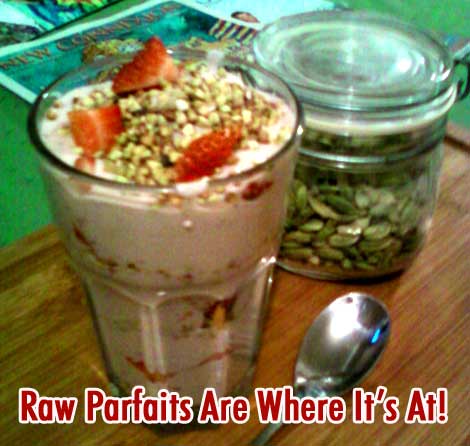
Above is a quick camera-phone pic I posted to our Facebook group lately. I did talk about making raw parfaits on that page, but want to talk a little more about them today, as it's just the perfect time to be talking about delicious raw parfaits (at least here in America, in any case, where many of the fresh berries you'll probably want are cheap and in season). I'll share a brief story about them, and then share my own basic recipe, and then we'll make some plans for MORE parfait talk really soon, okay?
I'm almost hesitant to talk about raw food parfaits here because, well, if the government found out how unbelievably healthy and ENJOYABLE parfaits are, I'm sure they'd make them illegal. But, I'll take a chance...

Happy Navratri!
You haven't been hearing much from me (Wendi) lately, for a variety of reasons. Over the next few days, I'll be celebrating Navratri and posting here on the blog at the end of each day. In my posts, I'll be sharing some of what has been going on with me and why you haven't seen much of me around, as well as comments on my celebration of Navratri.

Today, and every day, I am thankful for lovely Mother Earth. Where would we be without Mother? May we always care for her in a gentle and loving way.
====================

Yesterday's post was a little "heavy," don't you think In it, we shared a bit of the stress we were experiencing related to our pending move. There was just so much data to pore through (and yes, we're still feeling that stress)!?
At times like these, it's often good to step back, breathe, and make sure you're not ...well, freaking out -- which makes today's "Take the Time Tuesday" installment absolutely fitting, for we would like you to meet a raw foodie who goes to great lengths to ensure that your "Vitamin L12" levels stay well into the superhero range. Without further adieu, then...
Guess what's pulling into Pittsburgh tomorrow evening? Here's a hint (if you don't already know after reading the title of this blog post!):
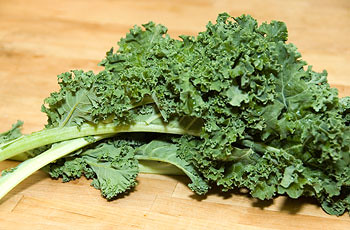
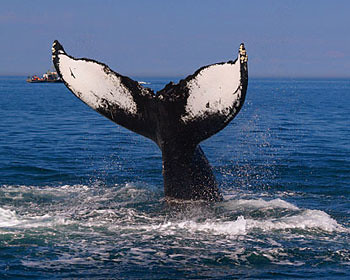
Read more: The Kale Whale Kickoff Event: Kevin Gianni in Pittsburgh!