Know Any Literary Animal Lovers?

Hi there PureJeevan readers! We wanted to let you know that Jim's new novel CHROO is available on Amazon. It's a crazy adventure involving a billionaire heiress, her Chihuahua BFF ("Chroo") and a host of human and animal characters. Find out more on Amazon! Here are some links:

We're loosley going to be picking up some of the ongoing themes we used to cover here on the blog. For the Take the Time Tuesday theme, we asked our readers to take the time to meet or learn about an individual, product, company, etc., that we think may be of interest to you. For today's entry, I'd like you to:
Take the time to meet...
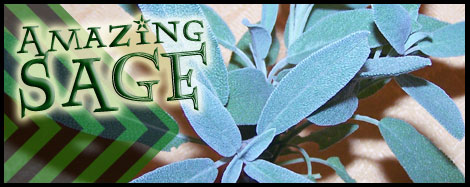
Well, we've always found the herb SAGE to be delightful in so many ways. That's why we've grown it here and elsewhere for years. Such a lovely, fragrant, sturdy, resilient herb, it's truly one of the easiest plants to communicate with -- and YES!, it truly IS a meaningful dialogue when you step out into the garden and sit among a patch of sage. All you need to do is listen carefully, and sage will speak its sage herbal wisdom to you.
I was wondering how sage came to be known as "sage" -- when all of the sources I had handy simply listed its technical name, salvia, along with its common name. Enter the great Wiki for an answer:
Read more: Please Tell Everyone: "I Read Some *Sage* Words at Pure Jeevan Today"
***** DISCLAIMER: As with all of our posts here at Pure Jeevan, and particularly those coming up over the next week and a half (which will all be tagged with a new term, "Nadi Balance"), please refer to the disclaimer that runs at the bottom of all Pure Jeevan Pages. Wendi and Jim are health researchers, educators, and extreme self-experimenters. ******

Nadi Balance: Part IV...
Is cacao dangerous or is it a super food? Anyone who's been learning about raw foods knows about raw cacao (check out a recent episode of Know Your Food: Cacao). It's raw chocolate without all the processing and additives normally included in the chocolate bars many buy from standard grocery stores. In its raw form, cacao has different nutritional components than typical processed chocolate. Many claim that raw chocolate is filled with mega doses of nutrients, making it a super food, and therefore extremely healthy for the human body. Others claim that even in its raw state, cacao is a stimulant that taxes the human body and cacao is more like a poison than a food. I've heard murmurs about negative effects of cacao for many years, but that was always subdued by the vociferous praise of cacao.
Recently, my friend Kevin Gianni (The Renegade Health Show) spoke out about cacao and his experiences with it. Kevin is well known in the raw food community, so his words came as a shock to many people. He explained in his video (below) that he developed a rash on his stomach. After much investigating and diet changes, he came to the conclusion that cacao was causing the rash (eliminating the cacao caused his skin to clear). He also stated that cacao had been stripping his body of vital minerals. Kevin pointed out that he was simply sharing his own experience with cacao, possibly shedding some light on a subject that may need to be further investigated. He advised others to take a look at their own reactions to the food, to see if they are experiencing any problems.
In this special five-part series, Joanna Steven uncovers where some top vegetarian athletes get their protein. Here's part two, focusing on Koya Webb's take on this issue.
ALMONDS
?The greater the percentage of raw food in the diet, the greater the health benefits? is Koya Webb, fitness model, personal trainer, triathlete and body builder's personal motto. Koya's sculpted physique won 1st place in the Ultimate Fitness Events "Fitness Model" and "Bikini Model" competitions and has modeled for Nike, Adidas, New Balance, Muscle and Fitness, Her Sports, Royal Caribbean and Triathlete magazine, to name a few. As a living-foodist (one who eats 60% or more uncooked veggies, nuts, seeds, and super foods) Koya believes eating all natural ?fruits of the earth? can help heal cancer, diabetes, and other diseases plaguing our society today.
Read more: Vegetarian Athletes Share: Top 5 Sources for Animal-free Protein (Part 2 of 5)
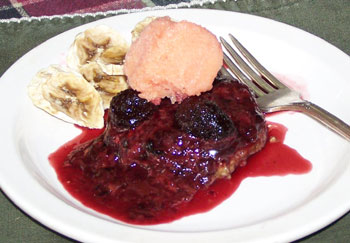
Jim here... Thought I'd post a pic from Wendi's birthday last Friday. Shown above is the "birthday cake" -- more of a birthday treat, really. If it looks decent to you, here's the recipe:
The "cake" part:
We're taking a very short break from our Nadi Balance series to announce that once again it's a special time of the year for diabetes awareness. As you may recall, we spent Wendi's 25th birthday last year doing public outreach on this very topic, as it's an issue close to our hearts. Pure Jeevan even maintains a special page, here, for diabetes information. So, if you know of anyone suffering from diabetes, and feel that they may be receptive to some really eye-opening information on the topic, please direct them to:
Sorry for the strange behavior of this site over the past few weeks, friends. As a former professional web programmer, and always a?bit of a mad hacker, I'm usually really great at keeping the web end of Pure Jeevan running very smoothly.
But, this is a Wordpress blog -- and so you have things like plugins and widgets and themes and updates, all interacting (and sometimes conflicting) with one another. I've noticed lately that this blog home page has developed all sorts of peculiar issues, not the least of which is a very slow-loading tendency.
Read more: Hopefully Pure Jeevan Loads a *Little* Faster Today!

A while ago, I received an email asking whether I had any thoughts on how old or young a person needs to be in order to benefit from a raw food diet. Yes. Yes, I do have thoughts on that! Lots of thoughts! ... Here goes:
The easy answer, of course, is that people of ALL ages can (and should) benefit from raw foods. I can assert with confidence that, for most people, increasing your intake of raw fruits and vegetables will likely bring about positive changes to your health, regardless of your age, dietary habits, or current state of health. (Naturally, reducing or eliminating the "bad" things is also paramount.)
Today, for Take the Time Tuesday, I'd like to introduce you to an online social networking Web site for those with similar interests to get together, meet, and hang out in the physical world. If you haven't already heard about it, check it out!
Take the time to meet....
[caption id="" align="aligncenter" width="500" caption="Perfected Raw Vegan Potato Pancake Recipe!"]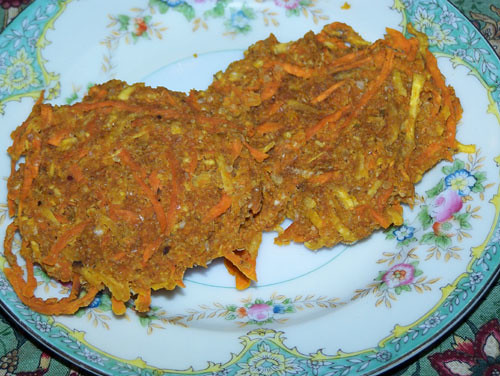 [/caption]
I've done it, I've done it, I've DONE IT!!!? I've perfected a recipe for raw vegan potato pancakes! My friend Melissa shared her potato pancake recipe with me and, like always, I had to play around with it (I rarely go by a set recipe). Had it not been for her original recipe, I wouldn't be writing this post! So, thanks, Melissa!!
In the next day, or two, I'm going to type up the recipe and send it out to all of our subscribers. So, if you haven't signed up recently for either our newsletter or the two free eBooks, do it soon! In addition to the potato pancakes recipe, I'm going to share another amazing recipe I created for Jim's birthday this past weekend: Raw Vegan Ice Cream Cake!! YUM!