Know Any Literary Animal Lovers?

Hi there PureJeevan readers! We wanted to let you know that Jim's new novel CHROO is available on Amazon. It's a crazy adventure involving a billionaire heiress, her Chihuahua BFF ("Chroo") and a host of human and animal characters. Find out more on Amazon! Here are some links:

What a fun weekend we'll be having! We leave later today to visit some friends in Virginia. Sweet little Rhia (a niece's daughter) will be turning one year old and there will be a huge party for her. I'll be wearing a sari, there will be lots of Indian food to tempt me back to the cooked side of life (but, never fear, I am strong!), and we'll be staying up very late enjoying the party Saturday evening.
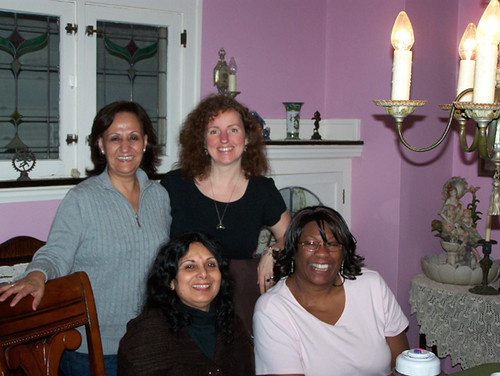
Mohtarama, Wendi, Mamta, Deborah

Last night I dreamed of meandering through an unfamiliar cityscape, following some lonely sidewalk next to a river at night, feeling particularly sad and miserable beneath dim yellow street lights. I wore a black suit, carried a highball glass, and was absolutely drunk!
Having crossed the river, I soon realized (even in my dream-drunken state) that I'd been wandering aimlessly. Feeling rather pathetic, I decided to walk back across the river and sober up in a casino that I knew was there. Drunk and depressed, I figured I'd just sit in front of a slot machine for a few hours.
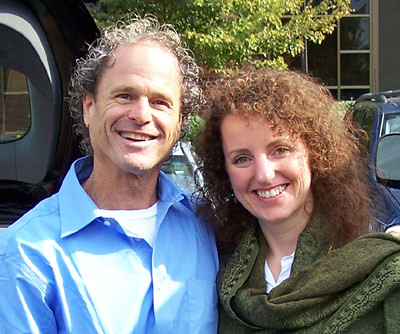
I met Dr. Doug Graham in person at the Raw Spirit Festival. He has a soft, gentle voice but his message is anything but soft. He's straight-forward about diet and health being intimately related. Dr. D. invited me to be his guest this past Saturday at a doctors' convention where he boldly stated to his audience of doctors: "I'm probably not going to make you all that happy with the things I'm going to tell you."
There he was, standing in front of a room of doctors who have taken an oath to harm none. These doctors were there to learn about health and nutrition, but I don't think they had any idea about what they were going to learn from Dr. D. "What I say may fly in the face of what you've been taught," Dr. D. admitted. Many of the doctors leaned forward a bit, eyes and ears a bit more open at the thought of hearing something radical.
Here's an older post, from August 2008, about modifying one's diet to experiment with attaining even greater health. ?I know the before/after pics, alone, are inspirational enough to live a raw vegan lifestyle!
*blows kisses to everyone*
========================
Just a quick update for those in the Pittsburgh area:
My dear friend Melissa has planned some fun raw food gatherings that you may be interested in checking out. The first is a raw food dinner and demo, the second is a wild herb walk.
Raw Foods Demo and Dinner?

Jim here... During one of our marathon sessions at a Border's book store, I recall reading somewhere about the notion of a fruit's "intention" to be eaten. It's been a few years since I've read that, but I immediately resonated with the notion that many fruits, nuts, vegetables, and seeds are actually evolved to be eaten by other living beings and, therefore, to consume them (or their fruits and seeds) is to participate in a wonderfully nonviolent act that is in perfect harmony with a kind of primordial Earthen symbiosis. Whether these plants, vines, trees, etc. feel a conscious intention to have their fruit eaten by others is a matter of metaphysical conjecture. But, within the context of discussing vegetarianism, the argument is certainly relevant and fairly strong.
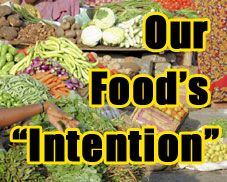 If you walk up to a farm animal, it may be impossible to estimate what's going through its mind, but I feel intuitively that it isn't, "Please kill me and eat my flesh." In other words, there's no "intention" present in that scenario. On the other hand, it's very easy to imagine that a tree produces fruit, knowingly or not, in order to produce offspring. Throughout the entire evolution of that tree, part of that reproductive process has involved animals (including humans) eating the fruit and then "redistributing" (which is a nice way of putting it, I suppose) the seeds naturally.
 ?
?
Well, it's nearing the end of 2009, and I've been unwell for half of the year. (To make a positive statement out of that, I'll add that I've been well for the other half!) It's hard to believe so much time has gone by and about half a year of my life was spent in pain, tears, and sometimes fear (mostly in the beginning of the lyme disease). I'm definitely looking forward to the new year, to leaving this disease behind me while taking the lessons I've learned with me into 2010.
As many of you know, I was very proactive in finding a "cure" to the disease as soon as it was identified. I tried allopathic remedies (antibiotics for about three months), alternative remedies (herbal protocols, vitamin/mineral/supplemental protocols, aromatherapy techniques, healing massage, hands-on-healing, water fasting, prayer/meditation/positive visualization), and so much more. Nothing completely cured my body from the lyme bacteria that seems to have spread throughout my body and found favorite spots to multiply (particularly in my shoulders and arms).
Read more: Wendi's Health Update: Cooked Food Experiment and Great News!
THE TOUR IS COMPLETED! For pictures, videos, and commentary about their adventures, check out the Trip Dashboard!!

For those of you who've been following our plans for a few years, you know we've been preparing for a cross-country tour for a long time. The plans have expanded, contracted, changed dramatically, but the core of the idea has always been there: we plan on relocating to a new city and we need to find the right place for Pure Jeevan to settle. In order to do that, a big cross-country tour is in order. So, the exciting news is that we're leaving in a couple of weeks to check out some of the cities/towns we're thinking might be a perfect fit for Pure Jeevan! The sad news is that all of us can't make the trip. Jim will be holding down the fort here in Pittsburgh (i.e. the house still hasn't sold and he still needs to keep his corporate job so we can pay the mortgage).
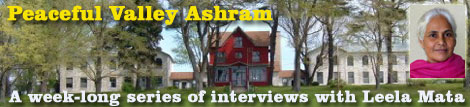
In Part 5 of this 5-Part series, Wendi talks with Leela Mata about meditation and diet. After discussing what meditation is and why people practice it, Mata Ji talks about diet and its effects on the mind. She then gives a brief explanation of how to meditate for those who are new to the practice, and demonstrates how to use a simple mantra (word or phrase) to aid in entering a meditative state.

Here's Part Two of our interview with Hatice Yavuz, co-owner of Cousin's I.V. raw restaurant in Chicago. Yesterday we talked a lot about Cousin's restaurant and the stories behind that (as well as some interesting notes about European and Turkish culture and attitude toward raw foods). Today we'll get into some of the effects experienced by many after going raw -- things like raw food detox and the strengthened connection between mind and body. Interesting stuff!

Sharing is lovely, don't you think? When I decided I was going to "go raw" and not consume cooked foods anymore, it was a huge life-changing decision. Even though there was no one standing next to me, telling me what to do and not do as I was changing my eating habits, I was still supported in my efforts. My support system was made up of copious amounts of experience and advice that was openly shared by experienced raw foodists. Even though many times I felt like I was alone, the path I was walking was etched with loving words left by caring people who wanted to encourage others who were yet to come down the same raw food path.