Know Any Literary Animal Lovers?

Hi there PureJeevan readers! We wanted to let you know that Jim's new novel CHROO is available on Amazon. It's a crazy adventure involving a billionaire heiress, her Chihuahua BFF ("Chroo") and a host of human and animal characters. Find out more on Amazon! Here are some links:

Wow, we've been getting a lot of publicity lately.(We'll be writing more about that later.) We're thrilled to be recognized for the work we're doing for the raw food community!
For those newly acquainted with Pure Jeevan, you've already found our blog (this site), and likely our main site. But, we also wanted to highlight another offering we've put a lot of work into -- the All Raw Directory. Here's a screenshot:

Sharing is lovely, don't you think? When I decided I was going to "go raw" and not consume cooked foods anymore, it was a huge life-changing decision. Even though there was no one standing next to me, telling me what to do and not do as I was changing my eating habits, I was still supported in my efforts. My support system was made up of copious amounts of experience and advice that was openly shared by experienced raw foodists. Even though many times I felt like I was alone, the path I was walking was etched with loving words left by caring people who wanted to encourage others who were yet to come down the same raw food path.

Jim here...Well, something awful happened today at Pure Jeevan, something utterly shocking to any raw foodie on the planet -- our Vitamix container broke! I know, I know... breathe with me: Deep breath in... deep breath out. There, that's better. It's going to be okay, I just know it!
Here's what happened:? The agitator assembly (the metal part at the bottom that connects to the blades inside the container) wore out. It blew some kind of bearing or something, lost its internal oil, and started making an infernal noise when we blended our morning smoothie. It was pretty clear we'd blended up our last elixir in that container.

To keep all of you inspired while we are away, we've asked some
remarkable individuals to share their raw food stories with you. Enjoy!

Is low fat more expensive? When I was eating a lot of nuts and seeds, in the back of my mind I kept saying, "Someday you'll eat less of these nuts and seeds, and you'll save a lot of money." I really believed that to be true because organic, raw nuts and seeds are outrageously expensive.
For one hundred days, I'm transitioning to a lower fat raw diet. I'm down to fats only in the evening, and for the next ten days those fats will only come from avocados, young coconuts, and possibly some hemp seeds. If I'm not hungry for the fat, however, I'll go without it. That hasn't been the case yet, though. By dinner time I'm ravenous and wanting to eat heavy, dense foods to calm the hungry beast in my belly. Even though I've been including some fats in the evening, I'm eating significantly less than I normally would if not doing this challenge. So, I've been eating more fruits and vegetables to get the calories I normally received from nuts and seeds.
In a recent post, I answered part of a message I received from Violet, one of our blog readers. Below is the continuation of my response to Violet (much briefer than my last one!).
Following my response to Violet is a response to Sarah, who has a fantastic raw food blog that I enjoy reading.
Violet's message continued:
Read more: Reader Questions: Raw Transition Support, Identify Peas

I'm in the mood to eat lemons, so I figured for today's Makin' It Monday I'd search the Net for some lemon recipes. Well, look what I found!

Here's an impromptu interview with Matt Miller, the gourmet raw foods chef from Maggie's Mercantile, a vegan/raw restaurant in Pittsburgh, PA. We met Matt @ a recent Raw Foods Meetup here in Pittsburgh. In the video, we discuss Matt's famously addictive raw blue corn chips -- deemed by yours truly as the "holy grail" of raw foods. Below, I'll go over the ingredients, etc.
Read more: Jim from Pure Jeevan Interviews Raw Chef Matt Miller

Jim here... A little over a month ago, we couldn't contain our excitement about an online contest to win the best job EVER -- living as caretaker of a tropical island in Queensland, Australia, on the Great Barrier Reef for 6 months (and being paid $100k for the task!).
The deadline has come for this and, as we promised, we BOTH applied. My video was the first to be processed. So, we posted a screenshot above, which you can click to go view it (or just click here) -- and also please vote and rate it a 5!!! (I've heard that the rating system can get a little screwy on that site -- that you need to wait for it to load and maybe mouse over the rating part first. But, a 5-star rating would really help, as would the traffic, even if you don't watch the entire video.
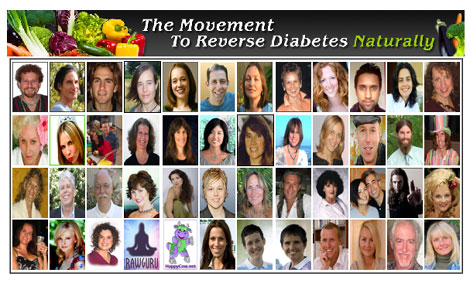
Wow, what an amazingly informative week here at Pure Jeevan. We've been featuring some great "My Raw Story" installments focusing on diabetes reversal via raw foods (and have more to come!). We've also been actively trying to encourage you to step forward and join the movement to reverse diabetes naturally.
Why are we dedicating an entire week to diabetes?
- 8% of the US population has diabetes. That s 23.6 million adults and children. 17.9 million are diagnosed. 5.7 are undiagnosed.
- There are 57 million people with pre-diabetes in America. That s 19.3% of the population!
- Heart Disease & Diabetes: Adults with diabetes have heart disease death rates about 2 to 4 times higher than adults without diabetes.
- ... and MANY more alarming statistics. See our diabetes page for more!
Many individuals have no idea that diabetes can not only be reversed via a raw food diet, but a person's life can be filled with health and vitality again. This Saturday, April 25 (Wendi's birthday!), is Reversing Diabetes Naturally Awareness Day. Together, we can spread this important and life-changing news.
The other day I made a recipe from "Rainbow Green, Live-Food Cuisine" by Dr. Gabriel Cousens. I modified his recipe a bit and what resulted was amazing. Perhaps the original recipe tasted even better, but this is what I did with it.