Know Any Literary Animal Lovers?

Hi there PureJeevan readers! We wanted to let you know that Jim's new novel CHROO is available on Amazon. It's a crazy adventure involving a billionaire heiress, her Chihuahua BFF ("Chroo") and a host of human and animal characters. Find out more on Amazon! Here are some links:
Jim here... Yesterday, Wendi toughed it out and typed up a lengthy health update (a painful process for her -- trust me!). So, for the rest of this week, I'm going to fill in here (letting her get back to her resting and healing) and share a few interesting stories related to this Lyme adventure. But first, I wanted to add that today brought some great improvements in Wendi's condition. She was able to do a physical movement (wrapping a towel around her head) without pain for the first time in months. So, we really think those antibiotics are starting to kick in.
Today's topic is intuitive eating. I'm certain we've covered this many times on the blog here. So, rather than explain what it is again, I'll just share an intresting example. Basically, while dealing with these Lyme symptoms, Wendi experienced a serious craving for olives.
We've been extremely busy, but KDcat and I did take some time to make some dehydrated food the other day. We rarely ever use the dehydrator, so we've been eating different foods than we normally do and enjoying it.
We didn't take pictures of everything, but here's a list of what we dehydrated:
* kale chips
Jim here... An unusual occurrence prompted this post, and I'm unsure as to whether it's significant. I've talked about some of my favorite non-raw items before -- things that were tough to leave behind as I embarked upon this raw foods journey. I think I covered pizza in a relatively recent post.
Corn chips were another. In fact, after Wendi went 100% raw and I more or less began to follow her dietary choices, I clung to corn chips for dear life for quite a long time. I began eating a LOT of salsa in those days. Sometimes, that would be all I'd eat for lunch -- just an entire jar of salsa and a bag of corn chips (though, by then, I'd at least usually buy the organic ones and, quite often, a baked variety of chips as well).
When I finally decided I'd be better off transitioning to an all raw lifestyle, I figured my love affair with corn chips had come to an end. Farewell beautiful chips, I thought. I'll never forget our delicious crunchy time together. And that was that. I never looked back.
But then, at a local raw foods pot luck, I met a raw chef who had more or less perfected a raw corn chip recipe. Could it be , I thought. Has this delicacy returned to me after all, as though via some sweet culinary destiny? Ahh, my friends, that was a glorious day. Chips and salsa had returned to me in an enlightened raw form. I could enjoy them once again, guilt free. And enjoy them I did -- usually using a local shop's "Peruvian Purple Corn" (a living, sproutable, dried corn product).
Alas, fate stepped in once again. "Thou may partake of these crisps any time thou wishest," fate boomed. "Yet, in order to do so, thou must prepare them thine self using thine Vitamix and requiring an enormous flax-sticky mess with extended clean-up time, and thou must have parchment paper available at all times, and thou must exercise great care and patience in using your Excalibur, for these chips must dry for many an hour before ready."
Yeah, it was a bit of a chore to produce them. So, as the novelty of chip making and eating wore off, I slowly decreased the frequency of going through the messy, time-consuming hassle of preparing them. Until yesterday, it had been literally months since I made a batch. But... we'd ordered a few pounds of the corn from Natural Zing lately, and I found myself with some extra time the other night. So...
Now, I'm going to pause for a minute for a tangent on digestion. I know a great majority of people, it seems, complain of various digestive disorders. As a result, we have many raw foodie specialists schooled in the nuances of food combining. Oddly, I never paid much attention to these discussions, nor offered input on these matters, because they simply weren't relevant to me.
In fact, I likened my own digestive system to some kind of nuclear powered garbage disposal. It didn't matter what I ate; digestion wasn't a problem for me. So, for example, I'd routinely finish off heavy meals, and then follow them with a huge slice of juicy watermelon (a major no-no according to common wisdom). It just never bothered me.I always joked that, even though I'd been raw for ages, I could still probably go eat a Big Mac (not that I would) and be unaffected by it.
So powerful was my stomach acid that, admittedly, I sometimes privately *worried* whether this might mean something was wrong with me. I mean, shouldn't some of the things I was eating make me sick? Was it "good" to not be made sick by what is generally regarded as poor food combining choices? Do people commonly suffer from problems of efficiency as well as deficiency ? I still do not really know the answer to these questions, and suspect the answer is rather complicated, anyway. Fortunately, it doesn't matter now because...
Something finally made me sick!? I'm laughing now about that, but I spent most of the evening in terrible stomach pain after having over-indulged in some of those (in)famous raw purple corn chips.
So, what happened ? That's an interesting question for me. Here are some possibilities: (1) Perhaps my hyper-active digestive system *was* in fact a problem, and now it's beginning to normalize. Perhaps, had I been healthier all along, I would have been made sick by some of my food choices, but now my health is improving!? (2) Perhaps it's a fluke and I simply shouldn't have eaten mass quantities of corn and flax so late at night. (3) Perhaps my body is improving in its ability to communicate with me, and/or that I'm getting better at listening, and that the message here is that corn is not something my body gains nourishment from -- at least, not in this dried-reprocessed-redried form. After all, some leading raw food authorities, like Gabriel Cousens, aren't fans of corn (even fresh corn!).
Oh sure, there may be other explanations (e.g., "a bad batch of corn"). But, I'm actually most interested in #3, above. Even though this is an extreme example (more intense than it needed to be), I'd like to think that I'm getting better at knowing what I'm being nourished from and what I am not. I'd like to think that this is a latent sense that can be developed, much like our ability to know things by feeling and intuition rather via pure rationality all the time.
But, with food, I think it's a matter of inventorying your physical sensations head to toe, and also as a whole. How is the food you're eating making you feel? Do you feel satisfied or still hungry? Do you feel light or is the food sitting kind of heavily? Do you feel energized or dragged down? How's your mental clarity? Do you feel spacey or more grounded? Do you feel noticeably happier or more sad than before? How are all of these things mapping out over time? Is your weight moving in a positive direction for you? Are your illnesses improving? Food is medicine, after all; it has all of these effects and many more!
For now, I think I can safely check purple corn off of my own personal list of foods that make me feel good. I suspect my old assertion about "being able to eat a Big Mac without any side effects" no longer applies -- and maybe this is a good thing. I think perhaps it signals some progress in my journey toward optimal health.
In any case, I think this kind of purposeful introspection is healthy, and something we should all strive to do more often.How about you? Had any similar experiences? What have you learned from them?
Original Comments
Below, we have included the original comments from this blog post. Additional comments may be made via Facebook, below.
On April 15, 2009, wrote:

Hey everyone!? I hope you're doing well. We started out the week with a great video from Joe, Tracey, and Heather. I thought I'd stay with the video blog format for a while, as I've been capturing some outstanding stuff here in Chicago. (We're here until Thursday.)? Well, a few of the vids are "okay," but the bulk of them are absolutely amazing, so be sure to check in every day for these great Chicago vids. (BTW, I'll dub this series, "The Chicago Raw Food Scene," although partially misleadingly so, as the videos are not always *about* Chicago, per se. Rather, we shot all of the videos *in* Chicago. So, pardon the slightly misleading banner graphic.)
Read more: Veritable "Wal Mart of Produce" Discovered in Chicago, Pineapples for $1.49!

According to Mike Adams of NewsTarget.com:
"Many Florida oranges are actually dipped in an artificial orange dye in order to make them more visually appealing. It's the same dye that's been banned for use in foods because of cancer risk."

Welcome to Day 3 of Raw Salad Dressing Week here on Pure Jeevan. As you'll see, I "got a little creative" once again -- and again got lucky! I'll let you watch the video for the backstory on this one, but I'm happy to report that a nice, hearty, sweet, holiday-appropriate salad dressing was created. So, check out the video, and then I'll make a few closing comments.
Those consuming a raw food diet sometimes use a dehydrator to prepare raw food dishes. They do this at low temperatures, below the point of actually cooking the foods, to intensify flavors, reduce the amount of moisture in the dish, and sometimes to take the chill off something they'd rather serve a bit warmer than straight out of the refrigerator. There is a practice that we've seen, however, that is actually cooking the very foods were taking such great measures to consume raw! Let me share an experience I had when I first started eating raw foods, that will help explain how some of us may be cooking our foods by mistake.
In the beginning of eating raw foods, my entire family loved the Vegetable Stir-Dont-Fry I used to make (you can find that recipe in the free eBook you downloaded when you first visited our site). One day I created a double recipe so we could eat more the next day, without going through the process of preparing it again fresh. The following day I took the bowl of Stir-Dont-Fry out of the refrigerator and put it into the dehydrator to take the chill off. It wasn't warming up fast enough on such a low temperature, so I thought I'd just cover the dish a little bit to trap in some of the heat that seemed to leave each time I checked the dish and stirred it around. So, I took a plate and placed it on top of the bowl with about an inch, or two, opening.

Wow, are you in for a treat! I came up with the most delicious soup recipe today! I wanted to make something that didn't require use of the food processor, blender, or dehydrator because I've gotten quite a few emails saying that it's too hard to be raw if you don't have the money for the appliances.
I disagree that it's too hard to be raw without the appliances. It's definitely easier to do it *with* the appliances, but it's not overly hard to do it without. So, from time-to-time I'll try to create recipes that don't use anything more than a knife and a chopping board to show you that it's not too difficult to eat raw. :-)
Jim here... A health-conscious friend of mine was feeling sick today. And, while I certainly do not advocate harping on the sick, I did have a very mild discussion with her when she phoned me for some advice. I asked, "Do you know what cognitive dissonance is "
"I'm not sure," she replied.
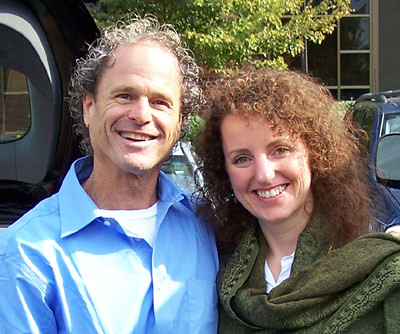
I met Dr. Doug Graham in person at the Raw Spirit Festival. He has a soft, gentle voice but his message is anything but soft. He's straight-forward about diet and health being intimately related. Dr. D. invited me to be his guest this past Saturday at a doctors' convention where he boldly stated to his audience of doctors: "I'm probably not going to make you all that happy with the things I'm going to tell you."
There he was, standing in front of a room of doctors who have taken an oath to harm none. These doctors were there to learn about health and nutrition, but I don't think they had any idea about what they were going to learn from Dr. D. "What I say may fly in the face of what you've been taught," Dr. D. admitted. Many of the doctors leaned forward a bit, eyes and ears a bit more open at the thought of hearing something radical.
As promised, here's today's herbal installment, a video on Oregano Oil! Verdict: It's strong, for sure, but it's not as bad as I thought it was going to be!