Know Any Literary Animal Lovers?

Hi there PureJeevan readers! We wanted to let you know that Jim's new novel CHROO is available on Amazon. It's a crazy adventure involving a billionaire heiress, her Chihuahua BFF ("Chroo") and a host of human and animal characters. Find out more on Amazon! Here are some links:


As promised, here is the picture again of the Mexican meal I created the other day. It will be served at the upcoming 3-Day Raw Food Spiritual Ashram Retreat (only a few spaces left!). Since many of our readers can't make it to the retreat, I said I'd post some of the recipes here in the blog. I hope some of you will try to create the recipes and let me know what you think!

It turns out that planning a 40-day/40-night cross-country trip is a LOT of work! (Who knew ??!) Wendi and I seem to be spending every waking moment planning this thing, which may explain why we've missed a day or two's posts here on Pure Jeevan. But, we're gearing up for something absolutely amazing -- and it all starts next week!? So, if there is a quiet day or two this week, just keep in mind that the rawsome content is going to be absolutely insane here starting late next week and continuing through March into early April!
Today, we wanted to extend a huge thanks to Jeff and Helen Rose, owners of Natural Zing, for offering to sponsor the snack portion of Wendi and KDcat's trip. Jeff and Helen understand that, being a raw foodie, it can be a little tough to be on the road for such a long time. Sure, Wendi and KDcat will probably be snacking on a lot of fresh fruit, but it's also nice to have some packaged raw goodies as well while you're traveling. So, Wendi and KDcat will be loading up on some of their favorites -- botija olives, Love Force breads, Gopal's power wraps, some nut butters, some raw chocolates, and more. So, in thanking Natural Zing, we'll be running banners and so forth along with our content during Pure Jeevan's trip.
***** DISCLAIMER: As with all of our posts here at Pure Jeevan, and particularly those tagged with a new term, "Nadi Balance," please refer to the disclaimer that runs at the bottom of all Pure Jeevan pages. Wendi and Jim are health researchers, educators, and extreme self-experimenters, not doctors. ******
Nadi Balance: Part V

Jim here... Wow, it's Monday, April 27! Let's do something different today: Let's celebrate Monday instead of bemoaning this day that represents the taditional start of the dreaded work week. Why? Because it's our sincere hope that whatever you do in your work week is a labor of love. And, if you're not quite there yet, then celebrate the fact that you WILL be there sometime soon. For us, it means another week of working to inspire you to achieve optimal health -- and that's not "work" at all; it's actually FUN!
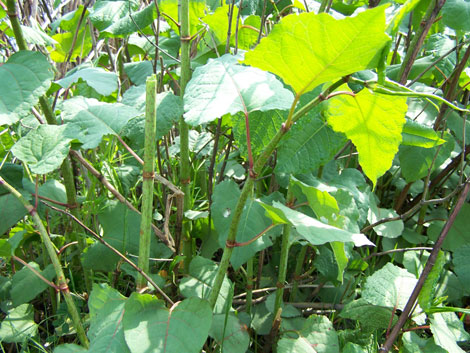
So, without further adieu, let's jump into this week's fun. Our good friends Melissa and Dave Sokulski have launched a site recently called FoodUnderFoot ("unleash the energy of wild edibles"). Even in it's young seedling state, I think it's already a fascinating site, and promises to become an encyclopedic web destination for anyone interested in foraging wild edibles. So, check them out for some informative info and valuable freebies, too!

I am very fair-skinned, with light eyes and medium-colored hair. For as long as I can remember, the sun made me feel ill. The older I got, the sicker I'd feel. I felt uncomfortable in the heat, my skin would feel all prickly, I got horrible headaches, and sometimes I even got sick to my stomach. I've always loved being out in nature, but on really sunny days, it bothered me and I'd try to stay in/near the woods and the shade.
It's always a journey.
That's basically my post today, boiled down into four words. From all I've read, from all of those I've talked with / emailed / interviewed, and certainly from all I've personally experienced, this is a key concept that, in my view, it's best to come to terms with as soon as you can.

You know that old saying about a picture being worth a thousand words? Well, today we want to add a thousand words to your daily informational intake.
Take the time to meet

We're going to be running the above banner for a few days as we bring you highlights of the raw food scene in the beautiful Florida Keys.

What's Valentine's Day without a little "Smooth Love," right ??Here's how we created this simple, creamy delicious, smoothie:
- Start with the water and flesh of one young coconut. We had one left over, still nice and fresh, from our recent trip to the Florida Keys (more raw food videos and posts coming soon from that trip!).
- Add three to four oranges, peeled (and de-seeded if necessary)
- Add two to three large bananas
- Add 12 ounces of frozen strawberries (or to taste)
- Add a small handful of raw almonds
- Add a bit of raw agave nectar or a few dates, if you have them.
Blend in your high-speed blender until smooth ... and share with a loved one! Happy Valentines Day, everyone!

Last year when I organized a raw food spiritual retreat at an ashram, I met some very lovely people. Two of those individuals were Patty and Denny (you can visit their blog to say hello to them). They were new to gourmet raw foods, so they were enthusiastic learners at the retreat. When they returned home after the blissful weekend, they began using their new raw food knowledge. Here are some excerpts of emails I have received from them since the retreat last year:
Well, you said you're motive in putting on this retreat was simply to pass on this valuable information and to help others; you were very successful where we're concerned - it is no exaggeration to say that you have changed our lives forever.
We've been almost 100% raw since the retreat. ... We're so excited about this new way of eating that we bought a new Vita-Mix. ...We can actually say that this has been our most notable and enjoyable dining experience - ever, in our entire lives! No one would ever put that much work into something if it were just for money; it is obvious that you did it from your heart. We feel blessed to have received such a gift.

Jim here... As I may have mentioned a while ago, I joined a gym recently. I figured, with Wendi and Bailey living on the other side of the country, I might as well find something healthy to do with my alone time until I'm able to join them soon (aside from my seemingly never-ending quest to rid our household of 13 years of rampant accumulation). I joined on a whim, actually. There's a gym near my home called Planet Fitness. Honestly, I have no idea how they make money. A membership costs just $10/month -- and it's a Wal-Mart-sized place, too, absolutely packed with state of the art machines. (Actually, it's a franchise, so there could very well be one near you.)
In any case, it had been a while since I'd been inside an actual gym. I've certainly remained relatively active, of course. But being in a gym is a little different -- and certainly has its plusses and minuses. On the minus side, I've always kind of felt that, if you add up all of the time it generally takes to get (1) get ready to go to a gym, (2) drive there, and (3) drive home -- say, a half-hour, total, for those things -- then you could probably better invest that time in just going for a run for a half-hour, leaving straight from your home. From a time management standpoint, I'm not crazy about gym memberships (meaning not that physical exercise isn't worth the investment of time, but rather that there are ways to accomplish the same results in much less time).
Read more: Exercise As a Reminder of the Human Body's Amazing Efficiency