Know Any Literary Animal Lovers?

Hi there PureJeevan readers! We wanted to let you know that Jim's new novel CHROO is available on Amazon. It's a crazy adventure involving a billionaire heiress, her Chihuahua BFF ("Chroo") and a host of human and animal characters. Find out more on Amazon! Here are some links:

Yesterday we talked about stress eating and I suggested coming up with a plan for ways you can deal with stressful situations in the future, before mindlessly turning to food for stress relief. I even said maybe it was okay to eat a gallon of ice cream if that's what makes you feel better. A healthy lifestyle isn't only about the foods we put into our mouths; it's about overall health (body, mind, spirit, emotions) and the decisions we make regarding our overall health on a daily basis.
Many times, individuals who struggle the most when trying to eat a healthy diet are the ones who have other aspects of their lives keeping them from attaining the healthy lifestyle they're desiring so much. For them, working on their diet may not be the best approach to overall health. If eating something we know is healthy for our bodies, something we know looks and tastes great, is difficult to do then there's something bigger going on in our lives than just food. If that's the case, it's important to figure out what's going on.

Today is Wendi's Birthday, so please join me in wishing her all the best for the coming year! Since this was our first year in Portland, just an hour-and-a-half's drive to the Pacific, I'd known for ages what we were going to do to celebrate Wendi's birthday -- a picnic at the beach, of course!
A few days ago, the weather reports for the central Oregon coast cities unanimously agreed: Rain! ?But, after living here for a few months, one learns that a forecast of rain *never* means that it's going to rain all day long. Rather, it just means that it'll likely rain at some point, or at many points, in a given day. The rest of the time, it could very well be perfectly sunny outside!
Read more: What Are Negative Ions, And Are They Beneficial to Human Health?
I receive many questions from our readers, and I am very happy to respond. I truly love helping others, but I don't do it just for them.When I was younger, many times I thought I was performing selfless acts of kindness whenever I'd help others. However, now I realize I am experiencing pleasure by helping others. I find it very rewarding, as though I am fulfilling my purpose in life.
Do you know what your life's purpose is? Do you believe there is such a thing These aren't rhetorical questions; I'm really interested in hearing your response. Well, I've known my life's purpose (actually, I have more than one) from a very young age, but it wasn't until recently that I began living it more fully. My purpose in life is to love others---to connect with others through an immensely deep and genuine love.One way I've found for spreading my love and realizing my purpose is by helping others.
When I answer questions for our readers, I speak from my heart. I think it's important to realize, however, that the answers we receive from others are *their* answers to similar questions. Maybe their answers will work for us, but maybe they won't.I've stressed this many times, but it never hurts to repeat it: Listen to others, hear what they have to share, but mostly listen to your own inner voice. We all have the answers deep within ourselves, even if we can't always hear them very well.
Read more: Life's Purpose and Reader Questions: Emotional Eating

Hi everyone!? Sorry for the late post tonight. I had a busy day, and even met with a new realtor to help me sell The Luck House! (Wish us luck on that front -- but I have a super-great feeling that this new realtor is 10x more professional and knowledgeable than the previous one.)
 Today I thought I'd give you a peek into Wendi's rather fascinating Inbox. While she's away, she asked me to monitor her Pure Jeevan mail box and field as many of the questions as possible. It's been ... interesting! :-)? I never realized the volume of email that she receives! It's almost a full-time job to keep on top of it (which I haven't been able to do as well as I'd hoped -- although I now have it down to just a ?hundred or so unanswered ones, so that's progress!).

Today, we're going to show you haw to make some tasty brownies. Best of all, this recipe takes only a few minutes. Let's get to it!
First, throw a couple of big handfulls of raisins into your food processor.
This video is nearly 10 minutes long (sorry, we'll aim for shorter ones in the future), but shows a full process for making a delicious, spicy nut dip. From there, we show two options for making the sandwich -- one using dehydrated raw bread, another using lettuce as the wrapper. I wanted to add that the packaged raw bread used herein is from Love Force, a great company that has provided sponsorship support to Pure Jeevan in the past. Here's a link to their site in case you're interested acquiring some of their bread or finding out where it's sold. (It's very good, as are their raw organic energy bars!)
Read more: Video: Jim from Pure Jeevan Makes Nutdip / Raw Sandwiches!

I'm pretty sure I've said this before, but I'm thankful for so many things that it could take me a very long time to list them all. Today, however, I'm focusing on how thankful I am to have loving, supportive friends in my life.
When I was a child we moved a lot (every two years, on average). I continued to move a lot even after college, when it was no longer my mother making the decisions about moving.Why am I telling you this on a Thankful Thursday ?Because all of that moving around when I was a young child partly shaped the way I made friends.
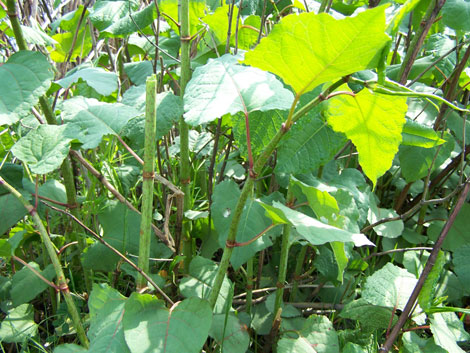
Jim here... Wow, it's Monday, April 27! Let's do something different today: Let's celebrate Monday instead of bemoaning this day that represents the taditional start of the dreaded work week. Why? Because it's our sincere hope that whatever you do in your work week is a labor of love. And, if you're not quite there yet, then celebrate the fact that you WILL be there sometime soon. For us, it means another week of working to inspire you to achieve optimal health -- and that's not "work" at all; it's actually FUN!
So, without further adieu, let's jump into this week's fun. Our good friends Melissa and Dave Sokulski have launched a site recently called FoodUnderFoot ("unleash the energy of wild edibles"). Even in it's young seedling state, I think it's already a fascinating site, and promises to become an encyclopedic web destination for anyone interested in foraging wild edibles. So, check them out for some informative info and valuable freebies, too!
 Before officially starting the new year, I'd like to acknowledge the changes and growth that took place over the past year. It was a whirlwind of changes, sometimes so dizzying that I wondered what I was doing and occasionally questioned whether, or not, I was making mistakes with my life. I followed my intuition, however, and it served me well. I'm here today, remembering the past year and ready to announce plans for this new year that has just begun. It's a beautiful life, isn't it Even when things seem dark and like there is a lot of pain, there is a tremendous amount of potential for new growth and a brighter life than ever imagined.
I ended 2008, perched on a summit and ready to take flight. Before I fly, however, I'm standing still for a bit and enjoying the view. I feel like the entire past year consisted of climbing to higher and higher plateaus of an enormous mountain. While climbing to each new plateau I stumbled, held on for dear life, saw amazing things, and became stronger.When reaching each new plateau, I'd spread my wings and leap, circling the mountain's circumference. But, I wasn't strong enough to fly straight to the peak. It was a year of gradual growth and change -- and I found myself becoming stronger and stronger as I reached the summit.I'm certainly not the same person who started this climb. I have transformed into a more genuine version of myself, a younger and stronger woman emerging from a lifetime of guilt and fear. As I stand on this summit, I feel youthful and invigorated. What lies ahead may be unknown to me, but I know it's within my ability to fly to the highest heights of ANY mountain, to see and do and experience ALL that I desire. It's going to be an incredible future and I look forward to sharing it with all of you!
In recognizing all of the accomplishments of 2008, I think it's important to admit that it wasn't one steady climb to the point I'm at today.The few years prior to 2008 were almost like my training in mountain climbing. Last year there were a lot of tears shed, along with a releasing of physical and emotional baggage that was still clinging to me. I openly shared what I was going through, however, after learning that keeping things inside was slowly killing my spirit. I think if I had to sum up 2008 in just one sentence it would be: In finally releasing everything, I woke up as my true self.
Read more: Acknowledging Changes and Growth: 2008 / 2009, Part 1

Pizza Delivery at Pure Jeevan s home ! Yep, and it s not raw pizza, either. Maybe sometime in the not-so-distant future we ll be able to order delicious, life-giving raw pizzas for delivery to our home, but that time hasn t come. Even if it was possible today, I have a feeling we d still be ordering the greasy pizza that s going to be arriving here later today.
 You see, today is KDcat s 14th birthday. As much as she knows about health, nutrition, and the harms of consuming dairy, she has made a decision that she wants to order a pizza for her birthday and have it delivered. When she told me of her birthday wish, a very big part of me wanted to review how unhealthy such food is, but the other part didn t want to bring guilt to her decision of eating pizza on her birthday. I know she completely understands about foods and health, especially about how harmful dairy can be for her body. She was determined to have pizza, so I d rather she enjoy it than to eat while feeling guilty about it the entire time.
***** DISCLAIMER: As with all of our posts here at Pure Jeevan, and particularly those tagged with a new term, "Nadi Balance, please refer to the disclaimer that runs at the bottom of all Pure Jeevan pages. Wendi and Jim are health researchers, educators, and extreme self-experimenters, not doctors. ******

Yesterday, we talked about live blood being a fantastic indication of overall health and well-being.Wendi's initial live blood review didn't show the extent of the Lyme disease. But, it did show an indication that something was going on (while Jim's blood showed overall health).
Read more: Nadi Balance: Exploring Fats and What Finally Healed Wendi