Know Any Literary Animal Lovers?

Hi there PureJeevan readers! We wanted to let you know that Jim's new novel CHROO is available on Amazon. It's a crazy adventure involving a billionaire heiress, her Chihuahua BFF ("Chroo") and a host of human and animal characters. Find out more on Amazon! Here are some links:
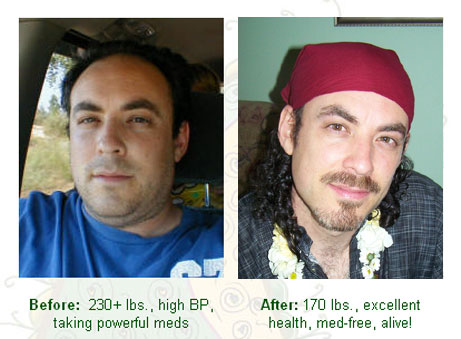
Jim here... Sorry for being away for so long. We've got SO much going on these days, it's mind-boggling! More on that later, as I have something in mind already for today...I should start by clarifying that I've been basically raw for almost 4 years now (high-raw, you might say). During the first nearly-two years, I still ate meat from time to time. Actually, I still ate (and drank) almost everything from time to time -- sugars, processed foods, alcohol, you name it -- only less than I did before, and within the context of a dietary intake consisting of a significantly higher percentage of living foods. In those early years, I'd estimate I was averaging 75-90% raw. Not bad ... I definitely experienced improvements in my health!
 The big change in consciousness didn't follow until two years ago. (This is an interesting point because, as you can see, I wasn't "ready" for a bigger change for two years into eating a lot of raw foods!) I suppose the difference was that, during the early years, I was pretty much raw by default rather than by conscious decision. As Jules said in Pulp Fiction, "... my girlfriend's a vegetarian. ?Which more or less makes me a vegetarian..." Yeah, that was my case back then, too, although I certainly grew into it (and am thankful that I did).
Read more: Reflecting on Two Years of an Exclusively Raw Die

Jim here... A little over a month ago, we couldn't contain our excitement about an online contest to win the best job EVER -- living as caretaker of a tropical island in Queensland, Australia, on the Great Barrier Reef for 6 months (and being paid $100k for the task!).
The deadline has come for this and, as we promised, we BOTH applied. My video was the first to be processed. So, we posted a screenshot above, which you can click to go view it (or just click here) -- and also please vote and rate it a 5!!! (I've heard that the rating system can get a little screwy on that site -- that you need to wait for it to load and maybe mouse over the rating part first. But, a 5-star rating would really help, as would the traffic, even if you don't watch the entire video.

Jim's mother, JoAnn, LOVES pasta. I'm sure many of you can relate to that---pasta is a big part of the cooked diet and just about everyone loves it. When going raw, many individuals say they just can't do it because they miss pasta too much. Well, that's no longer a problem. There is a raw way to make pasta and you are going to love it if you haven't experienced it, yet!
As a gift for Mother's Day, we sent a pasta-making tool to JoAnn along with a pasta sauce recipe we created for her (see the Paradisio Pasta Pomodoro entry). To make it easier for her to learn how to create pasta, and to answer some of the emails we've been receiving about the device we used to make the pasta, we have put together a two-part video showing how to make delicious, beautiful raw pastas! You'll learn how to use two different pasta-making devices, as well as how to use a simple vegetable peeler to create delicious noodles!
***** DISCLAIMER: As with all of our posts here at Pure Jeevan, and particularly those coming up over the next week and a half (which will all be tagged with a new term, "Nadi Balance"), please refer to the disclaimer that runs at the bottom of all Pure Jeevan Pages. Wendi and Jim are health researchers, educators, and extreme self-experimenters -- not doctors. ******
Nadi Balance: Part II
Even though this ground-breaking information we're sharing is not necessarily about Lyme disease, the story of Wendi's contracting, suffering, and healing from it is essential background information. So, we're going to talk about Lyme disease frequently here and in the next few posts, but know that the real, underlying story is about so much more than Lyme disease. (In fact, it's about overall health for everyone!)

Sharing is lovely, don't you think? When I decided I was going to "go raw" and not consume cooked foods anymore, it was a huge life-changing decision. Even though there was no one standing next to me, telling me what to do and not do as I was changing my eating habits, I was still supported in my efforts. My support system was made up of copious amounts of experience and advice that was openly shared by experienced raw foodists. Even though many times I felt like I was alone, the path I was walking was etched with loving words left by caring people who wanted to encourage others who were yet to come down the same raw food path.
Over the next few months and the coming year, you'll be witnessing the continued growth of Wendi Dee and Pure Jeevan in ways you might not ever have imagined! So, stay connected and let us know your thoughts about the changes that are (and will be!) taking place. We're not here for ourselves, we're here for all of you and for those who don't know about us (yet!). We have a mission: to share our stories and inspire others to fully embrace their lives and be all that they could ever desire (including healthy, happy, and vibrant)!
This is a long post, even though I tried to keep it brief. It's mostly a personal entry, but I wanted to share things so that you know a bit about what's going on with me and Pure Jeevan, now and in the near future. I'll break it up a bit with some more photos from Raw Spirit, the most therapeutic and life-changing event of my life.
======Wendi Dee's Growth======
We'd like to welcome the RawFoodRightNow blog readers to our Pure Jeevan blog! We are a new blog (started earlier this month), so we are thrilled that you have already found us and have taken the time to come and meet us!
Our blog is focused on a holistic look at living life as a raw food vegan (we have a holisitc raw-focused newsletter, too). We write posts that cover the body, mind, spirit, and emotions--as well as just random talk straight from our hearts to the blog page.
We update at least five times per week because we have daily blog features (Makin' It Monday, where we share raw recipes we are making; Take the Time Tuesday, where we introduce people or businesses we think may interest you; Weird Wednesay, where Jim shares observations about strange things; Thankful Thursday, where we share what we are thankful for and ask you to share, as well; and Fun-Filled Friday, where we tell you what fun things we have planned for our weekend).

Jim here... Since we posted Wendi's two-part series on pasta-making techniques (part 1, part 2) last week, I thought I'd follow up with an additional novel use for the spiralizer -- super-delicious, blazingly fast, ultra-low-fat sweet potato chips! We've done some really great things with sweet potatoes before. (Anyone signed up as a member of the Pure Jeevan family has likely already received our prized sweet potato pancake recipe.) But, these chips are amazing because they satisfy that unmistakable urge for crunchy, healthy snacks -- and in record time. Friends, if you have a dehydrator and sweet potato on hand, you could literally be enjoying these things in under three hours. So let's get going!
As Wendi demonstrated in the videos last week, you can easily make "rounds" using the spiralizer by simply making a vertical slice throughout your vegetable prior to placing it on the spiralizer. So, if we were looking down at the sweet potato, the cut (which goes all the way down the length of the vegetable) would look like this:
Read more: Super-Delicious, Blazingly Fast, Ultra-Low-Fat Sweet Potato Chips!

So far, so good, with the mono-meal fasting for Navratri! I mentioned that I'll be sharing an almost diary-like blog entry at the end of each day, to share things with all of you. Well, today's diary entry is quite long. I do share a lot about what was going on with me before the fast, and why I haven't been around much online to connect with all of you.
How's everyone else doing? Are you enjoying your raw food journey? What have you been learning about yourselves, your bodies, and your overall health?
We've been extremely busy, but KDcat and I did take some time to make some dehydrated food the other day. We rarely ever use the dehydrator, so we've been eating different foods than we normally do and enjoying it.
We didn't take pictures of everything, but here's a list of what we dehydrated:
* kale chips
 Jim here... Wow, what a great week it's been here at Pure Jeevan, focusing on diabetes for five straight days!? To cap it off, I have some fun news to share:? Tomorrow is Wendi's birthday!? And, guess what ? When I asked her what she wanted to do to celebrate this year, she said she'd like to devote her special day to spreading the word about the Movement ot Reverse Diabetes Naturally. So, we made some calls and sent out some press releases.
A few venues were enthusiastically receptive, so we're hitting the streets tomorrow -- celebrating Wendi's birthday by handing out diabetes awareness literature! Here's the press release I sent to the media, which tells where we'll be. If you're from Pittsburgh, we hope you'll stop by to say hello and/or ask questions about natural diabetes reversal and of course raw foods!
= = = = = = = = = =