Know Any Literary Animal Lovers?

Hi there PureJeevan readers! We wanted to let you know that Jim's new novel CHROO is available on Amazon. It's a crazy adventure involving a billionaire heiress, her Chihuahua BFF ("Chroo") and a host of human and animal characters. Find out more on Amazon! Here are some links:
Jim here (again!) A little over a month ago, we couldn t contain our excitement about an online contest to win the best job EVER ? living as caretaker of a tropical island in Queensland, Australia, on the Great Barrier Reef for 6 months (and being paid $100k for the task!).
The deadline has come for this and, as we promised, we BOTH applied. You saw my video, below. Here's Wendi's application. Once again, we hope you'll view the video & rate her a 5!!! You can click the screenshot above, or go there directly via this link. (As I said below, I ve heard that the rating system can get a little screwy on that site ? that you need to wait for it to load and maybe mouse over the rating part first. But, a 5-star rating would really help, as would the traffic, even if you don t watch the entire video.)
***** DISCLAIMER: As with all of our posts here at Pure Jeevan, and particularly those tagged with a new term, "Nadi Balance," please refer to the disclaimer that runs at the bottom of all Pure Jeevan pages. Wendi and Jim are health researchers, educators, and extreme self-experimenters, not doctors. ******
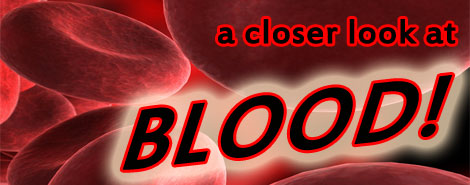
There are four parts to blood: red blood cells, white blood cells, platelets, and plasma. Using a specialized microscope, one can easily view these parts of the blood. Red blood cells deliver oxygen to, and carbon dioxide from, the body. White blood cells, also known as leukocytes, help defend the body against disease and anything that they see as unnatural or foreign. Platelets help form clots to prevent bleeding. Plasma, comprised of about 90% water, is the fluid that transports all of the above.

Welcome to Day 3 of Raw Salad Dressing Week here on Pure Jeevan. As you'll see, I "got a little creative" once again -- and again got lucky! I'll let you watch the video for the backstory on this one, but I'm happy to report that a nice, hearty, sweet, holiday-appropriate salad dressing was created. So, check out the video, and then I'll make a few closing comments.

Jim's mother, JoAnn, LOVES pasta. I'm sure many of you can relate to that---pasta is a big part of the cooked diet and just about everyone loves it. When going raw, many individuals say they just can't do it because they miss pasta too much. Well, that's no longer a problem. There is a raw way to make pasta and you are going to love it if you haven't experienced it, yet!
As a gift for Mother's Day, we sent a pasta-making tool to JoAnn along with a pasta sauce recipe we created for her (see the Paradisio Pasta Pomodoro entry). To make it easier for her to learn how to create pasta, and to answer some of the emails we've been receiving about the device we used to make the pasta, we have put together a two-part video showing how to make delicious, beautiful raw pastas! You'll learn how to use two different pasta-making devices, as well as how to use a simple vegetable peeler to create delicious noodles!

Q. I recently read the following on Dr. Micahel Eades' (dr. protein power) blog & would appreciate your opinion:
Have you any comments on the RAW FOOD movement and particularly Dr. Cousens claim of a ?cure ?Dr. Eades' response:
I don t know anything about Dr. Cousens. I do know that people in the raw food movement seem to believe the raw foods deliver ?natural? enzymes unaltered by cooking to the GI tract to help it do its work. Problem is these ?natural? enzymes are made of protein and are denatured (the same alteration process as cooking does with heat) as soon as they hit the stomach acid. The fact that proteins can t make it through the stomach without being completely altered is why diabetics can t take insulin pills and have to get their insulin via injection. Insulin is a protein, just as enzymes are, and it can t make it through the stomach without being denatured.

Have you ever heard about mono meals? When I first did, it sounded like such a great idea. When you eat a mono meal, you eat one item (and only one item) for the entire meal. Eating that way is supposed to be very cleansing and it gives your digestive system a rest from processing different types of foods at the same time. Supposedly there is a boost in energy, as well, since your digestion isn't taking up so much energy.
I recently received an email asking for advice from one of our Hindu readers, asking what I could recommend as far as light eating during the nine-day Indian festival of Navratri. Navratri is traditionally a time of fasting for nine days, however in modern society most Hindus no longer fast. Many do, however, pay more attention to their diets, and they try to eat lighter meals that do not contain animal products. Since our reader is just starting his exploration into raw foods, I didn't want to offer him advice that would make his nine days of Navratri difficult.He recently purchased a Vitamix, so I suggested that he make a lot of smoothies, since he has been enjoying them so much.
***** DISCLAIMER: As with all of our posts here at Pure Jeevan, and particularly those tagged with a new term, "Nadi Balance," please refer to the disclaimer that runs at the bottom of all Pure Jeevan pages. Wendi and Jim are health researchers, educators, and extreme self-experimenters; not doctors. ******

If you've been following this Nadi Balance series, you're probably as fascinated as we are with the body and the myriad ways in which we can peer into our physical health through observation and experimentation. Yesterday, we learned about a blanace being necessary in the human body between fatty acids and sterol fats. (This is but one of the many balances we'll eventually talk about under the larger umbrella of Nadi Balance.) We shared how Wendi's body was in an an extremely unbalanced state, with her fatty acids far outweighing the amount of sterol fats.

Welcome to Day One of "Dressings Week" here on Pure Jeevan. After finding out that KDcat took it upon herself to film a segment of "Makin' It Monday, Guest Raw Chef Edition," I decided that we should probably spend an entire *week* focusing on salad dressings.
Read more: Makin' It Monday Guest Raw Chef Edition: KDcat Makes Orange Pepper Cilantro Dressing
April 15, 2008
Every year my dear friend, Mamta, lets me know when Navratri is going to begin. ?It s the nine-day fast, but you don t have to change anything since you are already eating so healthy. Traditionally, Hindus used to abstain from eating during Navratri. In modern times, with everyone working and life being less relaxed, fasting isn t always something that can easily be accomplished. So, over the years Navratri has been modified by many to represent a time of eating more simply and abstaining from meat if you eat it.
This year, I had an email question from one of our readers who was asking about ways to eat simpler during the nine-days of fasting. After responding to him, it sparked in me a desire to do something this year for Navratri. I had read about eating mono meals and always thought it sounded like such a gentle way of cleansing the body, so I figured I d try it for the nine days of Navratri. To make it even easier on me, I decided to consume a different food every 24 yours, rather than eating the same thing for the full nine days. Maybe in the future I ll try that, but this time I wanted this to be as easily doable as possible.

One reason I keep going on and on lately about raw desserts and raw ice creams is best conveyed with an example. ?Here are the ingredients in Cool Whip, a commonly available whipped topping:
- water
- hydrogenated vegetable oil (coconut and palm kernel oils)
- high fructose corn syrup
- corn syrup
- skim milk
- light cream
- less than 2% of:
- sodium caseinate
- natural and artificial flavors
- xanthan and guar gums
- polysorbate 60
- sorbitan monostearate
- beta carotene (color)
Wow, I had a chemistry set in 5th grade that had a lot of things that sounded like some of those items. It's actually mind-boggling to envision the industrial processes necessary to produce everything on that list -- not that it's entirely possible to do so. After all, among the list of ingredients are "natural and artificial flavors." Ever wonder what, exactly, those are?
Read more: Natural and Artificial Flavors, and a Raw Whipped Cream Recipe
Well, here's my latest update on my nine days of mono meal eating. I have a headache this evening and I'm headed to bed early. I'm hoping the headache is a detox symptom and that it will be gone when I wake up.
April 9, 2008