Know Any Literary Animal Lovers?

Hi there PureJeevan readers! We wanted to let you know that Jim's new novel CHROO is available on Amazon. It's a crazy adventure involving a billionaire heiress, her Chihuahua BFF ("Chroo") and a host of human and animal characters. Find out more on Amazon! Here are some links:

In all of our discussion of immune-building lately, we remembered today that we left out one enormously important item that should be present in anyone's "healing toolbox." That item is, of course, laughter. What better time than a "Fun-Filled Friday" to celebrate the healing power of humor!
 Years ago, we'd heard a remarkable story about a man who had cured himself of a terrible disease using laughter as his "medicine." According to the story we heard, the man checked himself into a hotel and just watched Marx Brothers comedies for hours on end, and was eventually cured.
In yesterday's installment, we talked a bit about Salem, Oregon. I inadvertently missed this video in Wendi's batch of uploads. So, here's Wendi interviewing Kerry Matson on her path to raw and some of her favorite raw foods!
Once again, we thank our trip snack sponsor, Natural Zing, for helping us to make this possible on our budget!
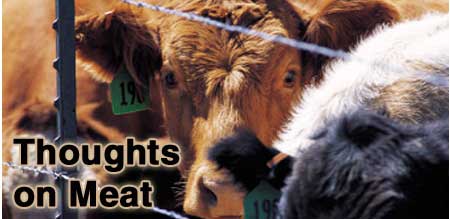
Jim here... Recently, a commenter on this blog, Lannette, mentioned being a cardiac rehab nurse. For some reason, reading this set my wheels spinning in various directions, among them onto the topic of meat consumption in the world. To begin, I'd like to recap something I'd said in response to her:
... it *astounds* me how people joke about heart health where I work. People around here routinely return from medical exams and actually adopt rather mischievous grins when they reveal how high their bad cholesterol levels are. It's like they're saying, "I know meat and dairy are bad for me, but I'm going to keep on eating it anyway. Isn't that funny ??!!!" Ummm, no. It's sad. They laugh it off as though there could be no possible future reckoning for them. It's reminiscent, IMHO, of Dr. Viktor Frankl's book "Man's Search for Meaning," in which he describes a psychological phenomenon he termed the "delusion of reprieve." For anyone unfamiliar w/ that, the term describes the phenomenon via which those faced with certain death (or near certain death) mentally construct some way out of it. They are deluded into believing that they'll have a reprieve from the inevitable. So, it's exactly the same to me -- these people see the heart attacks coming. They simply refuse to do anything about it, refuse to change their habits, deny what their blood work says to them. Why? Because they think "I'll be okay. Sure, this leads to heart disease in most people, but not in *me* because I'm a strong guy, I'm macho, I'm not as fat as some other person here, etc." Mostly, it's the meat, I think. It's got a powerful hold on our society...
So, today I wanted to write a little bit on the topic of meat consumption. This is an enormous issue, in my opinion. If you're reading this, it likely means you're already at least a vegetarian, so I do not need to quote you any saddening statistics on the horrors of the meat industry. In fact, before writing this, I decided to visit the PETA web site quickly in order to glean a few slaughterhouse facts. But, in no time, I became markedly depressed, so I'll largely avoid focusing on specific negative imagery here.

And you thought Apple Cider Vinegar was tough to pin down ? Ever come across the whole fluoride controversy
A Google search on "fluoride" returns 6,300,000 results.A Google search on "fluoride toothpaste" returns 246,000 results.

Getting Lyme Disease after regaining my health on the raw foods diet was a tough thing to accept. How could a body cure itself with a raw food diet, yet then fail to even recognize and destroy the Lyme bacteria? So many individuals have recovered from awful diseases, including cancer, by eating a raw food diet. Why, as a raw foodist, has my body been unable to easily eliminate this lyme disease?
I know Jim and I weren't the only ones wondering this. Many of you have voiced concerns, as well. Questions have been asked about how healthy my raw diet has actually been. Have I been cheating and eating cooked foods? Have I been eating too many packaged raw food snacks? Am I drinking alcohol? What have I been doing *wrong* with my diet in order for this to happen in my body? Here are some answers:
Read more: Please Share Immune Building Knowledge with Wendi!

To keep all of you inspired while we are away, we've asked some
remarkable individuals to share their raw food stories with you. Enjoy!

As many of you know, I'm more of an intuitive eater than anything else. I eat what I intuitively feel my body needs most of the time. Well, for the past two weeks what my body has been asking for is cauliflower. I went through a cauliflower stage sometime last year, and it seems I'm back to eating that lovely white flower veggie again!
At first I was making mashed cauliflower (like? mashed potatoes) and keeping the recipe very simple. I've made complex versions of the mashed cauliflower before, but I was really drawn to a more simple taste so all I was adding was some olive oil, salt, and a tiny bit of macadamia nuts. Yesterday, however, as I was cleaning the cauliflower (since my body was telling me it wanted more of it), I had a sense that I wanted something more vibrant, more fun than simple mashed cauliflower. So, I followed my intuition (picking up whatever I felt my body wanted to eat with the cauliflower) and here's what I created...
Continuing on, today, with Wendi's San Francisco travelogue:
 While on our walk, Pete pointed out that in the building on our right there are some amazing kale chips being produced. Kale chips ! I asked if he was referring to raw food kale chips and he nodded. Of course, I had to investigate and find out who was producing them and possibly meet the person. Well, what a treat we were in for!
One of the workers directed us to an office nearby where we met a lovely woman named Blessing. It turns out, Blessing is the producer of the kale chips we received from our Official Snack Sponsor during our tour, Natural Zing. Not only does Blessing produce some of the most popular kale chips in the raw community, her company is also the manufacturer of the famously delicious "Raweo" cookies (which you can find on Natural Zing's site)!
Read more: Part 2 of 4: Glowing Gypsy Gals Glimpse the Glorious Golden Gate's Gastronomical Goodness
Jim here... Wow, it's May 1st already! May is an exciting month for me because that's usually when my running kicks in more regularly. There's nothing like hitting the pavement and being in motion, MP3 player in hand. Whether it's an intense half hour of intervals powered by the Foo Fighters, or a longer moving-meditative outing accompanied by Michael Hedges, I do enjoy being out there (even if I'm distracted now and again when my canine running companion? -- aka "the Jooge" -- chases after something she shouldn't)!
But, as I was getting at:? Ever since I lost the weight, I simply can't abide cold. I've heard many raw foodies talk about this phenomenon, and have heard numerous explanations for it. My suspicion is that all of the "why raw foodies are always cold" theories are partly correct -- or, better put, that the theories cumulatively contribute to our slightly lowered body temperature.

I'm excited about something that one of my friends has been working on. Melissa is gifted in so many areas, one of which is wild edible identification. She recently told me she was working on something that would help a lot of people and I was excited about her new project. Well, now it's ready to be shared with everyone!
Take the time to meet...
Is cacao dangerous or is it a super food? Anyone who's been learning about raw foods knows about raw cacao (check out a recent episode of Know Your Food: Cacao). It's raw chocolate without all the processing and additives normally included in the chocolate bars many buy from standard grocery stores. In its raw form, cacao has different nutritional components than typical processed chocolate. Many claim that raw chocolate is filled with mega doses of nutrients, making it a super food, and therefore extremely healthy for the human body. Others claim that even in its raw state, cacao is a stimulant that taxes the human body and cacao is more like a poison than a food. I've heard murmurs about negative effects of cacao for many years, but that was always subdued by the vociferous praise of cacao.
Recently, my friend Kevin Gianni (The Renegade Health Show) spoke out about cacao and his experiences with it. Kevin is well known in the raw food community, so his words came as a shock to many people. He explained in his video (below) that he developed a rash on his stomach. After much investigating and diet changes, he came to the conclusion that cacao was causing the rash (eliminating the cacao caused his skin to clear). He also stated that cacao had been stripping his body of vital minerals. Kevin pointed out that he was simply sharing his own experience with cacao, possibly shedding some light on a subject that may need to be further investigated. He advised others to take a look at their own reactions to the food, to see if they are experiencing any problems.