Know Any Literary Animal Lovers?

Hi there PureJeevan readers! We wanted to let you know that Jim's new novel CHROO is available on Amazon. It's a crazy adventure involving a billionaire heiress, her Chihuahua BFF ("Chroo") and a host of human and animal characters. Find out more on Amazon! Here are some links:
Jim here... Wow, it's Monday, April 27! Let's do something different today: Let's celebrate Monday instead of bemoaning this day that represents the taditional start of the dreaded work week. Why? Because it's our sincere hope that whatever you do in your work week is a labor of love. And, if you're not quite there yet, then celebrate the fact that you WILL be there sometime soon. For us, it means another week of working to inspire you to achieve optimal health -- and that's not "work" at all; it's actually FUN!
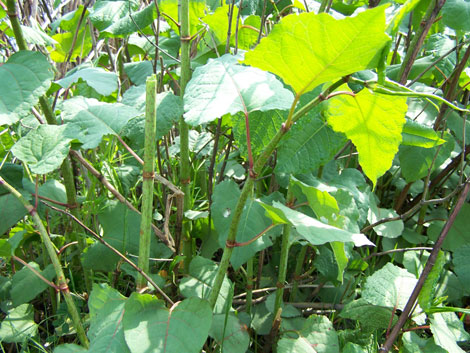
So, without further adieu, let's jump into this week's fun. Our good friends Melissa and Dave Sokulski have launched a site recently called FoodUnderFoot ("unleash the energy of wild edibles"). Even in it's young seedling state, I think it's already a fascinating site, and promises to become an encyclopedic web destination for anyone interested in foraging wild edibles. So, check them out for some informative info and valuable freebies, too!
?
Wow, it's been four months since we've run an article in our "Produce Buying Tips" series! Well, in today's installment, we want to remind you that our tips don't stop at the grocery store; you want to make sure you store your produce properly once it is at home to keep it fresh for as long as possible. After all, what good is your amazing organic produce going to do you if it goes bad? (That would be some super-expensive compost!)
Since Wendi has a difficult time right now with many motions involving her shoulders and wrists, I've taken over the responsibility of putting our groceries into the refrigerator. (I'm usually the "carry it all into the house" person, and then she likes to put away the refrigerated stuff.) But, wow, who knew so much went into storing vegetables and fruits I had no idea some things required air circulation, while others needed to be kept in sealed bags. Over the years, Wendi has fine tuned a system for keeping our fridge produce as fresh as possible and for maximizing storage time.
Read more: Pure Jeevan's "Produce Buying Tips" Series, #3: Produce Storage

Bunny Berry is back with a new 100-day Raw Fu challenge! If you've made a New Year's resolution to eat more raw in 2009, Bunny Berry's Raw Fu community may offer you the amazing support you'll need to meet your goal for the new year. Check it out!? Here's a snippet from Raw Fu:
And we re BACK! It s time to ring in the New Year with a New 100 Day Challenge. Take the plunge with 100 days of support, love, and lots of leafy greens. Bunny will be back with daily videos, vision boards, special Raw Fu celebrity guest stars, Breakfast with Bunny calls, and more Cutting Board Cam!
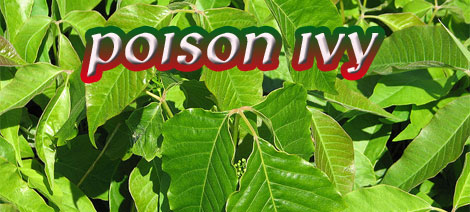
Jim here... Well, I may have lived 100% raw for nearly one year now (and mostly raw for a few additional years), and I have definitely witnessed the reversal of many physical ailments during that time, but I can say with certainty that, if raw actually cures people of allergies, it looks like I still have a ways to go before reaching that milestone. Here's a snippet from an article I published a few years ago in a book:
I believe I was roughly 12 upon learning of my allergy to poison ivy (the hard way, naturally). By age 14, I'd heard all of the poison ivy folk lore and "wisdom" out there -? that sensitive people like myself can inadvertently contract it via smoke from a nearby brush fire, that ingesting the plant's concentrated essential oil can reverse one's sensitivity to outbreaks (even, some said, to the point of complete immunity), that scratching spreads the rash, that scratching does not spread the rash, that going to get the shot and the steroids makes it fade more quickly, that calamine is best, that it's not, et cetera.
Welcome to Day 3 of Raw Salad Dressing Week here on Pure Jeevan. As you'll see, I "got a little creative" once again -- and again got lucky! I'll let you watch the video for the backstory on this one, but I'm happy to report that a nice, hearty, sweet, holiday-appropriate salad dressing was created. So, check out the video, and then I'll make a few closing comments.

As Pure Jeevan blog readers probably know, we're big fans of running ongoing series. A good blog can never have too many, really. So today we mark the official kick-off of another super series. We're calling these articles "Pure Jeevan Guides."
Guides to what , you may ask. Well, to various topics of interest to raw foodies, of course!
Welcome to Episode FIVE! Today we're focusing on our old friend the WALNUT. Since it's officially fall, walnuts are in season right now. What better time to enjoy one of nature's tasty, heart-healthy treats?
Some health/nutrition summary info: Walnuts provide a great source of protein, fiber, B vitamins, Vitamin E, anti-oxidants to help prevent cancer, and Omega 3s to help your heart and vascular system. They also help lowering your cholesterol and blood pressure, and contain numerous beneficial amino acids and polyphenols (compounds linked with reduced risk of heart disease and cancer).
"Should you eat when you're not hungry "
That was a question I asked myself a lot when I was first transitioning to the raw food diet. Just about everything I ever read said that people shouldn't eat if they aren't hungry. We need to listen to what our bodies are telling us in order to be as healthy as possible.
What if your body is telling you it's not hungry, however, while your instinct is telling you that you still need to eat That's what was happening to me in the beginning of my raw journey. My digestion was very slow and food would sit in my stomach for most of the day, especially if the food I ate was processed or heavy. It didn't matter how much I ate, either. My portions were always very small compared to those that my fit-looking friends were eating. I always wondered how I was the obese one when my meals were so minimal in comparison.
Read more: Inner Guidance: Should You Eat When You're Not Hungry?

For my Fun-Filled Friday and this entire weekend, I'm going to do something fun that I rarely get to do. What is it? It's nothing...literally NOTHING! What's the fun in doing nothing? Well, to be honest I think it's impossible to do nothing. If you decide to stay in bed all weekend, doing nothing, you are really doing something--staying in bed all weekend. Right?
So, what will my nothing include? Who knows! That's the beauty of doing nothing---I have no preset plans, no expectations of myself or others, nothing at all! I have lots of things to do, of course, but I'm not doing any of them this weekend (no working on Pure Jeevan activities, no cleaning the house or doing laundry, no working on the computer, no organizing future plans/activities, no fancy meal preparations, etc.).

I want to admit something to all of you: Sometimes I still cry because of how people treated me when I was obese. Because I stuffed all of my "negative" emotions deep inside my entire life, it's going to take some time to fully release them. I'm working on it, however, and making tremendous progress with healing myself on all levels. I'm not telling you these things so you'll feel sorry for me, however. I'm telling you because I am thankful for all the pain I endured. It shaped me (in more ways than just my physical appearance) into the person I am today.
Even though it sounds strange, and somehow wrong to feel this way, I'm thankful that I was obese. I'm thankful for all of the experiences during my life, even the extremely painful, traumatic ones. Maybe if I was a different kind of person I would wish that those things didn't happen to me. However, I am using those experiences in positive ways. They've helped me understand people even better, and to understand myself on a deeper level, as well. When people reach out to me it's not only because I'm an approachable person, it's because they sense that I understand them--and they're right. I DO understand them. I understand you. My experiences, coupled with my gift of empathy, help me relate to you in a way that maybe not everyone else is able to do.
Today, for Thankful Thursday, I want to focus on a raw food related subject: Raw Recipe Books! Without the many mouthwatering, visually appetizing recipes that have been created and published, I don't know if I'd still be living a raw food lifestyle at this time.
About two years ago, when I made the decision to transition into a raw food diet, there were some fantastic raw food recipe books available. A few years before that, when I tried raw for the first time with a dear friend of mine, there were books available but none of them were truly gourmet meals. It's amazing how much things change in just a few years! The newer books are filled with colorful pictures of the most visually stimulating foods, which never looked like simple chopped up veggies arranged nicely on a plate. We have a page with many raw recipe books listed, if you'd like to see some of the ones that are available.