Know Any Literary Animal Lovers?

Hi there PureJeevan readers! We wanted to let you know that Jim's new novel CHROO is available on Amazon. It's a crazy adventure involving a billionaire heiress, her Chihuahua BFF ("Chroo") and a host of human and animal characters. Find out more on Amazon! Here are some links:
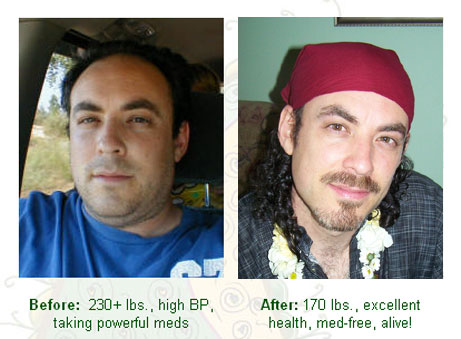
Jim here... Sorry for being away for so long. We've got SO much going on these days, it's mind-boggling! More on that later, as I have something in mind already for today...I should start by clarifying that I've been basically raw for almost 4 years now (high-raw, you might say). During the first nearly-two years, I still ate meat from time to time. Actually, I still ate (and drank) almost everything from time to time -- sugars, processed foods, alcohol, you name it -- only less than I did before, and within the context of a dietary intake consisting of a significantly higher percentage of living foods. In those early years, I'd estimate I was averaging 75-90% raw. Not bad ... I definitely experienced improvements in my health!
 The big change in consciousness didn't follow until two years ago. (This is an interesting point because, as you can see, I wasn't "ready" for a bigger change for two years into eating a lot of raw foods!) I suppose the difference was that, during the early years, I was pretty much raw by default rather than by conscious decision. As Jules said in Pulp Fiction, "... my girlfriend's a vegetarian. ?Which more or less makes me a vegetarian..." Yeah, that was my case back then, too, although I certainly grew into it (and am thankful that I did).
Read more: Reflecting on Two Years of an Exclusively Raw Die


Today is my birthday!!! I have always loved birthdays---my own, as well as those of my friends and family members. Some people don't make a big deal out of birthdays, but I think they are super special! For me, celebrating a birthday isn't about the cake and presents; it's about the focused attention that is given from one person to another.

Every Tuesday we introduce an individual or business that may be of interest to our readers. Our introductions vary from those that will help support your body, mind, spirit, or emotions. This Tuesday we are pleased to introduce an individual who brings a holistic view to her work and nourishes your body, mind, spirit, and emotions on all levels.
Take the Time to Meet
 This morning as I was driving from the beautiful Carnegie Mellon University campus to a business meeting outside the city, I had to take a detour at one of Pittsburgh's many bridges. It was a little frustrating because I had hoped to arrive at my destination early enough to grab a green tea at a coffee shop. But, these little delays happen. I'm glad this one did, though, because I soon passed a small yoga studio (called Pratique) where an interesting window decal hangs. It reads: "Yoga is my health insurance."
Many kudos to the clever people at Pratique who apparently crafted this catchy and spot-on message. While this is a raw foods site, not a yoga site, the message is equally apropos here. It essentially means, in my view, that we all have the opportunity to profoundly affect our own health and well being.
In our family, we're currently facing the realistic prospect of taking a literal approach to this concept, dropping formal health coverage! Quite literally, we feel that maintaining a health plan is (almost) a complete waste of money. I'm not posting this to start a debate as to whether those who follow a healthy diet should or should not buy into a plan. (I know all of the related arguments already: Yeah, but what if you cut your arm and need stitches Save that for Facebook or, at least, some other time.) I'm more concerned with reiterating one of our key messages here at Pure Jeevan -- our unwavering ?conviction that physical health and diet are tightly connected. Wendi knows this, I know this, our child knows this, YOU know this... But why doesn't everyone acknowledge it?
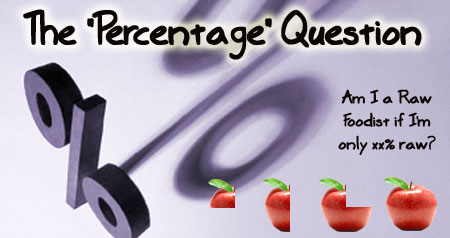
Jim here... "Do I Need to Eat a Certain Percentage of Raw Foods to Call Myself a Raw Foodist " This seems to be a common question among some people interested in pursuing a raw and living foods lifestyle. I fielded such a question recently online, and thought I'd recap my own answer here, somewhat edited for enhanced clarity:
I know what raw foodism means. And, if you're here, you probably do to, or at least you're interested in it and know the basics. But, to the mainstream population, raw is absolutely unheard of, totally out of the box -- relatively speaking. So, let's begin by taking a look at who in the world has potentially heard of RAW. Let's start more broadly and then hone in.
Read more: Do I Need to Eat a Certain Percentage of Raw Foods to Call Myself a Raw Foodist?
Do you know how sometimes you meet somebody new and they tell you their name and it just doesn't seem to fit for some reason? Well, that's just not the case for the person that we'd like to introduce to you today. This person's name describes the individual she is as well as the community that she creates.
Take the Time to Meet? Happy Oasis!
This experiment isn't looking so great, right now. I'm gaining weight.

I've cut fat out of my diet until my evening meal. Here's what I've eaten over the past few days:

Getting Lyme Disease after regaining my health on the raw foods diet was a tough thing to accept. How could a body cure itself with a raw food diet, yet then fail to even recognize and destroy the Lyme bacteria? So many individuals have recovered from awful diseases, including cancer, by eating a raw food diet. Why, as a raw foodist, has my body been unable to easily eliminate this lyme disease?
I know Jim and I weren't the only ones wondering this. Many of you have voiced concerns, as well. Questions have been asked about how healthy my raw diet has actually been. Have I been cheating and eating cooked foods? Have I been eating too many packaged raw food snacks? Am I drinking alcohol? What have I been doing *wrong* with my diet in order for this to happen in my body? Here are some answers:
Read more: Please Share Immune Building Knowledge with Wendi!
Ketchup
1 cup sun dried tomatoes, soaked for one hour
3 small fresh tomatoes
[Sorry, we lost the pic in a web update... will repost if we find it!]
Last night, Jim ate the first warm food he's had in over a year! I created a dinner that was placed in the dehydrator for about an hour before it was served. This dish is delicious at room temperature, also, but I thought it might be more special if I served it a bit warm. Jim thought it was a nice change to the colder temperatures of the smoothies he's been practically living on!
Here's the recipe, if you think you'd like to try it.

Three months ago today, we put up a post called "Is Alcohol Raw " I wanted to post a little follow-up to that today, while I'm thinking of the story. (And, by the way, a great conversation ensued in the comments section of that article. However, if you visit it now, you'll see that the comments have disappeared. We're hoping to have these and many other comments restored once a new version of Disqus is released.)
In that article, I touched on how the body can seemingly store states of consciousness (noting how I dreamed of being drunk and felt authentically drunk in the dream). This sort of phenomenon is well documented anecdotally (e.g., often associated with LSD use), although still not fully understood by medical doctors or psychologists. In any case, the term "flashback" comes to mind:
Read more: Strange Wine Experience & Jim's *Emergency Smoothie*