Know Any Literary Animal Lovers?

Hi there PureJeevan readers! We wanted to let you know that Jim's new novel CHROO is available on Amazon. It's a crazy adventure involving a billionaire heiress, her Chihuahua BFF ("Chroo") and a host of human and animal characters. Find out more on Amazon! Here are some links:

Want to have a little bit of fun today here on the blog? We'd love to hear your list of favorite foods for each color of the rainbow! I wonder how many of us will have similar fruits and vegetables on our lists, and how many of us will come up with vegetables and fruits that others have overlooked?
It's been a while since we offered an update on Wendi's health challenge. So, I asked if she felt up to writing a blog post to let everyone know what she's going through, highlighting a few new directions taken of late. As usual, I added some color splashes and graphics here and there, just for aesthetics. But, the following post is from Wendi. -Jim

Many thanks and lots of love go out to all of you for the love and support you ve been sending my way. I can t spend much time at the computer, but Jim has been trying to keep up with my email and he s been passing along your love, concern, advice, and healing energy. Thanks so much for everything, including the things that have arrived through the postal service. I definitely feel the love from all of you and I want you to know that each and every one of you means so much to me! * blows kisses *
Welcome to Episode 4 of Know Your Food. Wow, the PEAR episode is here at last! Aren't you thrilled to know that? Of ALL of the fruits, veggies, nuts, seeds, herbs, etc. in the knon world, we finally got to the wonderful pear. Well, it's no surprise, when you think about it. After all, sweet, mild pears are usually among the first fruits fed to babies. So, chances are, you were fed them, too, as a toddler. So, let's dig in, shall we?
Pears contain water-soluable fiber (pectin), Vitamin A, Vitamin B1, Vitamin B2, Vitamin C, Vitamin E, Copper, Potassium, Posphorous, Folic Acid, Niacin, Iron, Magnesium, Sodium, Sulphur, Calcium, and more! They lower your blood pressure, releive inflammation, lower cholesterol via pectin, calm the stomach, cool the body, prevent cancer via anti-oxidants, boost your energy via the fructose/glucose, reduce inflammation, help your bones/calcium levels, aid in pregnancies via the folate, and much more. Pears are GREAT for you, so eat them regularly!

To help keep all of you inspired, we ve asked some remarkable individuals to share their raw food stories with you. Enjoy! (Today's "My Raw Story" is also a special installment for our Diabetes Awareness Week!)

You're in for a treat with this recipe. Our Guest Raw Chef this week is Shivie Kaur, half of "The Cook and Butler" duo of TeamRaw. Wendi shot this video a few weeks back in San Francisco during Pure Jeevan's recent cross-country tour! While there, Shivie and her partner Cemaaj created and served a delicious gourmet meal for Wendi and KDcat. The blog post from that visit was here. So, here's Shivie sharing with you how to make an easy and delicious raw salad dressing!
Read more: Makin' It Monday Guest Raw Chef Edition: Shivie Kaur Makes Salad Dressing

Wow, so much happened in Chicago that it's taking literally weeks to show it all to you!? But, hey, it's also a lot of fun to share this stuff. Wasn't that a great talk yesterday with Kathy and Danny Living !? If you haven't seen it, definitely scroll down and watch!
Here's another one for you. Meet Hatice Yavuz, co-owner along with Chef Mehmet Ak of Cousin's Incredible Vitality, another great raw destination in the Windy City. "Hatice" is a Turkish name, in case you're wondering. The "c" is pronounced like a "j" -- so, her name sounds like "huh-TEE-jay." Our interview with her ran a little long, so I'm going to have to break it into two parts. Here's part one:
Read more: Pure Jeevan Visits Cousin's I.V., Interviews Co-Owner Hatice Yavuz (Part 1)
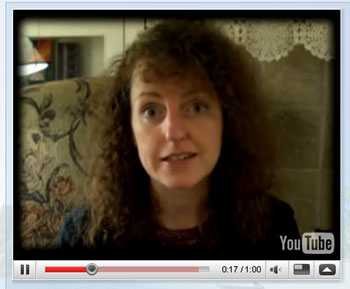
Jim here (again!) A little over a month ago, we couldn t contain our excitement about an online contest to win the best job EVER ? living as caretaker of a tropical island in Queensland, Australia, on the Great Barrier Reef for 6 months (and being paid $100k for the task!).
The deadline has come for this and, as we promised, we BOTH applied. You saw my video, below. Here's Wendi's application. Once again, we hope you'll view the video & rate her a 5!!! You can click the screenshot above, or go there directly via this link. (As I said below, I ve heard that the rating system can get a little screwy on that site ? that you need to wait for it to load and maybe mouse over the rating part first. But, a 5-star rating would really help, as would the traffic, even if you don t watch the entire video.)

Announcing: Pure Jeevan's Halloween Raw Pot Luck - A Costume Party for All Ages!!
When:? October 31, 2009, 6:00 p.m. - ? ?
Read more: Pure Jeevan's Raw Halloween Bash -- You're Invited!
 Wow, today is Day 7 of the Big 2010 Tour! So far, Wendi and KDcat have spent three days on a train and three more in Portland, Salem, and Corvallis. We still have plenty of content to post from those, including a good deal of video (once I'm able to edit that). For now, let's look at some pics and talk about their second stop, Salem!
Prior to leaving, Wendi & KDcat (let's just say "W&K" from here on out, okay ) stopped at People's Co-Op in Portland for supplies. As much as they loved Portland, they weren't very impressed with the co-op there, as compared to the one we have in Pittsburgh. However, in fairness, they were told that it's still a "young" co-op. Still, it's surprising to me that Portland wouldn't have an enormous one. However, it could very well be that there is not as much of a need there, in an area in which organics are much more accepted. Here in Pittsburgh, one could argue that our co-op thrives because organics are largely scoffed at by other retailers. Interesting, eh?
(By the way, are people on the west coast really as laid back as everyone says Wendi got into a bit of hot water for filming inside another co-op! Here in Pittsburgh, I doubt anyone would care if you set up a movie set in our co-op. No charges were filed, thankfully.)
Read more: Seeing Salem's Shops, Stores, and Super-cheap Supermarkets Spawns Smiles
After leaving the windy area of Prescott Valley, AZ, Wendi and KDcat headed up to Sedona. Today is part one of their Sedona visit, focusing on their visit with raw chocolatier, Kelly Johnson. We'll pick up with Wendi's travelogue, where we last left off:
It was great driving to Sedona, since I have a fond place in my heart for this magical spot. I'll talk more about that later, though. When we arrived, went directly to a raw restaurant I remembered visiting a few years ago. The name had changed, and there was a lot more going on there.
KDcat and I placed an order for some food to go (we wanted to have a picnic, rather than be inside when there was so much beauty around), and then met the lovely Kelly Johnson. Kelly is one of the owners of the raw restaurant and he agreed to do a quick interview to tell us about the restaurant and what had changed since the last time I was in Sedona.
I've already posted the recipe for this, but I wanted to talk about the orange pudding a bit. Since going raw, I've become a mostly intuitive eater. Whatever I feel like eating is what I eat. This usually means I am eating the same food for an extended period of time until I feel drawn to something different. Lately it has been the orange pudding.
I've been starting my mornings with a large bowl of it. If Jim is making lunch then I'll eat the salad or nut dip that he makes, otherwise it's orange pudding again. Then, if I didn't eat a salad during the day I usually have a salad for dinner and...a dessert of--you guessed it!--more orange pudding.