Know Any Literary Animal Lovers?

Hi there PureJeevan readers! We wanted to let you know that Jim's new novel CHROO is available on Amazon. It's a crazy adventure involving a billionaire heiress, her Chihuahua BFF ("Chroo") and a host of human and animal characters. Find out more on Amazon! Here are some links:
 Jim here... Wow, what a great week it's been here at Pure Jeevan, focusing on diabetes for five straight days!? To cap it off, I have some fun news to share:? Tomorrow is Wendi's birthday!? And, guess what ? When I asked her what she wanted to do to celebrate this year, she said she'd like to devote her special day to spreading the word about the Movement ot Reverse Diabetes Naturally. So, we made some calls and sent out some press releases.
A few venues were enthusiastically receptive, so we're hitting the streets tomorrow -- celebrating Wendi's birthday by handing out diabetes awareness literature! Here's the press release I sent to the media, which tells where we'll be. If you're from Pittsburgh, we hope you'll stop by to say hello and/or ask questions about natural diabetes reversal and of course raw foods!
= = = = = = = = = =
Jim here again... So, instead of Episode 1 of "Know Your Food," we present Episode 0.5, which documents the high drama of launching a video blog. Quite intense, my friends... Recall yesterday's installement -- when we captured the initial moment of inspiration in our library? Well, today's installment is a "confession cam" one, just like you see on every reality TV show ever produced.
The question is: Will we EVER actually launch our nutritional web show? Stay tuned...
Read more: Pure Jeevan Nearly Launches New Series. See Episode 0.5.

Today, we'd like to take the time to introduce some raw athletes who continually inspire others. There is a huge misunderstanding about the need for protein in our bodies, especially within the world of competetive sports. Many believe that without large amounts of protein we can't be strong, we can't build muscle. Raw athletes are proving that a vegan diet not only supplies enough energy to sustain the human body during competition, it also allows them to many times outperform competitors who are half their age.
|
Who Would Win Read more: Take the Time Tuesday: Raw Athletes 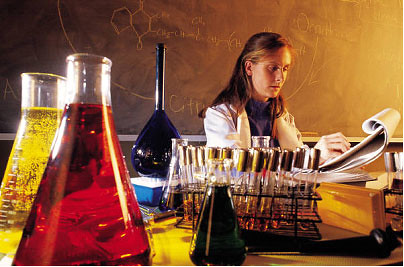
I'd like to talk with you about diet and experimenting. I've been learning about natural healing and foods/health since I was a very young woman. Somewhere along the line I knew that what I was eating was either making me feel better, or worse, and that food was related to health (it was more than just to fuel the body). It was with this knowledge that I stepped into the realm of natural healing and stumbled around for most of my life.I've learned about vegetarianism, herbs, the negative effects of dairy on the body, veganism, essential oils, Ayurveda, harmful chemicals in and around our foods, and so very much more. I don't claim to be an expert on any of these topics, they are just part of my overall bank of knowledge and experiences from which I pull to live as healthy as possible. 
Today we welcome Melissa Sokulski from BirchCenter.com and FoodUnderFoot.com for another episode of Pure Jeevan's Makin' It Monday "Guest Raw Chef" edition. In this episode, Melissa demonstrates how to make raw tortillas (this recipe uses a dehydrator). You'll be amazed at how pliable these tortillas are!! Read more: Melissa Makes Raw Tortillas on Makin' It Monday "Guest Raw Chef" Edition
Jim here with another Weird Wednesday. Recently, at the store, I came across a little plastic tool, priced at $1.49. It was an orange peeler. I'd never heard of such a thing. As someone who eats about 20 oranges/week, I was intrigued. Do you mean to tell me, I thought, that my days of laboriously de-skinning oranges would disappear (those trips to the company bathroom to remove the orange pulp from my fingernails!)?
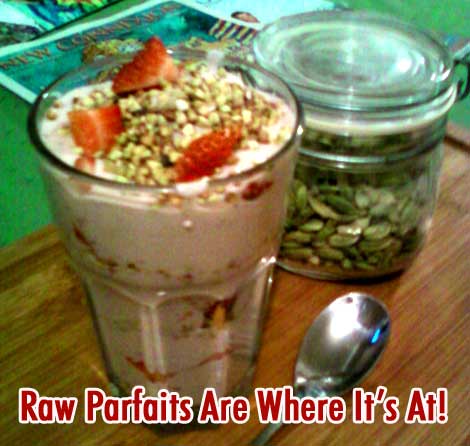
Above is a quick camera-phone pic I posted to our Facebook group lately. I did talk about making raw parfaits on that page, but want to talk a little more about them today, as it's just the perfect time to be talking about delicious raw parfaits (at least here in America, in any case, where many of the fresh berries you'll probably want are cheap and in season). I'll share a brief story about them, and then share my own basic recipe, and then we'll make some plans for MORE parfait talk really soon, okay? I'm almost hesitant to talk about raw food parfaits here because, well, if the government found out how unbelievably healthy and ENJOYABLE parfaits are, I'm sure they'd make them illegal. But, I'll take a chance...
Jim here with another intriguing installment of Weird Wednesday.Look, I'm a hugefan of gigantic, mondo salads. If you (well, not raw foodists but most SAD-diet Americans) were to visit our house at lunch time, you'd likely think that the individual salads on our table are as big as the salads bowls put out for entire families (for those few families, relatively speaking, that serve any salad at all these days, that is). Seriously, when I have enough prep time, I like to pile 'em high with organic green leaf (though I'll take red leaf or romaine frequently), tomatoes, carrots, onions, peppers, apple slices, pepitos, sunflower seeds, raisins -- basically everything but the kitchen sink.
With this video, Pure Jeevan concludes coverage of the 2009 Raw Spirit East festival. We started off two Fridays ago covering raw food chefs, then moved on to raw lifestyle speakers and philosophers. The final piece of the gourmet raw pie would have to be the festival ambience, which is somewhat tougher to capture in a short video. But, I think this video does a reasonable job of conveying a lot of the scene "beyond the food." (But even if it doesn't, how many times do you get to see Charles Balcer hula-hooping on video ) Enjoy the video (and pics, below, too)! 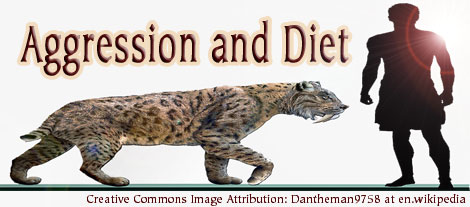
"... a warrior's life is not about imagined perfection or victory; it is about love. Love is a warrior's sword; wherever it cuts, it gives life, not death." During some "highway philosophization" (my term for pondering everything and anything while driving) this afternoon, I eventually began to think rather deeply about human aggression, and specifically about how people hurt other people. Mainly, I was thinking about individual aggreession, although, as a group, humans are unfortunately rather prone to it.Wikipedia maintains a list of ongoing conflicts (i.e., wars), in fact. According to that page, there are seven major wars happenning right now and 15 additional significant ones. Of course, there are scores of unlisted ones ongoing as well, most of which the average person has never heard about.
|