Know Any Literary Animal Lovers?

Hi there PureJeevan readers! We wanted to let you know that Jim's new novel CHROO is available on Amazon. It's a crazy adventure involving a billionaire heiress, her Chihuahua BFF ("Chroo") and a host of human and animal characters. Find out more on Amazon! Here are some links:
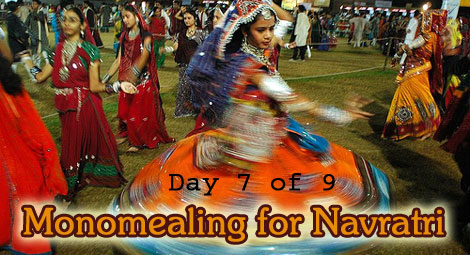
Day 7: Happy Navratri! It's the final three days, and today begins the special day of focusing on the attributes of Goddess Saraswati, recognizing those same feminine qualities within ourselves, and drawing inspiration to continue growing and changing in the most wonderful ways.
 Saraswati has always held a place of honor in our home. When we traveled to India a very long time ago(*), we purchased a batik wall hanging of Goddess Saraswati and framed it. It's quite large and we've always hung it in places where we wanted to focus on the energy that she represents to Hindus: creativity (particularly in the areas of music and art) and knowledge/intelligence (usually linked with education and literature).

There is a certain irony that takes place when you launch a raw foods web site because, no matter how much you love and believe in what you do, no matter how solid the proof may be that the information you're providing is true and accurate, no matter how clearly it can be demonstrated by analyses of blood tests or tons of "before and after" photos that this lifestyle heals the human body, you're still pretty much bound by legal best practices to include a full disclaimer on your site. And, as much as you just write it once and kind of forget about it, it's always there. For practical reasons, of course we understand all of that. But beyond all of that, there's an implied message that "only a medical doctor" really knows what's best for you.
Well, in fact, we DO recommend working with a competent health professional. But what we do not endorse here is simply accepting whatever that professional has to say without question. So, the operative word would be "competent" in that recommendation.
Look at the dinner we had this evening!!!

A bean and rice burrito, taco with all the toppings, tomato and pepper salad, and sweet orange salsa! Yum, yum, yum!!! I'll be posting the pic again and sharing a recipe on Monday.
April 12, 2008
Today we are doing some Spring cleaning and getting rid of stuff that has been collecting that we don t really need or use. I just finished the bananas (eight of them) and later I ll start eating the oranges that we have. I have plenty of oranges to get me through the day and into tomorrow until we go shopping. I m hopeful that there will be cantaloupes at the food co-op tomorrow. It would be fun to have a cantaloupe day!
How many days do I have left? I guess three? Overall, it hasn t really been all that difficult.

Welcome to the very first Take the Time Tuesday entry! What's Take the Time Tuesday, you may ask? Well, it's a time to meet someone special. Each Tuesday we'll introduce you to an individual or business we think might be of interest to you. So, who's in the spotlight for this very first Take the Time Tuesday entry? Pure Jeevan, of course!
Take the Time to Meet...
 To help keep all of you inspired, we ve asked some
remarkable individuals to share their raw food stories with you. Enjoy!
My Story of Conquering the Myths of My 50+ Body
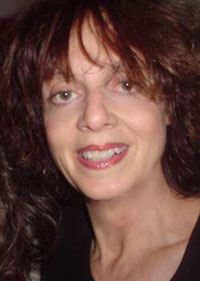 I ve been eating 100% live/raw food for a little over eight months now, and I believe it all started? well.... hmmmm? let s see. Last summer I was determined to do something once and for all about the weight that I put on since I turned 50, six years ago (well, almost seven years now ). It seemed that no matter how much I exercised or how much I ate ? or didn t eat ? nothing stopped the onslaught of impending bulk. Each year added a few more pounds until I hardly recognized myself! What happened? Who was I? Where did this strange body come from? I decided I needed to take this foreign body by the horns and wrangle it back into submission. Actually, I was gentler than that, but the determination was there.
Jim here... I have about 3 free minutes this afternoon to post here, so please bear with me as I type this post as fast as humanly possible. Okay, here's a fascinating video we shot last night. For anyone unfamiliar with live blood cell analysis, definitely check out this video. What they do is take a small drop of your blood (via a painless finger prick) and magnify it like 80 kajillion times. Then, they show you a real-time picture of what's going on in your blood.
Two main points from this:?
I was standing in line at the grocery store the other day and plopped a package of chicken wings up onto the conveyor belt. The cashier made some sort of smalltalk -- I think she asked whether I liked wings -- which prompted me to say, "Oh, the chicken is for my dog, Julia."
She looked at me, eyebrows raised. "For your dog "
?To keep all of you inspired while we are away, we've asked some
remarkable individuals to share their raw food stories with you. Enjoy!

For the past twelve years I've been doing some monthly freelance work for a nonprofit company. I've done other work in addition to the work for this company, but for the past few years I've solely been working with them. The work is sweet---straight-forward desktop publishing for a legal advertising publication. I don't have to read, write, edit, research, or anything else---simply format the pages. The pay is great, too!
Well, I just received a call a few minutes ago notifying me that the publication will no longer be printed. I'm overjoyed for the trees---I wish all publications would go digital. However, since it's going digital, they won't be needing my services much longer.
Jim here... It's been nearly half a year since we posted a long meditation on living patiently, noting the unique, sometimes-at-odds dovetail that exists between (1) experiencing the zen of patience and (2) living the electrically charged life of raw foods. While we're STILL living with the same patience we talked about, I have to admit there have been times when we've been in not-so pleasant touch with some real frustration about getting our home sold and finally moving on to all of the exciting stuff we have planned for us and for you.
Wendi and I are absolutely ecstatic about taking our raw foods message to the next level -- and not just "next level" meaning more a few more blog posts and videos, but a true quantum leap in terms of our immersion into this world and commitment to advocating the lifestyle. It just gets a little tough, even when practicing patience, to be kind of stuck in the starting gate.
Read more: Pure Jeevan Heads Out of Town: Raw Roadtripping Vids to Come!