Know Any Literary Animal Lovers?

Hi there PureJeevan readers! We wanted to let you know that Jim's new novel CHROO is available on Amazon. It's a crazy adventure involving a billionaire heiress, her Chihuahua BFF ("Chroo") and a host of human and animal characters. Find out more on Amazon! Here are some links:

Jim here again... What do you think of that montage of vintage cigarette advertisements ! Knowing what we now know about cigarettes, it's tough to believe that such ads could have existed only 50 years ago, but the campaigns were real. Did doctors actually see no harm in cigarettes? Were there no pulmonary specialists back then who thought that habitually inhaling smoke might not be such a healthy idea Who knows... ?As I like to believe when it comes to doctors, even though they're quite oblivious to the harmful effects that chemicals have on our bodies, they do seem to mean well (in their own deluded ways). So, I don't hold it against them so much as I now hold it against individuals to think for themselves and challenge healthcare practitioners.
In any case, whether or not there is an advertising campaign attached to a new consumer product, it stands to reason that when a product is introduced into the marketplace, manufacturers should have a responsibility to ensure that the product is safe, and consumers should likewise have a reasonable expectation that the product is safe. Only, it doesn't always work that way, does it?
I have a need for hot food in winter to feel warm.
We hear this comment a lot from those trying to lose weight. Some joke that they thought their excess body fat would be keeping them warm, but they're still feeling cold and needing hot food in the winter months.
In the past, we've talked about reasons what's going on in the body when hot foods are consumed. Understanding this will help you realize that hot foods are actually not very good for our bodies. When we consume very hot foods, that heat is then inside our bodies, next to vital organs, while the body needs to maintain a temperature around 98.6 degrees. When we have temperatures higher than that right next to our vital organs, it must quickly work to remove that excess heat. It's the removal of this excess heat that causes us to feel warm. It's our bodies trying to stay in a healthy state. We are actually putting our bodies under stress when we do this (the same holds true for eating overly cold foods, like frozen desserts and icy drinks).

The superlatively captivating, one-and-only Bif Naked has been a superstar rock and roll icon, performer, diva, composer, acclaimed actress, sought-after voice-over artist, gifted poet / writer, and even cartoonist(!) for years. But, did you know she's also a raw vegan !
Early in 2009, I remember reading about her breast cancer diagnosis. The story both intrigued and haunted the raw world: ?How could a raw foodie get cancer ! We're supposed to be impervious to such things, right !
Read more: Rawk and Roll: An Interview with Multi-Platinum Raw Rocker Bif Naked

Jim here... Here's an interesting way to finish out the week: Today just happens to be my one-year "rawniversary." That's right, for the past full year, I've existed as a 100% raw food vegan.
Sure, I'd been "high-raw" for a couple of years prior to September 18, 2008 -- and it was during those high-raw years when the bulk of my weight came off and when I kissed prescription meds goodbye (I'd been on powerful beta-blockers for my heart and blood pressure).
This recipe is an adaptation of one from "Rawvolution", by Matt Amsden. As of this point in time, "Rawvolution" is my favorite recipe book. Most of the recipes are high in sodium and fat, but very satisfying for those who are used to eating cooked foods.
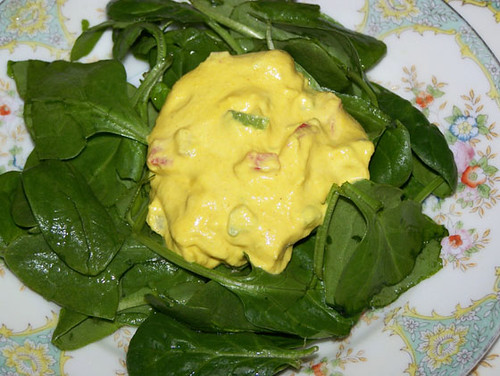
Egg-less Egg Salad


Q. Do you know of any nutritional protocol that would be beneficial for reducing or *gasp* even healing fibromyalgia using a high raw diet regimen
Do you feel that something like live blood testing, or mineral level testing would be beneficial? Wendy, after following your long ordeal with Lyme disease **Gentle Hugs to you** I believe you might be able to understand the pain, fatigue and depression that is involved while dealing with a chronic illness. ?I am looking forward to hearing more about your healing journey!
Sending love,? C.

On special Mondays, you sometimes see a regular feature here on Pure Jeevan's blog called Makin' It Monday. We always have so much fun doing this series, and it's been a huge hit both here on our blog and on YouTube.
We thought of a way to make the special Mondays even more special! Guess how? By seeing YOU in our Makin' It Monday raw food recipe videos! So, here's an open casting call for anyone in the Pure Jeevan family (that's you!) adventurous enough to prepare a raw food recipe on video to be featured in our Makin' It Monday series!

Today I am thankful for the small things in life that often go overlooked. I'm thankful Jim made some sweet dessert last night when I wanted it. I'm thankful KDcat is having a fun time with some of her friends right now. I'm thankful that: the trash collectors just picked up the garbage (we don't produce a whole lot since going raw); the older woman across the street has started smiling and being nice to KDcat; the sun is out and the snow is melting; I have another computer job to work on for some income.


Wow, is it Friday already !? Time flies when you're powered by 100% raw organic goodness! Today, we wanted to share an audio interview with you. Last night, Alex Ortner from the Movement to Reverse Diabetes Naturally interviewed us about our recent work helping them spread their message. We were honored to hear him introduce us as "two people that hold a special place in my heart right now, and I'll tell you why that is: They are probably the two most active people that we've had in the movement to reverse diabetes naturally."
Well, Alex, it was our pleasure! We met scores of new people during our work for RDN, generated major awareness about the movement, and spread the word about the raw food lifestyle as well. To listen to or download the interview, just visit their site, here. Topics covered include:

Sometimes you meet someone and you just know they have tapped into something special, something most of us search for but never quite find. That was the case when I met this lovely woman I'd like the rest of you to meet. There's a centered peace about her, down deep in her core, and yet she's overflowing with an energy that I've never seen matched by anyone else. She's delightfully insightful, intelligent, and playful all at the same time. ?
Take the Time to Meet
Jim here... It's been nearly half a year since we posted a long meditation on living patiently, noting the unique, sometimes-at-odds dovetail that exists between (1) experiencing the zen of patience and (2) living the electrically charged life of raw foods. While we're STILL living with the same patience we talked about, I have to admit there have been times when we've been in not-so pleasant touch with some real frustration about getting our home sold and finally moving on to all of the exciting stuff we have planned for us and for you.
Wendi and I are absolutely ecstatic about taking our raw foods message to the next level -- and not just "next level" meaning more a few more blog posts and videos, but a true quantum leap in terms of our immersion into this world and commitment to advocating the lifestyle. It just gets a little tough, even when practicing patience, to be kind of stuck in the starting gate.
Read more: Pure Jeevan Heads Out of Town: Raw Roadtripping Vids to Come!