Know Any Literary Animal Lovers?

Hi there PureJeevan readers! We wanted to let you know that Jim's new novel CHROO is available on Amazon. It's a crazy adventure involving a billionaire heiress, her Chihuahua BFF ("Chroo") and a host of human and animal characters. Find out more on Amazon! Here are some links:
I had to write an update after my grocery shopping today! Remember I said just yesterday that sometimes people comment about the amount of produce we are buying? Well, a sweet older woman saw all of the bananas going into our cart and she asked, "What are you going to do with all of those bananas " You already know the response I gave: "Eat them!"

One of the really nice workers at the food co op commented that he can eat about eleven bananas sometimes. I told him, and another friend we saw shopping at the same time, that I can do that now, too. I explained how I used to get full on just one banana when I ate cooked foods. But, now that my system is so much cleaner and healthier, I can consume 10-11 bananas in a day (bananas should be covered with brown specks to truly be ripe and digestable). I don't remember the maximum I ever ate in a day--it's somewhere in my Going Raw journal, I'm sure. It might have even been more than 10 or 11 when I was going through my major banana-eating phase. Now I eat about 4-6 bananas a day, which doesn't seem like a lot to me (but in the past I would have wondered about all of those bananas in someone's cart, too!).
Read more: What are you going to do with all of those bananas?
Even though it's not time to share everything with you about the life-changing events going on with us here at Pure Jeevan, I'm going to try harder to squeeze in a few minutes once in a while to update this blog with other information. I miss coming here and connecting with all of you. Thank you for so many lovely emails that you've been sending to me. I will be responding to all of you very soon. Please forgive me for taking so long to respond, but once we fill you in on everything that's been going on, I think you'll understand that it's difficult to find time to keep up with email and blog writing, among other things.
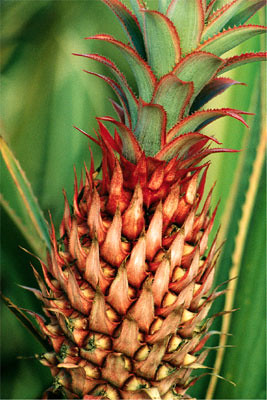
The latest news, as far as raw foods go, is that I'm having a love affair with a particular fruit. When I was transitioning to raw foods over two years ago, and also during the first few months of eating 100% raw foods, I was in love with young Thai coconuts. I couldn't get enough of them and they did some amazing things for my body---the most amazing was lowering my cholesterol to a healthy range within one month! After many months of consuming at least one coconut per day, however, my love affair ended. I still loved those Thai coconuts, but they just weren't as attractive to me anymore.

Sharing is lovely, don't you think? When I decided I was going to "go raw" and not consume cooked foods anymore, it was a huge life-changing decision. Even though there was no one standing next to me, telling me what to do and not do as I was changing my eating habits, I was still supported in my efforts. My support system was made up of copious amounts of experience and advice that was openly shared by experienced raw foodists. Even though many times I felt like I was alone, the path I was walking was etched with loving words left by caring people who wanted to encourage others who were yet to come down the same raw food path.
Some of you have noticed that we've seemed a bit silent, or asleep, here at Pure Jeevan. We haven't abandoned our blog or our readers, though! For the next two weeks, it may continue to look like we are sleeping, but in reality we are doing anything but that! :-)
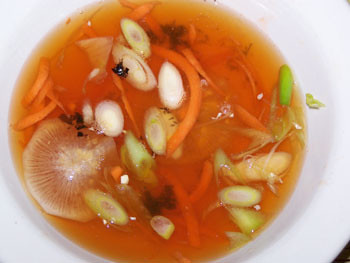
Here are some pictures of some recent meals we've been testing in our kitchen...
Jim here... Yesterday, Wendi toughed it out and typed up a lengthy health update (a painful process for her -- trust me!). So, for the rest of this week, I'm going to fill in here (letting her get back to her resting and healing) and share a few interesting stories related to this Lyme adventure. But first, I wanted to add that today brought some great improvements in Wendi's condition. She was able to do a physical movement (wrapping a towel around her head) without pain for the first time in months. So, we really think those antibiotics are starting to kick in.
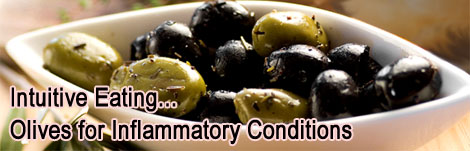
Today's topic is intuitive eating. I'm certain we've covered this many times on the blog here. So, rather than explain what it is again, I'll just share an intresting example. Basically, while dealing with these Lyme symptoms, Wendi experienced a serious craving for olives.
Here's an update from Wendi. I think this can be considered, with 99% confidence, the big announcement:
Of course, there's that 1% chance that something unexpected will happen. But, Portland feels right. It always has for us; we nearly moved there in the late 1990s. We had books on Portland back then, and I was buying their newspaper each week to hunt for jobs. It just never panned out, though. I suppose we were meant to live in Pittsburgh for a spell. It would be easy for me to list many reasons why Pittsburgh served a purpose for us. But, yeah, I think we're Portlanders at heart. So much about that city resonates with us. It'll be a homecoming, for sure! I want to reiterate a few things that I'd written in comments recently, slightly clarified in places.
Read more: Pure Jeevan Perceives Peace, Purpose, and Prosperity in Populous Portland!

If you like raw cauliflower and fresh mint, I recommend you try this dish! Jim and KDcat don't like raw cauliflower much, so this dish wasn't a big hit with them. I, however, consumed the entire dish before the end of the day! I LOVED it!
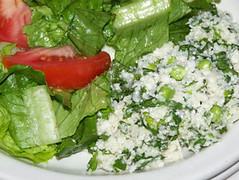
Read more: Makin' It Monday: Refreshing Cauliflower Mint Salad
A Bit of India in Pittsburgh s Back Yard?
During an intense personal journey in recent years, I ve discovered that the more I m able to know my true self, the more my perception of the world changes. As a result, my surroundings have changed as well ?people, places, directions. At one point, internal and external changes happened so rapidly, it was difficult to fully process anything; I felt overwhelmed.
Amid urges to explore so many new directions, all at the same time, it became impossible to focus. My initial instinct was to flee to India, where I could peacefully stay at an ashram and process all that was transpiring in my mind. Although circumstances kept me from traveling abroad, I knew I needed to simplify. That s when I remembered an old issue of Point of Light I d kept. I dug it out and quickly flipped through the pages? There it was: Peaceful Valley Ashram & Retreat, located just north of Pittsburgh!

When you're young and learning the letters of the alphabet, anything that starts with the same letter as your name becomes really special. Well, ever since I was a child and saw a Winnebago RV with the giant "W" on the side, I've been enchanted with the idea of one day owning one and traveling the world (at that age, I didn't realize I'd have to cross oceans to see everything).
If you've been following us for a while, you'll know that I was bringing that vision to life. It took years of convincing, but Jim was finally ready for such an adventure and together we began making plans. For more than two years we've been preparing to tour the country, while teaching about raw foods along the way. Our lives changed so dramatically when we found a way to heal our bodies (and more), a way that can also help others, and we just couldn't sit still. We feel called to spread the word about the raw food diet so others can at least hear that there's another way, that there's something different to try in their quest for health. I knew that crossing the country in an RV, planting the seeds about a raw food diet along the way, would be an efficient way of spreading the word.

Many of our visitors go directly to our raw food recipes section of the blog. They must be terribly disappointed to find only a few recipes there. We ll continually add more, but for now there are only a handful. So, it is with extreme pleasure that we introduce you to someone you are going to love!
Take the time to meet...
Wow, with literally years of raw food coverage under our belts here at Pure Jeevan, we don't think we've ever devoted an entire post to fermented foods. Well it's high time we do, don't you think ? Check out the video and then we'll discuss it further...