Know Any Literary Animal Lovers?

Hi there PureJeevan readers! We wanted to let you know that Jim's new novel CHROO is available on Amazon. It's a crazy adventure involving a billionaire heiress, her Chihuahua BFF ("Chroo") and a host of human and animal characters. Find out more on Amazon! Here are some links:
With this video, Pure Jeevan concludes coverage of the 2009 Raw Spirit East festival. We started off two Fridays ago covering raw food chefs, then moved on to raw lifestyle speakers and philosophers. The final piece of the gourmet raw pie would have to be the festival ambience, which is somewhat tougher to capture in a short video. But, I think this video does a reasonable job of conveying a lot of the scene "beyond the food." (But even if it doesn't, how many times do you get to see Charles Balcer hula-hooping on video )
Enjoy the video (and pics, below, too)!

 Six months ago, we devoted a week's worth of coverage here on Pure Jeevan to diabetes. You'll find diabetes statistics, raw food resources for diabetes, stories of people who have beaten diabetes using a raw foods diet, an audio interview Wendi and I did about diabetes, and more.
We also linked several times to the Movement to Reverse Diabetes Naturally, where people could pick up copies of two amazing DVD documentaries, "Simply Raw: Reversing Diabetes in 30 Days" and "Raw for Life." Through an enormous effort during those weeks back then, the RDN Movement spread the word about raw foods to literally thousands of people!
Read more: "Raw for Life" and "Simply Raw" on Special This Week

I'm going to be including questions and answers more often on the blog, since we've had a lot of emails from many of you saying you found last week's Q&A helpful and fun to read. I have many questions I've been saving to share with others, and more come in daily. Don't be shy if you have a question about anything that you think I'd possibly be able to help you with. Simply send me an email asking, and I'll reply to you personally. Questions that I feel might have a more general interest may be shared here on the blog (with the questioner being anonymous).
[Please email questions to me, rather than post them here on the blog: WendiDee [at] PureJeevan.com.]

Today we'd like to introduce you to one of the sweetest, most creative, and passionate raw foodists we know. She's petite, pretty, pleasant, powerful! She continually shares her knowledge about the raw food lifestyle with others and educates many individuals about our human rights when it comes to the foods we grow and consume. She's up on the latest regulatory activities relating to health and diet issues going on within the US government, and speaks out when our rights are in jeopardy of being taken away.
Take the Time to Meet... Rhio!

Wow, are you in for a treat! I came up with the most delicious soup recipe today! I wanted to make something that didn't require use of the food processor, blender, or dehydrator because I've gotten quite a few emails saying that it's too hard to be raw if you don't have the money for the appliances.
I disagree that it's too hard to be raw without the appliances. It's definitely easier to do it *with* the appliances, but it's not overly hard to do it without. So, from time-to-time I'll try to create recipes that don't use anything more than a knife and a chopping board to show you that it's not too difficult to eat raw. :-)
Well, we've finally done it -- made the move westward to our new hometown, Portland, Oregon! It's been nothing but the kind of high adventure befitting such a move, not the least of which was a wheel literally flying off of our car while driving (don't worry, no one was hurt) just days before we were scheduled to leave. And, of course, everything during the past few weeks wound up costing about 10x what we'd planned. ?But, we're here! ?And, we're beginning to get settled.
As always, we've got some great things on deck for this blog in the coming near term, including many interesting articles and some fun video experiments we did involving live blood and electrical grounding. We also have some new exciting web site features to roll out, one completely new raw food site to unleash upon the raw foods community, and a whole new Pure Jeevan web site design to launch. For now, though, we'll probably remain off-line for a bit longer, as we organize and unpack things.
Our Pittsburgh home remains for sale. Naturally, we'd hoped to have sold it before making this move. But, we realized that we didn't necessarily have to wait for it to sell in order to move to Portland. So, we took the great leap of faith and moved here without that step completed. (It'll certainly be a happy day when that lovely home finds its new owners and caretakers!).
Read more: Greetings from PDX, Pure Jeevan's New HQ!! (Post #756)

Isn't it high time we incorporate more Internet phenomena into our daily lives? Okay, maybe not everything (reminding myself that certain others aren't always amused when I say "BRB" instead of "I'll be right back.") But, I really do think there are some conceptual web ideas out there that could benefit us if applied more often.
In a recent post we announced that we were interviewed by Rhio for her Hooked on Raw with Rhio radio show that airs on NY Talk Radio (formerly known as Tribeca Radio). Rhio is an amazingly talented woman; we encourage you to check out her Rhio's Raw Energy site that has a lot of helpful information about the raw and living foods lifestyle.
Rhio talked with us about all of the projects we've been working on. She was particularly fond of the All Raw Directory, but she was also thrilled about our cross-country raw food tour and the raw food publishing company that we'll be starting in the near future. She asked us about our successes with the raw food diet, about our daughter, and so much more. If you have the time, we'd love for you to listen to the interview and let us know what you think! It was our first professional interview and we enjoyed it!
Here's a link to check out interviews that Rhio has conducted: Hooked on Raw with Rhio/NY Talk Radio.
Read more: Podcast Available: Rhio's Interview of Wendi and Jim Dee

For the past twelve years I've been doing some monthly freelance work for a nonprofit company. I've done other work in addition to the work for this company, but for the past few years I've solely been working with them. The work is sweet---straight-forward desktop publishing for a legal advertising publication. I don't have to read, write, edit, research, or anything else---simply format the pages. The pay is great, too!
Well, I just received a call a few minutes ago notifying me that the publication will no longer be printed. I'm overjoyed for the trees---I wish all publications would go digital. However, since it's going digital, they won't be needing my services much longer.
Q. I am trying to go raw and juicing for only two days now and I am soooo hungry and I really don't quite understand what to eat. I went out and bought a bunch of raw vegetables but I am lost on exactly how to prepare the meals and I'm so tired of being fat. Can you direct me to a simple start of book or can you give me some simple recipes or what you did to get started on your first month? Thank you.
Signed,
Frustrated and Fat in Virginia
A. Dear LOVELY BEING,
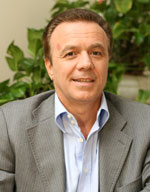 Today's post isn't specifically about raw foods. But, we wanted to post a few videos highlighting some interesting research by an Italian doctor named Tullio Simoncini, who just might be onto something HUGE! Dr. Simoncini treats certain cancer patients with ordinary sodium bicarbonate (baking soda), based on his premise that cancer is a fungal problem and that a solution of baking soda is anti-fungal. Naturally, he's been vilified by the medical establishment for making such a seemingly simplistic claim. But, what if he's right?
Here at Pure Jeevan, we're very much into health research -- not so much with an aim to cure any specific disease or ailment, but rather to understand ways in which our bodies can become what we like to call unbalanced, as well as the ways in which we might return our bodies to proper balance, when necessary. In this way, I suppose that we, like many in the natural health world, feel that the body is amazingly capable of healing itself (in many circumstances) as long as the body is able to find a favorable state from which it can properly do what it naturally wants to -- which is to return the body to an optimal state of health.
Medical doctors don't buy into this theory very much. ?However, it's certainly ironic how, where certain areas of standard medical practice are concerned, what I described above is exactly what doctors do. Take something like a broken bone, for example. A doctor does not normally attempt to surgically repair the bone itself. Rather, the standard and time-honored practice is to set the bone (say, with a cast), and then to let your body heal the break naturally, on its own, making those skeletal connections as only the imponderably complex, ever-evolving wisdom of the human body can facilitate. (True, doctors do often intervene these days with surgery for broken bones. But, their aim there is mainly to position the bones for proper healing, and/or to do things like insert pins in an attempt to improve functionality after healing. Either way, the procedure here still relies on the body's ability to eventually heal the problem.) Standard medical knowledge in this area is without question outstanding -- and this is why most people in the natural health world have little problem with going to see a medical doctor for emergency treatment.
Read more: Is Cancer a Fungus? Considering the Work of Italian Dr. Tullio Simoncini