Know Any Literary Animal Lovers?

Hi there PureJeevan readers! We wanted to let you know that Jim's new novel CHROO is available on Amazon. It's a crazy adventure involving a billionaire heiress, her Chihuahua BFF ("Chroo") and a host of human and animal characters. Find out more on Amazon! Here are some links:

On special Mondays, you sometimes see a regular feature here on Pure Jeevan's blog called Makin' It Monday. We always have so much fun doing this series, and it's been a huge hit both here on our blog and on YouTube.
We thought of a way to make the special Mondays even more special! Guess how? By seeing YOU in our Makin' It Monday raw food recipe videos! So, here's an open casting call for anyone in the Pure Jeevan family (that's you!) adventurous enough to prepare a raw food recipe on video to be featured in our Makin' It Monday series!
April 15, 2008
Every year my dear friend, Mamta, lets me know when Navratri is going to begin. ?It s the nine-day fast, but you don t have to change anything since you are already eating so healthy. Traditionally, Hindus used to abstain from eating during Navratri. In modern times, with everyone working and life being less relaxed, fasting isn t always something that can easily be accomplished. So, over the years Navratri has been modified by many to represent a time of eating more simply and abstaining from meat if you eat it.
This year, I had an email question from one of our readers who was asking about ways to eat simpler during the nine-days of fasting. After responding to him, it sparked in me a desire to do something this year for Navratri. I had read about eating mono meals and always thought it sounded like such a gentle way of cleansing the body, so I figured I d try it for the nine days of Navratri. To make it even easier on me, I decided to consume a different food every 24 yours, rather than eating the same thing for the full nine days. Maybe in the future I ll try that, but this time I wanted this to be as easily doable as possible.
Jim here... Here's a short video from last Saturday when we were out distributing literature about reversing diabetes naturally and the raw foods lifestyle. In it, we interview a local man, R.T., who had stopped to talk with us, went on his way, and then returned again to where we were standing a few moments later rather astounded.
You see, he'd seen a "before / after" flyer showing Wendi's "pre-raw" pic next to her "raw" pic and couldn't believe the two pics were of the same woman!? Many people who have significant weight to lose (or, like R.T., know someone who does) wonder whether losing so much weight will result in saggy skin. He was so amazed at the transformation, he decided to come back and ask. So, here's the raw answer to that question...
Read more: Common Before & After Weight Loss Question: "Will I Have Saggy Skin?"

Welcome to Pure Jeevan's "Juice-a-Day Jamboree"! You're probably wondering, "What IS Pure Jeevan's Juice-a-Day Jamboree, anyway " Well, it's simple: It's an ongoing, informal, loosely organized "event" centered around juicing. Think of it as an interim step between (1) any kind of diet or lifestyle, from SAD to full-on raw, that does not include much regular juice, and (2) an all out juice feast where that's ALL you'd consume for a period of time. Basically, we're saying, "Let's just make this simple and accessible for everyone. Let's just make a goal to simply drink more fresh juice!"
Wendi and I have been thinking a lot about incorporating more juicing into our lives lately (which is something we've done off and on over the years but never stuck with long-term). One thing holding us back from doing it more often is the time requirement. When we juice, it usually takes a half hour or so from start to finish. I know it doesn't seem that complicated, but I suppose it's just the whole process of setting up the juicer, washing and peeling the produce, juicing it, setting the juice aside while we clean the juicer, doling out the juice into glasses, cleaning up the mini-mess that makes, and then sitting down to actually enjoy the juice.

Jim here... A little over a month ago, we couldn't contain our excitement about an online contest to win the best job EVER -- living as caretaker of a tropical island in Queensland, Australia, on the Great Barrier Reef for 6 months (and being paid $100k for the task!).
The deadline has come for this and, as we promised, we BOTH applied. My video was the first to be processed. So, we posted a screenshot above, which you can click to go view it (or just click here) -- and also please vote and rate it a 5!!! (I've heard that the rating system can get a little screwy on that site -- that you need to wait for it to load and maybe mouse over the rating part first. But, a 5-star rating would really help, as would the traffic, even if you don't watch the entire video.

Today, for Take the Time Tuesday, I'd like to introduce you to an online social networking Web site for those with similar interests to get together, meet, and hang out in the physical world. If you haven't already heard about it, check it out!
Take the time to meet....
Leaving Sin City, our fearless raw travelers headed south to Arizona for all sorts of raw food adventures. First up was a trip to Prescott Valley to meet Abi and Eli. Let's take a peek into Wendi's travelogue again, shall we
 You probably haven't met our official tour guide yet. We call her Simone. She's a bit testy at times, but always gets us safely to our destination (although sometimes in rather roundabout ways). She added an extra one-time $89 fee to our trip budget, but we're very satisfied with her performance so far. You see, Simone is our trusty GPS unit!
Leaving Las Vegas, she guided us through the Hoover Dam area on our way to Arizona, a geographic area that I think would be better described as a "state of extremes." There, we experienced super hot, sunny days, freezing nights, snow outside even when it's sunny and hot, and also a bizarre experience we had in which some bananas actually froze and then nearly roasted all in the same day.
Read more: Arriving At Abi's Arizona Abode After Arduous Attempts

A Pure Jeevan family member recently asked us how they can tell if they're consuming too much protein. They felt because they have been eating too many nuts and seeds, because of how quick and filling they are, that perhaps their intake of protein is too high in their diet.
We fully understand the convenience of the quick energy that eating nuts and seeds can bring to one's diet. We also have learned, through experience, that the more we rely on this type of nutrition (high in fat), the less energetic we feel long-term. There's nothing wrong with eating nuts and seeds as a pick-me-up between meals, as long as you're eating a small handful of them and your body does well with fats (not everyone can easily digest fats).
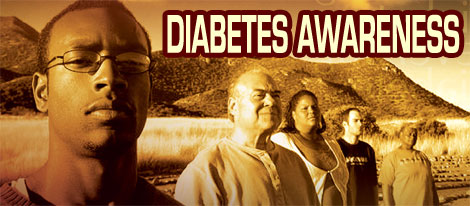
We're taking a very short break from our Nadi Balance series to announce that once again it's a special time of the year for diabetes awareness. As you may recall, we spent Wendi's 25th birthday last year doing public outreach on this very topic, as it's an issue close to our hearts. Pure Jeevan even maintains a special page, here, for diabetes information. So, if you know of anyone suffering from diabetes, and feel that they may be receptive to some really eye-opening information on the topic, please direct them to:
Hi everyone!? Sorry for not posting yesterday. Things got crazy-busy on my end, and Wendi is still out of town on her tour. I know poor Deb Young is eagerly awaiting our next installment, as that's the one from Wendi and KDcat's visit to sunny L.A. (during which they had SO much fun and captured some great footage at a raw restaurant there!). However, I honestly do not have a single free moment this week. So, we'll pick up on Monday, April 5 -- by which time our raw travelers will have returned home!? Upcoming posts include:
- Los Angeles -- vids w/ Deb Young, visits to raw restauranrs
- Las Vegas -- vid interviews @ a raw restaurant there
- Arizona -- some Makin' It Monday stuff & staying w/ raw friends
- New Mexico -- visiting w/ raw friend Terri Mares & all sorts of interesting activity/video
- Oklahoma -- hanging at 105 degrees, & Wendi & Penni's raw event
- St. Louis -- visiting w/ family there & my mom as a guest Makin' It Monday chef!
- Geneseo -- visiting with family!! (Hi Cindy!)
- Chicago -- visiting with Danny & Kathy Living, and a raw event at Whole Foods
Some of those are multi-day posts, too, as we have so many interesting raw food goodies to share!? So, see you soon!
Original Comments
Below, we have included the original comments from this blog post. Additional comments may be made via Facebook, below.
On March 30, 2010, wrote:
You know we're always awaiting your installments. Your fans LOVE PureJeevan!!
You're such a sweet guy, and I even have more of the "inside scoop" on how sweet you are, so I definitely forgive you for not posting every day. Stay happy, and I'll see you in April.
Much love, Terri
On March 31, 2010, wrote:
Thanks Jim! that way I can post about the same time as you!
Mahalo!
aloha
deb
On March 31, 2010, wrote:
I love watching you check out new places - I want to do one of my own - maybe a UK raw tour...hmm...
On April 2, 2010, wrote:
How exciting!
 As we promised yesterday, we're featuring a wonderful (and LONG!) video interview today with the incredible John Kohler of Santa Rosa, CA. You may be familiar with John from some of his popular web sites, most notably his "Living and Raw Foods" community site at www.RawFoods.com. Below are parts one, two, and three of Wendi's interview. They're roughly 10 minutes each. (That's a lot of time, I realize, but at least check out Part 1 if you're short on time, as it offers an amazing look at John's front yard.)
Wendi said she was at a loss for words when interviewing John at his home (and you'll soon see why!), because what he has done on his 1/10th of an acre lot is *phenomenal*. He told Wendi off the video that it's all a matter of trial and error--finding what grows easily and well, and working with those plants the most. If something takes a lot of effort, or is difficult to easily grown, he skips it and focuses on what can give the most yield for the least work. Almost everything grown on John's land is edible!
PART TWO:
PART THREE:
The video of John's garden and the pictures (see yesterday's post) are enough to inspire ANYONE to plant even a small garden for themselves! WOW!
John has a lot going on, including a monthly potluck. Wendi and KDcat happened to be in town on the night of the March potluck, so Wendi was invited to speak at the event. It was a nice, laid-back group of people, Wendi said, and they sat at a long table talking about the raw lifestyle, health issues / concerns, what children are fed in school, and so much more -- a really nice group of people, Wendi said, noting she'd love to visit them all again. To connect with John Kohler is pretty easy. He's on the internet at:
- RawFoods.com -- John's main community site
- GrowingYourGreens.com -- John's YouTube channel
- BeRaw.com -- Santa Rosa Meetup Group
- RawHealthExpo.com -- Annual Raw Foods Conference
Once again, we d love to thank our generous trip snack sponsor, Natural Zing, for helping us to make this possible on our budget!

Original Comments
Below, we have included the original comments from this blog post. Additional comments may be made via Facebook, below.
On March 19, 2010, wrote:
fantastic, thank you so much Wendi, very informative, what a guy and energy bomb he is, hope you are well again, you seem so
love to you