Know Any Literary Animal Lovers?

Hi there PureJeevan readers! We wanted to let you know that Jim's new novel CHROO is available on Amazon. It's a crazy adventure involving a billionaire heiress, her Chihuahua BFF ("Chroo") and a host of human and animal characters. Find out more on Amazon! Here are some links:
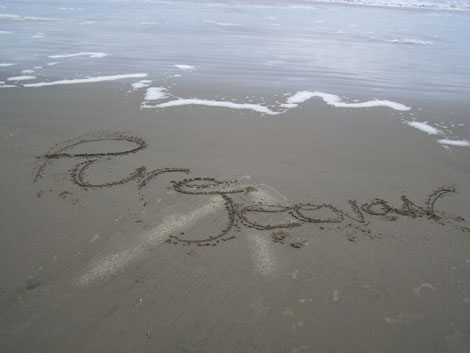
Wow, Pure Jeevan is officially coast-to-coast now! That picture, above, is our name written in the Pacific sand. Surely, there's an apt metaphor here, if only I felt moved to make one. Instead, why don't we take a look at what Wendi wrote about this, and see if a life-lesson doesn't spring to life! Her remarks, written for Pure Jeevan readers:
So, the ideal place on paper (Corvallis) wasn t seeming quite like the perfect place for us that we thought it would be. It s an amazing little town, with a lot going for it. If someone is looking for a totally hip, laid-back, creative, educated group of people living in a small town with no unsavory extremes as far as cold and heat, then this is the place for you. For us, however, we now realize that we ve grown to love all that comes with living in a larger city. Corvallis is fantastic, but now we realize we need a larger city.
Read more: Perusing the Peacefully Percussive Pacific, Pure Jeevan Ponders Portland

Announcing: Pure Jeevan's Halloween Raw Pot Luck - A Costume Party for All Ages!!
When:? October 31, 2009, 6:00 p.m. - ? ?
Read more: Pure Jeevan's Raw Halloween Bash -- You're Invited!

As some of you already know, along with regaining my physical health I've also been working on every other aspect of my overall health and being. I don't just want a healthy body---I want the whole package (vibrancy and bliss inside and out, in every way possible).
One area of my mental health that has been slow to heal is my self confidence. I continue to work on it in many ways and have made some tremendous progress over the past year, or so. I feel worthy of so much more than I ever did before.Many people never doubt their self worth---they have a good sense of who they are and assume that others see them as they are, as well.
Read more: Thankful Thursday: We Like It Raw and Dhrumil Purohit

Just a few brief thoughts for you this Weird Wednesday...
Of all the species on this Earth, it's weird that no other animals besides people cook their food. Similarly, of all the species on this Earth, it's weird that no other animals besides people drink the milk of other animals.

Jim here... Many people write to us asking whether we own pets and, if so, whether they are raw, too. Well, I wish I had a straight answer for you, but I think the answer is better told via a dedicated blog post.
As I'm writing this, part of me is tempted to include this post in our "My Raw Story" series. You see, Julia (pictured above) had some serious health issues just after we adopted her from a local rescue shelter, and we're still relatively early-on in our attempt to understand and reverse these issues.
With love in my heart, I present this gift to the entire raw and living foods community:
Original Comments
Below, we have included the original comments from this blog post. Additional comments may be made via Facebook, below.
As we said yesterday, we have some fantastic videos to share from RSF East last weekend. To launch a series of interviews, we want to reiterate that Pure Jeevan has always been a holistic site, meaning that we like to focus on all aspects of a human being's optimal existence (mind, body, spirit, and emotions). While it's not always "all about the food" here, it's also fair to say that it all really does start with the food -- super-nourishing 100% raw living foods! So, it's only appropriate that we begin this series of interviews with a raw food chef.
RawDawg Rory was a huge pleasure to meet and hang out with. The man exudes happiness, and it's quite infectious! We had a great time talking, and of course talked a lot about tasty raw foods. In this video, RawDawg shares a delicious dessert recipe. Here it is:

Last time on Raw Foods 101 we answered the question, "Why should you soak nuts / seeds before eating them."? Naturally, many readers then asked the next logical question, "How LONG should I soak them before eating " Great question!
Don't forget:? You're soaking the nuts and seeds to "wake them up" as would happen in nature. When seeds are soaked in the springtime rain, they wake up and begin to sprout. When this happens, the nutritional content of the nuts and seeds changes (they become an even greater powerhouse of nutrients).
Read more: Raw Foods 101: How Long Should You Soak Nuts / Seeds Before Eating Them?
As promised, here's today's herbal installment, a video on Oregano Oil! Verdict: It's strong, for sure, but it's not as bad as I thought it was going to be!
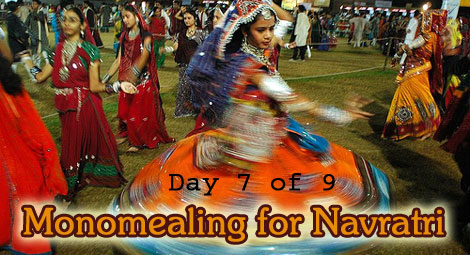
Day 7: Happy Navratri! It's the final three days, and today begins the special day of focusing on the attributes of Goddess Saraswati, recognizing those same feminine qualities within ourselves, and drawing inspiration to continue growing and changing in the most wonderful ways.
 Saraswati has always held a place of honor in our home. When we traveled to India a very long time ago(*), we purchased a batik wall hanging of Goddess Saraswati and framed it. It's quite large and we've always hung it in places where we wanted to focus on the energy that she represents to Hindus: creativity (particularly in the areas of music and art) and knowledge/intelligence (usually linked with education and literature).

Wow, with literally years of raw food coverage under our belts here at Pure Jeevan, we don't think we've ever devoted an entire post to fermented foods. Well it's high time we do, don't you think ? Check out the video and then we'll discuss it further...