Know Any Literary Animal Lovers?

Hi there PureJeevan readers! We wanted to let you know that Jim's new novel CHROO is available on Amazon. It's a crazy adventure involving a billionaire heiress, her Chihuahua BFF ("Chroo") and a host of human and animal characters. Find out more on Amazon! Here are some links:

Wow, who knew so much work goes into meeting up with people all across the country ! It's going to all be worth it, though, to meet so many of you!! Below are the definite meetups happening. There are more being planned that we'll share once things are finalized. If you don't see your town/city here, but it's on our list of places we'll be visiting, maybe you'd like to help us put together a little gathering If so, just let us know! We'll be updating later next week with a more finalized plan for the trip and various meetups taking place.
Read more: Meetups Across the Country: Want to Meet Wendi in Your Town/City?
You thought our "Know Your Food" series was dead ?!!? (Or, if you're a new reader, maybe you don't know what "Know Your Food" is yet!) Well, we've been poking around in the archives this week and discovered THREE lost episodes. This is HUGE... It's like one of those stories you hear every few years about some rare Hollywood film being discovered in a vault somewhere (laughing so hard)!
Over the next week or two, we'll be posting these three episodes. Today's episode is PUMPKIN, starring Wendi and her guest Ella (daughter of Melissa and Dave, who run the FoodUnderFoot blog we linked to recently). Once these missing episodes have been aired, this will usher in the dawn of a never-before seen level of production values for the Know Your Food series. The new stuff will totally win every major award available to YouTubers (continues laughing...).
Sure, we know pumpkins aren't in season right now. However, this video is sweet because of our special guest. So, enjoy the Pumpkin episode:
What have we been doing lately? Well, one of the highlights would be getting the first and second stages of the All Raw Directory up and running. We have many different stages planned for the future, enhancing the directory as time permits. It's a pretty exciting project, so be sure to become a member of the directory and continually contribute to its growth. It's a fantastic resource for all of us!

Today we welcome Devaki, the yoga instructor at Peaceful Valley Ashram, for another episode of Pure Jeevan s Makin? It Monday ?Guest Raw Chef? edition. In this episode, Devaki demonstrates how to make raw Cabbage-Mango salad. We ate the salad shown just after shooting the video. It was quite tasty and refreshing! Here s the recipe:
Read more: Devaki Makes Cabbage-Mango Salad on Makin' It Monday "Guest Raw Chef" Edition
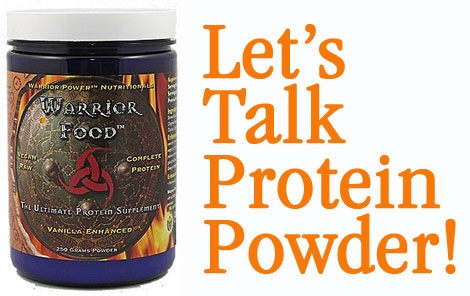
We get asked from time to time about whether we like to use protein powders and, if so, which brands we like. As you'll no doubt notice after getting into raw foods for a while, raw foodies (just like quite a lot of health-conscious people) often get into various powdered food additives. Some purists are against their use, of course. But, we're not so dead set against them. We do, however, believe that, if you're going to put something into your body as part of a health program, you should be conscious about it.
A few months ago, Wendi decided that she wanted to add some protein into her diet in the form of a protein powder. She did quite a bit of research at the time into the various brands available, charting out which ones were raw, which ones had various ingredients, and so forth. It was a fairly in-depth study, done for personal reasons unrelated to Pure Jeevan's blog articles. So, we never mentioned it before.
Read more: Protein Powder Smoothies Part 1 of 3: Selecting the Powder
After so looooong, the much-awaited Episode 6 is here of "Know Your Food"! Aren't you thrilled? Well, WE are. We're fantastically excited to announce that we have SIX thrilling new eipsodes "in the can" (as we film buffs like to say). So, here's the first of those six, in which your humble nutrition researchers reveal the hidden secrets of cacao, that delicious tropical ambrosia that opens your heart like nothing else. So, grab a raw chocolate snack of your choice and curl up in front of your favorite flat screen. Here's the vid:
Whoa, what'd you think of the "Monkey Brains" scene ! Have we finally used EVERY SINGLE hoaky feature of the Windows Movie Maker software? (Don't answer... Those were rhetorical questions.) In case you couldn't read some of the nutritional information, here's a summary of the key components of this delicious bounty from the Earth's equatorial regions. Raw chocolate contains:

I hear the question all the time: "Don't you miss eating out at restaurants " My answer is always, "No. I prefer the fresher organic foods I can create for myself in my own home. I can pay the same amount for better food if I stay at home to eat." It's true, too. I don't miss eating out at restaurants. Sometimes I miss the convenience of someone else doing my food prep and cleaning up afterward, but as far as the actual food that I consume, I prefer the foods we eat at home. Besides, when you eat out as a raw foodist, your choices are limited to only a salad if you live in an area with no raw food restaurants.
Sometime last year, as a treat for Jim, we went to a restaurant. I got a huge salad that I used to love when I ate cooked foods at that particular restaurant. I remembered the greens were always dark, the onions were nice and flavorful, and the dressing was a simple oil and vinegar with salt. Well, after consuming only fresh foods in our home for quite some time, the salad that I used to think tasted so great now seemed to be lifeless and limp. It wasn't enjoyable to eat, and I sure didn't like paying so much for a nonorganic salad that didn't even taste good to me. So, we didn't eat out again after that.
You rarely hear us talk about our daughter here on the blog. Some of you have noticed and asked questions about her through email. I'd like to tell you why we don't write about her very much, because there's something to be learned from it.
First, I usually don't like to write about people unless I get their permission. This is especially true when my daughter is concerned. I respect her privacy if she chooses for me to not share things about her life. Years ago when I knew I wanted to create the Pure Jeevan site, I talked with Jim and our daughter about it. I said it was something I felt drawn to do, that I felt it could help a lot of people, but I wanted it to be a family site if it's something they were interested in doing along with me. Jim agreed to help me at the time, but didn't fully embrace Pure Jeevan himself (now, however, he has become a very active part of this site and all of our projects). Our daughter, however, said from the very beginning that she didn't want any part of it.
Is cacao dangerous or is it a super food? Anyone who's been learning about raw foods knows about raw cacao (check out a recent episode of Know Your Food: Cacao). It's raw chocolate without all the processing and additives normally included in the chocolate bars many buy from standard grocery stores. In its raw form, cacao has different nutritional components than typical processed chocolate. Many claim that raw chocolate is filled with mega doses of nutrients, making it a super food, and therefore extremely healthy for the human body. Others claim that even in its raw state, cacao is a stimulant that taxes the human body and cacao is more like a poison than a food. I've heard murmurs about negative effects of cacao for many years, but that was always subdued by the vociferous praise of cacao.
Recently, my friend Kevin Gianni (The Renegade Health Show) spoke out about cacao and his experiences with it. Kevin is well known in the raw food community, so his words came as a shock to many people. He explained in his video (below) that he developed a rash on his stomach. After much investigating and diet changes, he came to the conclusion that cacao was causing the rash (eliminating the cacao caused his skin to clear). He also stated that cacao had been stripping his body of vital minerals. Kevin pointed out that he was simply sharing his own experience with cacao, possibly shedding some light on a subject that may need to be further investigated. He advised others to take a look at their own reactions to the food, to see if they are experiencing any problems.
We all know what "greens" are in general. For example, no one questions whether lettuce, kale, spinach, or chard are greens. But on the other hand, all of those items *are* also clearly green in color. With that in mind, what would you make of the following two questions I (Jim) recently pondered -- tagged as "reader questions" so they're easily found in the future by other equally inquisitive people ;-) -- that seem bizarre, but are really quite interesting?
1. Are non-green greens (e.g., purple kale) still considered greens2. Are vegetables with green skins (e.g., cukes, zucchini) considered greens? (After all, they're green!)

Today's Jim's birthday!
This photo is from Saturday night. We had a sleepover birthday party to celebrate Jim's big day. The Pure Jeevan home was filled with loving friends, amazing raw food dishes, and vibrations from some fun group drumming!
Happy, happy birthday, Jim! May all your wishes come true and your life always be filled with health, love, laughter, and friendships! I love you!