Know Any Literary Animal Lovers?

Hi there PureJeevan readers! We wanted to let you know that Jim's new novel CHROO is available on Amazon. It's a crazy adventure involving a billionaire heiress, her Chihuahua BFF ("Chroo") and a host of human and animal characters. Find out more on Amazon! Here are some links:
Jim here... Since many people have asked me how she liked the surprise gift, here's a quick, unedited video taken last Saturday on Wendi's birthday. We had gone to the park that evening to hang out and catch some fresh air. I took a few minutes to ask her about her day, and thought I'd share this with you.If I showed you the video of her receiving the gift that morning, I'm afraid all you'd see would be tears all around the dining room table. (We were all rather emotional about it.) So, take a look at this video for now. Wendi said that she wanted to write something here as well. So, that will no doubt be coming soon.
By the way, at the end of this video, Wendi mentions another video of a man we interviewed earlier that day on Wendi's birthday. I was going to edit some of that in, but we decided to run that video here on its own this Thursday because it addresses a question Wendi gets quite often. You'll love that video, as it's a great testament to the power of raw foods. For now, I hope you like the above vid (even though there's a fair amount of dog posterior that I should have edited out - LOL).
Read more: Wendi Dee Interviewed About Her 25th Birthday Surprise!
Eating only mono meals is going pretty well. I'm on my third food, so far, and have ended day two. This evening I've started my third fruit: Pineapples!
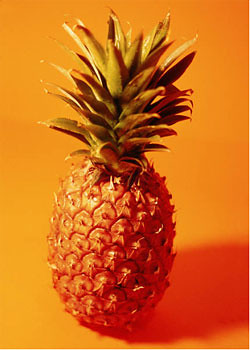

We're going to be running the above banner for a few days as we bring you highlights of the raw food scene in the beautiful Florida Keys.

If you like raw cauliflower and fresh mint, I recommend you try this dish! Jim and KDcat don't like raw cauliflower much, so this dish wasn't a big hit with them. I, however, consumed the entire dish before the end of the day! I LOVED it!
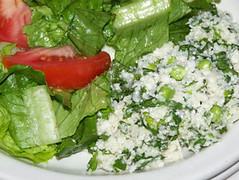
Read more: Makin' It Monday: Refreshing Cauliflower Mint Salad
 Before officially starting the new year, I'd like to acknowledge the changes and growth that took place over the past year. It was a whirlwind of changes, sometimes so dizzying that I wondered what I was doing and occasionally questioned whether, or not, I was making mistakes with my life. I followed my intuition, however, and it served me well. I'm here today, remembering the past year and ready to announce plans for this new year that has just begun. It's a beautiful life, isn't it Even when things seem dark and like there is a lot of pain, there is a tremendous amount of potential for new growth and a brighter life than ever imagined.
I ended 2008, perched on a summit and ready to take flight. Before I fly, however, I'm standing still for a bit and enjoying the view. I feel like the entire past year consisted of climbing to higher and higher plateaus of an enormous mountain. While climbing to each new plateau I stumbled, held on for dear life, saw amazing things, and became stronger.When reaching each new plateau, I'd spread my wings and leap, circling the mountain's circumference. But, I wasn't strong enough to fly straight to the peak. It was a year of gradual growth and change -- and I found myself becoming stronger and stronger as I reached the summit.I'm certainly not the same person who started this climb. I have transformed into a more genuine version of myself, a younger and stronger woman emerging from a lifetime of guilt and fear. As I stand on this summit, I feel youthful and invigorated. What lies ahead may be unknown to me, but I know it's within my ability to fly to the highest heights of ANY mountain, to see and do and experience ALL that I desire. It's going to be an incredible future and I look forward to sharing it with all of you!
In recognizing all of the accomplishments of 2008, I think it's important to admit that it wasn't one steady climb to the point I'm at today.The few years prior to 2008 were almost like my training in mountain climbing. Last year there were a lot of tears shed, along with a releasing of physical and emotional baggage that was still clinging to me. I openly shared what I was going through, however, after learning that keeping things inside was slowly killing my spirit. I think if I had to sum up 2008 in just one sentence it would be: In finally releasing everything, I woke up as my true self.
Read more: Acknowledging Changes and Growth: 2008 / 2009, Part 1
We're into soft foods and treats these days, because Jim recently had a wisdom tooth extracted (KDcat insists he is less wise for having done so). We've been having a lot of fruit smoothies! I made a big mistake and created a smoothie with a grapefruit for the juicy part (I normally only use oranges). I don't care for grapefruit, because the bitter part just isn't appealing to me. However, I thought for sure that bananas and frozen berries would override the bitter taste of the grapefruit. It didn't, so I added some agave to the mixture and blended it again. Nope--still bitter. So, I asked Jim to taste it (he LOVES grapefruit) and he thought it was fantastic. He consumed the entire pitcher of the bitter concoction.


In this special five-part series, Joanna Steven uncovers where some top vegetarian athletes get their protein. Here's part four, focusing on Brendan Brazier's take on this issue.
GREEN LEAFIES
Brendan Brazier is one of only a few professional athletes in the world whose diet is 100% plant-based. He s a professional Ironman triathlete, bestselling author on performance nutrition, and the creator of an award-winning line of whole food nutritional products called Vega. He is also a two-time Canadian 50km Ultra Marathon Champion.
Read more: Vegetarian Athletes Share: Top 5 Sources for Animal-free Protein (Part 4 of 5)

Well, we've always found the herb SAGE to be delightful in so many ways. That's why we've grown it here and elsewhere for years. Such a lovely, fragrant, sturdy, resilient herb, it's truly one of the easiest plants to communicate with -- and YES!, it truly IS a meaningful dialogue when you step out into the garden and sit among a patch of sage. All you need to do is listen carefully, and sage will speak its sage herbal wisdom to you.
I was wondering how sage came to be known as "sage" -- when all of the sources I had handy simply listed its technical name, salvia, along with its common name. Enter the great Wiki for an answer:
Read more: Please Tell Everyone: "I Read Some *Sage* Words at Pure Jeevan Today"
In yesterday's installment, we talked a bit about Salem, Oregon. I inadvertently missed this video in Wendi's batch of uploads. So, here's Wendi interviewing Kerry Matson on her path to raw and some of her favorite raw foods!
Once again, we thank our trip snack sponsor, Natural Zing, for helping us to make this possible on our budget!
All this week we're continuing to feature a variety of answers to the question "Are Raw Foodists Crazy" from various friends of Pure Jeevan. If you're just now tuning in, please read the back story and introduction to this, as posted on Monday.But, for now, let's continue with posting more of the excellent responses sent in! Enjoy!! :-)

It's nice to meet new people, isn't it? For today's Take the Time Tuesday, I'd love for you to meet someone who's really helping to make a difference in the raw food world in an exciting way.
Take the time to meet...