Know Any Literary Animal Lovers?

Hi there PureJeevan readers! We wanted to let you know that Jim's new novel CHROO is available on Amazon. It's a crazy adventure involving a billionaire heiress, her Chihuahua BFF ("Chroo") and a host of human and animal characters. Find out more on Amazon! Here are some links:
Beginning today and running all through next week (and even spilling into the following week!), we'll be running videos from the Raw Spirit Festival (RSF East 2009) held in Upper Marlboro, MD, last weekend. If you've never attended a RSF event, you absolutely must. They're the best ever!

Every Tuesday we introduce an individual or business that may be of interest to our readers. Our introductions vary from those that will help support your body, mind, spirit, or emotions. This Tuesday we are pleased to introduce an individual who brings a holistic view to her work and nourishes your body, mind, spirit, and emotions on all levels.
Take the Time to Meet
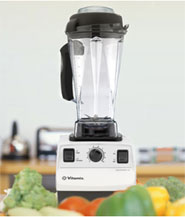 Hey there, everyone! Thanks for visiting Pure Jeevan. We want our welcome article, for now, to be this article on Vitamix blenders. There are certainly a few essential elements (e.g. good knives, cutting boards, a good food processor, etc.) to any raw food kitchen, and one of them is an awesome high-speed blender. Yes, there are many great blenders in the world, and yes there are a few decent top-of-the-line models on par with Vita-Mix. But, at the end of the day, our recommendation is the Vita-Mix (and yes, it's better than Blendtec, in our view). Here's a crazy video Jim did a while back for a Vitamix contest:
Note: That "free shipping" code, below, is no longer active. We'll let you know when we get a new free shipping code. For now, we hope you enjoy the video. :-)
We purchased ours 15+ years ago, and have subjected it to at least daily use (if not many times per day most of the time!) -- and it's still going strong. If you don't understand why a Vita-Mix is different from even a high-end blender from a department store, it's basically the sheer power. These things can pulverize pretty much anything -- time after time, without blowing out the motor. For example, you can make ultra-thick, healthy, raw ice creams day after day all summer long, and the machine will keep on working for years (and, in our case, we're almost ready to say "decades").
We used to be an affiliate w/ them, and are reapplying to be one. For now, we hope you like the video, above.

Jim here... We've always been fans of the Simply Raw people -- or, as I call them, the "Reversing Diabetes Naturally" people. Or ... are they the "Raw for Thirty" people? Seriously, they should probably settle on one name, don't you think? In any case, they emailed us again lately to let us know about a new video promotion they're doing, in which they'll be sharing some great videos from Morgan "Super Size Me" Spurlock, David "Avocado" Wolfe, Mike "Natural News" Adams, and Dr. Joel Fuhrman. (Sorry, I don't have a nickname for Dr. Fuhrman yet.) I haven't yet seen the videos, but I'll be checking them out ASAP to hear what these gents have to say in order to further awareness about this important topic. Here's the link:
In some recent Summertime Raw posts, we've focused on preparing delicious, nutritious raw foods *while* on the go. Today, however, we're doing an outing with all of the prep work done at home -- so no need to pack knives and cutting boards! We're also focusing in on a few seasonal ingredients. You'll see some really tasty uses for mint, and we'll also take a look at some wonderful edible flowers. Here's the video:
Read more: Summertime Raw: (Video) Undeniably Magical Sparkling Wonderment!

It's Fun-Filled Friday again---that week went by so quickly! So, what fun did you have this past week and what fun have you planned for yourself in the near future? It's very important to make the time for fun. We all know that, right? But, how many of us actually carve out the time to have some special fun without stress, without problems---a time when we can laugh and experience the joys of being alive?

This video is nearly 10 minutes long (sorry, we'll aim for shorter ones in the future), but shows a full process for making a delicious, spicy nut dip. From there, we show two options for making the sandwich -- one using dehydrated raw bread, another using lettuce as the wrapper. I wanted to add that the packaged raw bread used herein is from Love Force, a great company that has provided sponsorship support to Pure Jeevan in the past. Here's a link to their site in case you're interested acquiring some of their bread or finding out where it's sold. (It's very good, as are their raw organic energy bars!)
Read more: Video: Jim from Pure Jeevan Makes Nutdip / Raw Sandwiches!


Today for "Take the Time Tuesday," we'd like you to take the time to meet Mimi Kirk, whom many of you may know as the winner of PETA's "Sexiest Vegetarian Over 50" contest last fall. If you're interested in longevity, and how diet influences the way we look, act, think, and exist, then you'll definitely want to listen closely to what this vibrant woman, who is 71 years young, has to say. We spoke with Mimi for nearly an hour this weekend, and are happy to share her inspiring interview with all of you. Below, you can listen right here, or download a podcast MP3 version.

In this special five-part series, Joanna Steven uncovers where some top vegetarian athletes get their protein. Here's part one, focusing on Tim VanOrden's take on this issue.
When alternatives to the Standard American Diet are discussed, protein is on everyone's mind. There are many reasons why someone might want to eat a plant based diet, whether for allergy concerns, health reasons, or more variety. But nagging doubts often come up;? Are plant proteins adequate for athletes and body builders ? Are they really the preferred protein source of the human body ? Are they better than animal based protein or are they just consumed for environmental reasons ? To answer these questions, why not ask the experts:? triathletes, professional dancers, bodybuilders and extreme sport racers ? Here are the answers from some of the most competitive athletes in their respective fields.
Read more: Vegetarian Athletes Share: Top 5 Sources for Animal-free Protein (Part 1 of 5)

There is a certain irony that takes place when you launch a raw foods web site because, no matter how much you love and believe in what you do, no matter how solid the proof may be that the information you're providing is true and accurate, no matter how clearly it can be demonstrated by analyses of blood tests or tons of "before and after" photos that this lifestyle heals the human body, you're still pretty much bound by legal best practices to include a full disclaimer on your site. And, as much as you just write it once and kind of forget about it, it's always there. For practical reasons, of course we understand all of that. But beyond all of that, there's an implied message that "only a medical doctor" really knows what's best for you.
Well, in fact, we DO recommend working with a competent health professional. But what we do not endorse here is simply accepting whatever that professional has to say without question. So, the operative word would be "competent" in that recommendation.