Know Any Literary Animal Lovers?

Hi there PureJeevan readers! We wanted to let you know that Jim's new novel CHROO is available on Amazon. It's a crazy adventure involving a billionaire heiress, her Chihuahua BFF ("Chroo") and a host of human and animal characters. Find out more on Amazon! Here are some links:
I like this "travelogue" format, so let's continue! Here's Wendi's comments from their adventures in San Luis Obispo, checking out the raw vibes along the CA Central Coast!
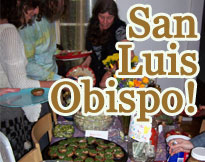 After a very active visit in the San Francisco / Berkeley area, we headed down the coast to San Luis Obispo, CA. There's a pretty active raw food meetup there and we were asked to stop in their town to give a talk to their group.
It was a nice drive south, but the sun is a bit brighter than we're used to (especially when driving long distances). When we arrived in the town, we were overcome by the beauty of the place. It's one of the most beautiful places we've seen in California, so far!
Read more: The Friendly, Mellow, Raw Groove of San Luis Obispo

Pizza Delivery at Pure Jeevan s home ! Yep, and it s not raw pizza, either. Maybe sometime in the not-so-distant future we ll be able to order delicious, life-giving raw pizzas for delivery to our home, but that time hasn t come. Even if it was possible today, I have a feeling we d still be ordering the greasy pizza that s going to be arriving here later today.
 You see, today is KDcat s 14th birthday. As much as she knows about health, nutrition, and the harms of consuming dairy, she has made a decision that she wants to order a pizza for her birthday and have it delivered. When she told me of her birthday wish, a very big part of me wanted to review how unhealthy such food is, but the other part didn t want to bring guilt to her decision of eating pizza on her birthday. I know she completely understands about foods and health, especially about how harmful dairy can be for her body. She was determined to have pizza, so I d rather she enjoy it than to eat while feeling guilty about it the entire time.

End of day 4:
Yesterday I decided to go ahead and consume what my body was telling me it wanted: cooked, fermented rice and lentil pancakes. Well, the restaurant nearby that makes the Uthappam doesn't serve them until 5pm and it was lunch time. So, I ordered the simpler, steamed, fermented rice and lentil patties called Idli.
***** DISCLAIMER: As with all of our posts here at Pure Jeevan, and particularly those coming up over the next week and a half (which will all be tagged with a new term, "Nadi Balance"), please refer to the disclaimer that runs at the bottom of all Pure Jeevan Pages. Wendi and Jim are health researchers, educators, and extreme self-experimenters. ******

Nadi Balance: Part IV...

Wow, is it Friday already !? Time flies when you're powered by 100% raw organic goodness! Today, we wanted to share an audio interview with you. Last night, Alex Ortner from the Movement to Reverse Diabetes Naturally interviewed us about our recent work helping them spread their message. We were honored to hear him introduce us as "two people that hold a special place in my heart right now, and I'll tell you why that is: They are probably the two most active people that we've had in the movement to reverse diabetes naturally."
Well, Alex, it was our pleasure! We met scores of new people during our work for RDN, generated major awareness about the movement, and spread the word about the raw food lifestyle as well. To listen to or download the interview, just visit their site, here. Topics covered include:

When you're young and learning the letters of the alphabet, anything that starts with the same letter as your name becomes really special. Well, ever since I was a child and saw a Winnebago RV with the giant "W" on the side, I've been enchanted with the idea of one day owning one and traveling the world (at that age, I didn't realize I'd have to cross oceans to see everything).
If you've been following us for a while, you'll know that I was bringing that vision to life. It took years of convincing, but Jim was finally ready for such an adventure and together we began making plans. For more than two years we've been preparing to tour the country, while teaching about raw foods along the way. Our lives changed so dramatically when we found a way to heal our bodies (and more), a way that can also help others, and we just couldn't sit still. We feel called to spread the word about the raw food diet so others can at least hear that there's another way, that there's something different to try in their quest for health. I knew that crossing the country in an RV, planting the seeds about a raw food diet along the way, would be an efficient way of spreading the word.
Hi Everyone! It's been a while since we've run a "My Raw Story" feature. So, here's one from my good friend Chris Paris, who I met and hung out with at the Raw Spirit Festival this past summer. I think you'll like his take on raw, his before & after pics, and the personal topics he covers such as the role raw foods played in his spirituality. -Jim

?

Jim here... Whenever I want to learn how to do something new, here's how I go about it:
>>> I practice. <<<
This past weekend we had the pleasure of Rhio and her partner, Leigh, visiting with us. Rhio was in town for a presentation on Genetically Engineered foods (more about that here) and she took the opportunity to spend some time with us. It was a lovely weekend and we talked about all kinds of things (yes, even non-raw food things!), laughed a lot, enjoyed delicious raw foods, and got to know each other better.
While they were here, Rhio and Leigh agreed to allow us to interview each of them for this blog. Since we needed to keep the interview under ten minutes (the maximum time allowed on most video sites), we decided to ask questions about topics we had already touched on with Rhio and Leigh during their stay--things we thought might be interesting for all of you to hear about.
Let's take a quick look at a few dessert pictures, then compare and contrast, shall we First up is a small slice of some normal pastry:
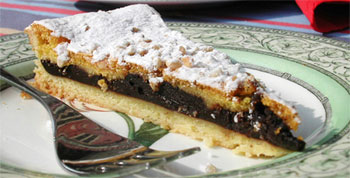
Looks sinful, right It seems to proudly display its bready crust, its gooey chocolate center, some sort of butter-rich top layer coated with lovable little bits and bobs, and a liberal sprinkling of confectioner's sugar to make the whole thing cute as a wintry scene from one of those holiday specials hosted by the claymation likeness of Burl Ives. I'm sure it's delightfully rich, too. A tad small, though, eh ? It's probably all anyone can take of such decadence without worrying about clogged arteries or putting in extra time on the tread mill for the next three days.

Sometimes you meet someone and you just know they have tapped into something special, something most of us search for but never quite find. That was the case when I met this lovely woman I'd like the rest of you to meet. There's a centered peace about her, down deep in her core, and yet she's overflowing with an energy that I've never seen matched by anyone else. She's delightfully insightful, intelligent, and playful all at the same time. ?
Take the Time to Meet