Know Any Literary Animal Lovers?

Hi there PureJeevan readers! We wanted to let you know that Jim's new novel CHROO is available on Amazon. It's a crazy adventure involving a billionaire heiress, her Chihuahua BFF ("Chroo") and a host of human and animal characters. Find out more on Amazon! Here are some links:

It's time for another "Makin' It Monday" installment!? This time, Pittsburgh raw foodies Joe Prostko and Tracey Anne Miller (along with videographer Heather) demonstrate their "Turbo Tornado Superfood Solution," which has (as you'll see) a *ton* of superfood ingredients. Take a look:
Read more: Makin' It Monday: Turbo Tornado Superfood Solution
Here it is...the Queen of all Juices! It's cooling, cleansing, light, easy, delicious, pretty, promotes weight loss, energizing, vibrant, and FUN!
Can one simple juice really be so wonderful for your body? Yes!! Following is the recipe, as well as some highlights about the ingredients and why it's so great for your body.
Cooling and Cleansing Juice
(Serves 1)4 medium apples

Today, and every day, I am thankful for lovely Mother Earth. Where would we be without Mother? May we always care for her in a gentle and loving way.
====================

"I sent out over 100 emails, now, and have been corresponding with the chair of the almond board. He s an ass."~Wendi, writing a few years ago in her "Almond Frustration" blog post.
Jim here again... Wow, that's an excerpt from a very fired-up Wendi, writing a few years ago about her frustration over the USDA's absolutely insane regulation that nearly all almonds sold in the United States must be treated with chemicals or heat prior to sale. I'm sure you know the story by now, so I won't rehash it here. (In case you do not, you can read about it in our original post, Wendi's Almond Frustration post (which even recounts a disturbing, related dream she had about this issue), or our last update post. It's an issue we've been following for years here.)
Read more: One Step Closer to the Return of Truly Raw Almonds!
Let's take a quick look at a few dessert pictures, then compare and contrast, shall we First up is a small slice of some normal pastry:
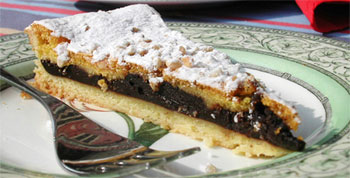
Looks sinful, right It seems to proudly display its bready crust, its gooey chocolate center, some sort of butter-rich top layer coated with lovable little bits and bobs, and a liberal sprinkling of confectioner's sugar to make the whole thing cute as a wintry scene from one of those holiday specials hosted by the claymation likeness of Burl Ives. I'm sure it's delightfully rich, too. A tad small, though, eh ? It's probably all anyone can take of such decadence without worrying about clogged arteries or putting in extra time on the tread mill for the next three days.

To help keep all of you inspired, we ve asked some remarkable individuals to share their raw food stories with you. Enjoy! (Today's "My Raw Story" is also a special installment for our Diabetes Awareness Week!)
?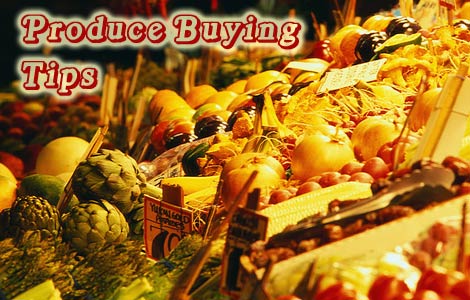
Wow, it's been four months since we've run an article in our "Produce Buying Tips" series! Well, in today's installment, we want to remind you that our tips don't stop at the grocery store; you want to make sure you store your produce properly once it is at home to keep it fresh for as long as possible. After all, what good is your amazing organic produce going to do you if it goes bad? (That would be some super-expensive compost!)
Since Wendi has a difficult time right now with many motions involving her shoulders and wrists, I've taken over the responsibility of putting our groceries into the refrigerator. (I'm usually the "carry it all into the house" person, and then she likes to put away the refrigerated stuff.) But, wow, who knew so much went into storing vegetables and fruits I had no idea some things required air circulation, while others needed to be kept in sealed bags. Over the years, Wendi has fine tuned a system for keeping our fridge produce as fresh as possible and for maximizing storage time.
Read more: Pure Jeevan's "Produce Buying Tips" Series, #3: Produce Storage
After so looooong, the much-awaited Episode 6 is here of "Know Your Food"! Aren't you thrilled? Well, WE are. We're fantastically excited to announce that we have SIX thrilling new eipsodes "in the can" (as we film buffs like to say). So, here's the first of those six, in which your humble nutrition researchers reveal the hidden secrets of cacao, that delicious tropical ambrosia that opens your heart like nothing else. So, grab a raw chocolate snack of your choice and curl up in front of your favorite flat screen. Here's the vid:
Whoa, what'd you think of the "Monkey Brains" scene ! Have we finally used EVERY SINGLE hoaky feature of the Windows Movie Maker software? (Don't answer... Those were rhetorical questions.) In case you couldn't read some of the nutritional information, here's a summary of the key components of this delicious bounty from the Earth's equatorial regions. Raw chocolate contains:

In Part 5 of this 5-Part series, Wendi talks with Leela Mata about meditation and diet. After discussing what meditation is and why people practice it, Mata Ji talks about diet and its effects on the mind. She then gives a brief explanation of how to meditate for those who are new to the practice, and demonstrates how to use a simple mantra (word or phrase) to aid in entering a meditative state.
Recently I've been to three potlucks in the span of four days. They've all been wonderful for different reasons -- one was a birthday party for a lovely young woman, Bethany, another was part of a women's circle that my friend, Melissa, invited me to attend, and the other was at my home as a meetup when Kevin and Annmarie Gianni were here visiting. Lots of fun, connecting with people, and raw foods to eat.
Sounds perfect, right? Well, something's been happening with me and raw foods over the past year. It became even more evident after eating at three different potlucks over four days. I've noticed more and more that when I don't eat something that I've created, I many times have reactions to the foods I've eaten. The reactions have ranged from flushed facial skin, slight headaches, hives, full-blown headaches, upset stomach, water retention, achy joints, etc. All signs of being sensitive to something I'm eating, right? I've narrowed it down to a few things, but it doesn't seem to be an exact science to knowing what's going to cause the reaction.
At home I know that I feel better if I don't consume garlic even though I love the taste and smell of it. When I eat too much of it I experience headaches and sometimes flushed cheeks. I gave up raw vinegar a long time ago because it makes my joints ache. Recently I noticed that whenever I eat Nama Shoyu I get a headache, flushed cheeks, and sometimes some hives. So, at home I can control my reactions to foods -- I simply avoid eating the things that sometimes trigger problems for me. I feel great most of the time because I eat more simply and my body doesn't experience any problems.
Read more: Something Has Been Happening With Me and Raw Foods

In this special five-part series, Joanna Steven uncovers where some top vegetarian athletes get their protein. Here's part five, focusing on Tonya Kay's take on this issue.
AVOCADO
Professional dance is of most challenging sports requiring athletes to perform at expert levels of flexibility, strength, coordination and emotional fitness in order to entertain their audiences. Having been vegetarian since age 7, Tonya Kay has built her glorious professional dance career entirely on a vegetarian diet.
Read more: Vegetarian Athletes Share: Top 5 Sources for Animal-free Protein (Part 5 of 5)