Know Any Literary Animal Lovers?

Hi there PureJeevan readers! We wanted to let you know that Jim's new novel CHROO is available on Amazon. It's a crazy adventure involving a billionaire heiress, her Chihuahua BFF ("Chroo") and a host of human and animal characters. Find out more on Amazon! Here are some links:

Happy Navratri!
You haven't been hearing much from me (Wendi) lately, for a variety of reasons. Over the next few days, I'll be celebrating Navratri and posting here on the blog at the end of each day. In my posts, I'll be sharing some of what has been going on with me and why you haven't seen much of me around, as well as comments on my celebration of Navratri.
This is Part II of a two-parter on raw food restaurants. Yesterday, we listed a half-dozen challenges that one might face when opening a raw restaurant. Today, we're focusing in on the more enjoyable side -- the potential advantages that opening raw restaurants offer over their cooked-food counterparts.
Let's dive into it... Here are six things we believe are advantages!
Read more: Some Thoughts on Opening a Raw Foods Restaurant -- Part II of II!


Our weekend is going to be filled with Spring cleaning. Many may not think of any type of cleaning as fun, but there's something special about Spring cleaning. Maybe it's because when we do Spring cleaning in our home, we tend to make it a family event. When we do things together as a family, even though there may be a little bickering here and there, but for the most part we have fun. There's something truly rewarding about working together as a team for something that is going to benefit everyone.

Let's stay sharp by learning about brain power! Did you know that the less exercise your brain receives through reading, learning new things (like you do here on our blog!), playing games, and contemplating puzzles the more it is likely to become weak and not serve you well into your centenarian years? Scientists have been trying to figure out ways to improve the brain's function and have learned a lot, but are still uncertain what causes Alzheimer's Disease, or any other form of Dementia.
If you ve ever known someone who suffers with a loss of mental capabilities, you know how sad and sometimes scary that can be. Last week, Jim posted a blog that touched a bit on the subject of Alzheimer s Disease. He wrote in that article, ?I want better than just a small chance that I ll live healthfully for a full lifespan. I want to stack the aging deck in my favor. ?Eating a healthy, raw food diet is something Jim was hoping to use in order to stack the deck in his favor of a life free of memory loss and full of vibrant health.
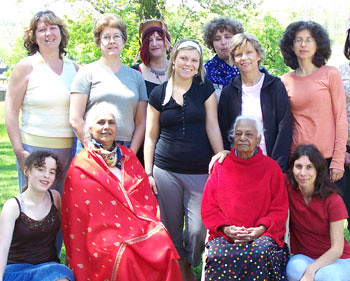
A partial group picture from the retreat.
The 3-Day Raw Food Spiritual Ashram Retreat was a success! All my time and effort that went into creating the event was well worth the experience. When Leela Mata and I discussed a possible raw food retreat about a year ago, I had no idea how to go about creating such an event. I have never done anything like this, so I approached it by asking myself: "What would I want if I was attending a raw food spiritual retreat " From there, I created a retreat that I would love to attend, myself. In fact, when it was completely organized and guests began signing up, I wished that an identical event existed that I really could take part in, as well!
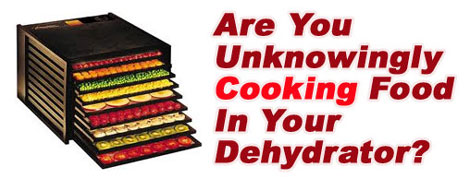
Those consuming a raw food diet sometimes use a dehydrator to prepare raw food dishes. They do this at low temperatures, below the point of actually cooking the foods, to intensify flavors, reduce the amount of moisture in the dish, and sometimes to take the chill off something they'd rather serve a bit warmer than straight out of the refrigerator. There is a practice that we've seen, however, that is actually cooking the very foods were taking such great measures to consume raw! Let me share an experience I had when I first started eating raw foods, that will help explain how some of us may be cooking our foods by mistake.
In the beginning of eating raw foods, my entire family loved the Vegetable Stir-Dont-Fry I used to make (you can find that recipe in the free eBook you downloaded when you first visited our site). One day I created a double recipe so we could eat more the next day, without going through the process of preparing it again fresh. The following day I took the bowl of Stir-Dont-Fry out of the refrigerator and put it into the dehydrator to take the chill off. It wasn't warming up fast enough on such a low temperature, so I thought I'd just cover the dish a little bit to trap in some of the heat that seemed to leave each time I checked the dish and stirred it around. So, I took a plate and placed it on top of the bowl with about an inch, or two, opening.
While I was growing up in the Midwest, I had a rich uncle who lived out East in Philadelphia. I didn't know him very well at the time, but would often glean stories via the family grape vines of his business successes. After high school, I attended college in Northeastern Pennsylvania -- Wilkes University -- where, incidentally, I first met Wendi! :-)
Being out there, I got to visit my uncle from time to time, and dine with him and his family. ?Among other things, he was quite the gourmand. I'm not so sure what he'd have thought of raw foods, although I suspect he'd have appreciated the many gourmet efforts.
You thought our "Know Your Food" series was dead ?!!? (Or, if you're a new reader, maybe you don't know what "Know Your Food" is yet!) Well, we've been poking around in the archives this week and discovered THREE lost episodes. This is HUGE... It's like one of those stories you hear every few years about some rare Hollywood film being discovered in a vault somewhere (laughing so hard)!
Over the next week or two, we'll be posting these three episodes. Today's episode is PUMPKIN, starring Wendi and her guest Ella (daughter of Melissa and Dave, who run the FoodUnderFoot blog we linked to recently). Once these missing episodes have been aired, this will usher in the dawn of a never-before seen level of production values for the Know Your Food series. The new stuff will totally win every major award available to YouTubers (continues laughing...).
Sure, we know pumpkins aren't in season right now. However, this video is sweet because of our special guest. So, enjoy the Pumpkin episode:

Here's Part Two of our interview with Hatice Yavuz, co-owner of Cousin's I.V. raw restaurant in Chicago. Yesterday we talked a lot about Cousin's restaurant and the stories behind that (as well as some interesting notes about European and Turkish culture and attitude toward raw foods). Today we'll get into some of the effects experienced by many after going raw -- things like raw food detox and the strengthened connection between mind and body. Interesting stuff!

You know about raw foods, I know about raw foods, and we both know people who know about raw foods. It seems like more and more people know about this lifestyle than ever before -- and that's absolutely true! But, it's still true that, on the whole, the average person on the street knows almost nothing about it. As such, if you're a raw foodist, you often find yourself in situations in which you're explaining it to people. (Obviously, as raw foods bloggers, we're more than happy to do so, of course!)
Amid all of these explanations to new friends and new readers, it's not too uncommon to hear people scoff at the idea in one way or another. Common objections include things like:
There's an old saying that "What Happens in Vegas, Stays in Vegas." But we're not ones for keeping secrets. So, here's the low-down on Wendi and KDcat's time in Sin City -- straight from Wendi's travelogue, once again!
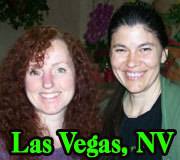 We drove to Las Vegas from California, and loved seeing the change as our surroundings became a desert. The snow-capped mountains are such a beautiful contrast in CA, but especially here in Nevada where it's so dry and hot!
This stop was longer than expected, since we decided to change our schedule a bit in order to get some more relaxing time in--and also to allow KDcat to have some fun that didn't involve raw foods or Pure Jeevan activity. ?We decided to hold off on visiting a date farm and the grand canyon (two activities we'd had planned for this leg of the trip) until Jim could do those things with us as a family. We especially missed him during this part of the trip, because he's always wanted to see what Vegas is like in person.
Read more: Las Vegas, Nevada: Relaxing Times and the Raw Scene at Go Raw Cafe