Know Any Literary Animal Lovers?

Hi there PureJeevan readers! We wanted to let you know that Jim's new novel CHROO is available on Amazon. It's a crazy adventure involving a billionaire heiress, her Chihuahua BFF ("Chroo") and a host of human and animal characters. Find out more on Amazon! Here are some links:
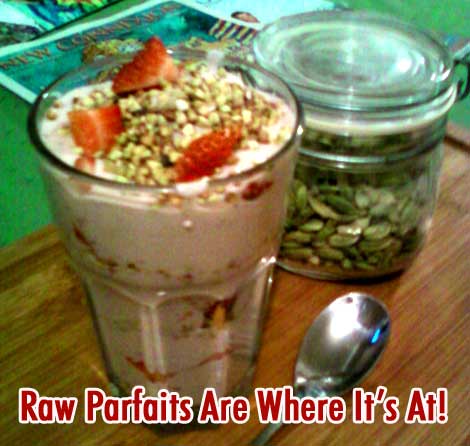
Above is a quick camera-phone pic I posted to our Facebook group lately. I did talk about making raw parfaits on that page, but want to talk a little more about them today, as it's just the perfect time to be talking about delicious raw parfaits (at least here in America, in any case, where many of the fresh berries you'll probably want are cheap and in season). I'll share a brief story about them, and then share my own basic recipe, and then we'll make some plans for MORE parfait talk really soon, okay?
I'm almost hesitant to talk about raw food parfaits here because, well, if the government found out how unbelievably healthy and ENJOYABLE parfaits are, I'm sure they'd make them illegal. But, I'll take a chance...

Today we wanted to do something fun and a bit unusual. We raw foodies are a creative bunch, so we? thought, "Why not profile a handful of raw musicians !" Sounded like an interesting project, as we've all heard of at least a few raw foodist musicians out there. So, here are a dozen raw musicians to get you started -- that's right, FOURTEEN wonderful raw musicians!? (Since when does a dozen equal fourteen? Well, we figure that cooked foodies have their "baker's dozen," which everyone knows is thirteen.We figure: Why be outdone by the cooked food world, eh? So, we're redefining things a bit!)
Anyway, some of these bands/musicians are internationally famous; others are names you may not have heard before. We asked some of our friends to suggest raw musicians for today's post and we were surprised with the number of musicians mentioned! All those listed below are reportedly raw (or, in the case of whole bands, at least one or more of the members are raw foodists).Please note that this is by no means a complete list.

I want to admit something to all of you: Sometimes I still cry because of how people treated me when I was obese. Because I stuffed all of my "negative" emotions deep inside my entire life, it's going to take some time to fully release them. I'm working on it, however, and making tremendous progress with healing myself on all levels. I'm not telling you these things so you'll feel sorry for me, however. I'm telling you because I am thankful for all the pain I endured. It shaped me (in more ways than just my physical appearance) into the person I am today.
Even though it sounds strange, and somehow wrong to feel this way, I'm thankful that I was obese. I'm thankful for all of the experiences during my life, even the extremely painful, traumatic ones. Maybe if I was a different kind of person I would wish that those things didn't happen to me. However, I am using those experiences in positive ways. They've helped me understand people even better, and to understand myself on a deeper level, as well. When people reach out to me it's not only because I'm an approachable person, it's because they sense that I understand them--and they're right. I DO understand them. I understand you. My experiences, coupled with my gift of empathy, help me relate to you in a way that maybe not everyone else is able to do.
Pardon the video quality there. A.J. and I shot that video at night and, although it looked decent on the camera's preview screen, the actual video came out almost totally black!? However, with a bit of video processing, we were able to salvage it. It's not optimal video, but it's at least watchable (and, hey, also conveys a little of that nighttime festival feeling).
A quick note about veganism before I share some additional info... As we've stated here many times, Pure Jeevan advocates a raw vegan lifestyle. What do we intend that to mean, exactly? Well, strictly speaking, veganism excludes all animal products, both in terms of diet and lifestyle.
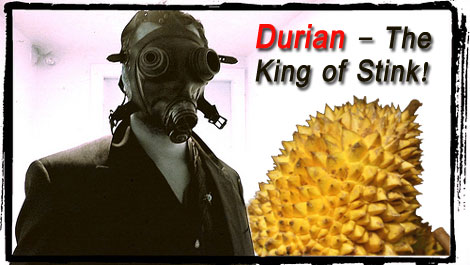
We tried it in the past, this most unusual fruit. While in Chicago recently, we decided to give it one more try! You see, the first time we tried it we were ... let's just say "not big fans" of the infamous durian. (Here's an episode of Kevin Gianni's Renegade Health Show, shot in our home, documenting that day.) It's a stinky fruit to most, although some claim to enjoy the bizarre odor (which is sometimes described as dirty sock and propane gas smell). If you can get past the smell to give it a taste, you'll be greeted by a taste as strange as the odor. Wendi describes it as a sweet onion pierogie, but each person seems to have a different opinion about this odd fruit.
In this current video our raw friend Debbie Gedayloo-Bennett, whom we met in Chicago, jumped at the opportunity to hang out for a bit of a durian experience. Debbie is on the pro-durian side of the fence that divides those who love and those who hate the alien-like fruit. Wendi was still sitting on the fence, not making up her mind after the initial taste with Kevin and Annmarie. Jim was adamantly sitting far from the love side of the fence, refusing to even attempt approaching the pro side. Debbie was a pro in opening this spiny fruit, so she agreed to open it while on video so that we could share the experience and knowledge with all of you.

Today, we thought we'd share another non-diet-oriented explanation of obesity. It's from Rhonda Byrne, author of the international multi-media phenomenon known as "The Secret," which provides readers with in-depth philosophical explanation and instruction with respect to the Law of Attraction.
Wendi and I have The Secret on CD, and often enjoy listening to it. I think, in fairness, we both have a few legitimate criticisms about certain aspects of it (and I'll share one or two, below). However, on the whole, many of the ideas within resonate deeply for us and we find much of the underlying message profoundly uplifting and empowering -- especially (for me) much of the discussion regarding maintaining a healthy, positive, optimistic attitude and practicing gratitude.

Jim here... Wow, how awesome is it that today's Makin' It Monday falls just one day after Mother's Day -- and that we had ?a very special guest edition ready to post featuring ... ?my awesome mom! ??!!! ?I love my mom so much ... she's the best mom ever! And you'll love watching her demonstrate how to make 100% raw hummus. Mom might be 100% Italian, but she makes a pretty mean 100% Lebanese raw hummus, which is a pretty popular dish in my family. Here's the vid!
Read more: Makin' It Monday Guest Raw Chef Edition: Jim's Mom Makes Raw Hummus!

Wow, today is a really special day: Jay Kordich's 86th birthday! There must be millions of stories of how Jay has touched the lives of people in enormously positive ways. Here's ours...
Back in the early 1990s when we moved to the Washington, D.C., area, Wendi got a job in Arlington, Virginia. When she walked into work one day, one of the other workers there was absolutely glowing. So, she asked the woman, "Do you have a new boyfriend or something ?!!"

Organizing the 3-Day Raw Food Spiritual Ashram Retreat has brought with it the bonus of meeting some fantastic people and the opportunity to learn about their amazing raw food snack companies.

Hi there, lovely Pure Jeevan family members!
It's so sweet that many of you are concerned about us, wondering where we are and what we are doing since the blog has been quiet for quite some time. We feel very loved! *blows kisses to everyone*
Well, our trip to Portland, Oregon, went well. We bought the fixer-upper home that will eventually house Pure Jeevan, and did some preliminary work on it (it's a *true* fixer-upper and is going to require *a lot* of work and investment). A few times during our stay in the new home, Jim and I both looked at each other, wild-eyed, wondering what we had done. Following one's intuition can be a bit scary at times, but we've learned over the years that things always work out for the best and that these sometimes scary, unknown times are what help us grow and learn in ways we had never imagined.
The new Vitamix container arrived within two days (they knew we were hard core Vitamix users and put the container in the mail the day we ordered it to replace the broken one). So, what was the first thing we made in our shiny new container (after washing it, of course)? A DELICIOUS coconut smoothie!