Know Any Literary Animal Lovers?

Hi there PureJeevan readers! We wanted to let you know that Jim's new novel CHROO is available on Amazon. It's a crazy adventure involving a billionaire heiress, her Chihuahua BFF ("Chroo") and a host of human and animal characters. Find out more on Amazon! Here are some links:

Jim here... A few months ago, I was in our local food co-op's juice bar. I'd ordered an apple juice and had cringed when I saw the barista chop up four Granny Smiths and nonchalantly toss the whole lot, seeds and all, into the juicer. That juice was for someone else. So, when my order came up, I politely requested that he cut the seeds out -- a request he reluctantly granted, although not without showing considerable annoyance. My thinking was: Hey, those seeds contain cyanide! Why would I want to consume that, even in small amounts
 But then... Have you ever known anyone who died from eating apple seeds? ?I know I haven't. Also, after mentioning this to a few people I know, I found that a number of them regularly ingest apple seeds. And, well, they're still living. So, is there any truth to the rumors? And, should we be concerned at all about this?
Read more: Should You Juice the *Whole* Apple, Seeds and All?

Next weekend I'll be at the Green Festival in Washington, DC. helping Natural Zing at their vendor booth (I'm completely in love with Natural Zing because of their honest business ethics and commitment to having the highest quality products available---and the president is a truly beautiful individual). My dear friend RawBin will be picking me up next Thursday for a RAWsome weekend and I'll fly back on Monday!
Here's a list of some Green Festival facts from their Web site:
Here's an update from Wendi. I think this can be considered, with 99% confidence, the big announcement:
Of course, there's that 1% chance that something unexpected will happen. But, Portland feels right. It always has for us; we nearly moved there in the late 1990s. We had books on Portland back then, and I was buying their newspaper each week to hunt for jobs. It just never panned out, though. I suppose we were meant to live in Pittsburgh for a spell. It would be easy for me to list many reasons why Pittsburgh served a purpose for us. But, yeah, I think we're Portlanders at heart. So much about that city resonates with us. It'll be a homecoming, for sure! I want to reiterate a few things that I'd written in comments recently, slightly clarified in places.
Read more: Pure Jeevan Perceives Peace, Purpose, and Prosperity in Populous Portland!
***** DISCLAIMER: As with all of our posts here at Pure Jeevan, and particularly those tagged with a new term, "Nadi Balance, please refer to the disclaimer that runs at the bottom of all Pure Jeevan pages. Wendi and Jim are health researchers, educators, and extreme self-experimenters, not doctors. ******

Yesterday, we talked about live blood being a fantastic indication of overall health and well-being.Wendi's initial live blood review didn't show the extent of the Lyme disease. But, it did show an indication that something was going on (while Jim's blood showed overall health).
Read more: Nadi Balance: Exploring Fats and What Finally Healed Wendi

"I sent out over 100 emails, now, and have been corresponding with the chair of the almond board. He s an ass."~Wendi, writing a few years ago in her "Almond Frustration" blog post.
Jim here again... Wow, that's an excerpt from a very fired-up Wendi, writing a few years ago about her frustration over the USDA's absolutely insane regulation that nearly all almonds sold in the United States must be treated with chemicals or heat prior to sale. I'm sure you know the story by now, so I won't rehash it here. (In case you do not, you can read about it in our original post, Wendi's Almond Frustration post (which even recounts a disturbing, related dream she had about this issue), or our last update post. It's an issue we've been following for years here.)
Read more: One Step Closer to the Return of Truly Raw Almonds!
Continuing on, again, with Wendi s San Francisco travelogue:
After leaving Pete and Blessing, we had a little time before our next meeting. So, KDcat and I explored San Francisco a bit. We saw the largest rainbow flag we've ever seen, experienced the steep hills (much steeper than the ones in Pittsburgh), and checked out an overview spot called Twin Peaks. Our San Francisco host taught us later that evening about how to "curb" your car and always apply the parking brake (which is necessary in a place with such steep hills).
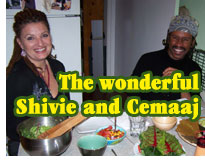 Later we met up with Shivie and Cemaaj, who heard we'd be in town and invited us to visit them for a raw meal? in their home. Wow, what a delicious and beautiful meal we were served! Shivie and Cemaaj are gentle, loving people with a true gift for preparing and serving gourmet raw foods. We were honored to be invited to visit with them and loved them both instantly. They were a lot of fun getting to know, and very generous (sending raw foods with us before we left to eat and share with our San Franciso host). Cemaaj is also a gifted musician and taught KDcat some rhythms on the djembe African drum, which she quickly learned and enjoyed very much! Cemaaj is a gifted teacher and great with kids. It was fun watching him ease her into the instrument, which she now says she'd love to own and practice on!
Read more: Part 3 of 4: Glowing Gypsy Gals Glimpse the Glorious Golden Gate's Gastronomical Goodness
Angela Stokes, well known and loved by many in the Raw Food Community, was interviewed on CNN back in September. The story was so popular that it has been mentioned on CNN, again! So, I'm reposting my original blog entry about the interview, below, for anyone who missed the interview or this blog entry.
Below you can see the interview of Angela Stokes that originally ran on CNN:
Read more: Angela Stokes on CNN: Did A Raw Food Diet REALLY Help Her?

On this Thankful Thursday I am feeling especially thankful for the Internet. Without the Internet I wouldn't be able to learn as much as I've learned about raw foods in such a short period of time. The Internet has connected me with people from all over the world who are also interested in natural health and raw food living. I am part of a larger community, one that would never exist without the Internet.
So, today I am especially thankful for the Internet. What are you thankful for today?

To keep all of you inspired while we are away, we've asked some
remarkable individuals to share their raw food stories with you. Enjoy!
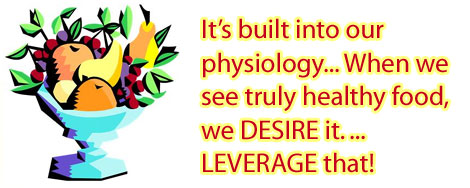
For many people, a change in diet is largely a mental issue. You *decide* that you're going to do something different, and then commit to it. You may shop a little differently than before, but quite often that is the extent of any action taken (other than preparing and eating the new foods rather than the old ones).For many, the commitment aspect is the trickiest part. ?Books could be written on this subject alone (and we're sure we've discussed this at length here on the blog).
Today we want to share a super-easy tip to help with the commitment side of this: Keep your fruits and vegetables VISIBLE.

I am very fair-skinned, with light eyes and medium-colored hair. For as long as I can remember, the sun made me feel ill. The older I got, the sicker I'd feel. I felt uncomfortable in the heat, my skin would feel all prickly, I got horrible headaches, and sometimes I even got sick to my stomach. I've always loved being out in nature, but on really sunny days, it bothered me and I'd try to stay in/near the woods and the shade.