Know Any Literary Animal Lovers?

Hi there PureJeevan readers! We wanted to let you know that Jim's new novel CHROO is available on Amazon. It's a crazy adventure involving a billionaire heiress, her Chihuahua BFF ("Chroo") and a host of human and animal characters. Find out more on Amazon! Here are some links:
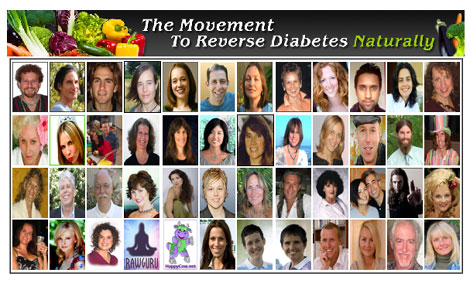
A few weeks ago, we hosted a Diabetes Awareness week here at Pure Jeevan. This was our contribution to the larger Reversing Diabetes Naturally movement that we blogged about. We wanted to let you know that the package of bonus materials offered to people who purchase the Simply Raw DVD is quite amazing! (See this post for details.) We reviewed all of the materials ourselves, and it's just a ton of great information.
The original deadline for receiving the free bonus materials was the end of April. However, the deadline has been extended through Friday, May 8. So, if you know anyone who has diabetes who could benefit from either the ?Simply Raw? documentary and/or the companion film, ?The Ultimate Enyclopedia of the Raw Food Listyle," simply point them to http://tinyurl.com/pj-diabetes.
Read more: Two Days Left for Raw Food Bonus Materials for RDN Movement

Here's a video demonstrating a technique for making super-fast, vibrantly beautiful, tasty salads! If you frequently find yourself in a rush, but also want a healthy meal, definitely check out this mandoline technique. (Further commentary below, after the video...)

Jim here... Many people write to us asking whether we own pets and, if so, whether they are raw, too. Well, I wish I had a straight answer for you, but I think the answer is better told via a dedicated blog post.
As I'm writing this, part of me is tempted to include this post in our "My Raw Story" series. You see, Julia (pictured above) had some serious health issues just after we adopted her from a local rescue shelter, and we're still relatively early-on in our attempt to understand and reverse these issues.
For some odd reason, I've had the privilege of "doing Thanksgiving" with a lot of different friends and families over the years. Because of this, and of course just from talking with others and reading things others have posted, I'm fairly certain that Thanksgiving means different things to different people.For some, it's their favorite annual holiday and fills them with joyous memories of Thanksgivings past and incredible anticipation of Thanksgivings to come. Some historian friends of mine seem fascinated by the historical aspects of the holiday -- the whole story of the pilgrims, etc. On the other end of the spectrum, I've actually encountered a few people who take offense at the very idea of this holiday (and they've got some convincing reasons to protest the wider celebrations)!
 While all holidays are certainly "food-centric" by tradition, it's arguable that no other holiday (at least here in America) can match Thanksgiving's reputation in terms of feasting. It's kind of funny when you think about it because many holidays (or, "holy days") are actually traditionally observed by abstaining from food. So, there are fasts, and feasts. I think the majority view, based on my own sampling of various friend and family traditions, seems to be: It's mostly about having a huge meal. Yes, there is certainly an undercurrent of being thankful out there. A few families I've been with have had traditional, almost ceremonial, activities that went along with the meal (e.g., going around the room, taking turns stating what you're grateful for).
Leaving Sin City, our fearless raw travelers headed south to Arizona for all sorts of raw food adventures. First up was a trip to Prescott Valley to meet Abi and Eli. Let's take a peek into Wendi's travelogue again, shall we
 You probably haven't met our official tour guide yet. We call her Simone. She's a bit testy at times, but always gets us safely to our destination (although sometimes in rather roundabout ways). She added an extra one-time $89 fee to our trip budget, but we're very satisfied with her performance so far. You see, Simone is our trusty GPS unit!
Leaving Las Vegas, she guided us through the Hoover Dam area on our way to Arizona, a geographic area that I think would be better described as a "state of extremes." There, we experienced super hot, sunny days, freezing nights, snow outside even when it's sunny and hot, and also a bizarre experience we had in which some bananas actually froze and then nearly roasted all in the same day.
Read more: Arriving At Abi's Arizona Abode After Arduous Attempts
Jim here... Thought we'd share some hidden camera footage from the Pure Jeevan household. Didn't you know ? ... the Pure Jeevan household is under continual video surveillance!? We have an enormous bank of these cameras, all feeding live streams to our costly, off-site high-tek storage facilities, monitoring every room in the house -- all to capture moments of inspiration such as this one. Why carry pen and paper all the time when you can simply install hundreds of "inspiration-cams" and pay techies to maintain a gargantuan bank of petabyte hard drives ? So, in this clip, the actual origin of an idea is captured. (We totally weren't just acting, ok ) So, having scoured said bank of petabyte hard drives, we isolated the following clip --thought you'd enjoy it as a preview of what's ahead tomorrow.

Just a quick post on what may or may not be considered "weird" for our inaugural "Weird Wednesday" post. According to a few web sites I checked, around 3% of the population (and I'm assuming this means U.S. population) is vegetarian. It looks like maybe 1% (possibly a little more) is vegan. Of every 100 vegans, how many do you suppose are raw foodists? (Actually, I'm asking; I didn't find any solid answer to that.) Maybe 1 of every 100 vegans? What do you think?
Here's a painfully unscientific, yet still slightly educated guess:

Wow, is it Friday already !? Time flies when you're powered by 100% raw organic goodness! Today, we wanted to share an audio interview with you. Last night, Alex Ortner from the Movement to Reverse Diabetes Naturally interviewed us about our recent work helping them spread their message. We were honored to hear him introduce us as "two people that hold a special place in my heart right now, and I'll tell you why that is: They are probably the two most active people that we've had in the movement to reverse diabetes naturally."
Well, Alex, it was our pleasure! We met scores of new people during our work for RDN, generated major awareness about the movement, and spread the word about the raw food lifestyle as well. To listen to or download the interview, just visit their site, here. Topics covered include:
Wow, is it really Episode 3 already? How time flies! Remember way back when we started this informative, informational, nutrition-oriented "Know Your Food" series? Seems like ages ago, doesn't it? (Oh, wait... It WAS ages ago. It's just taken us a while to get up to speed with this video stuff!) Anyway, here's the video, followed by some camera/video editing news -- oh, and of course some highly urgent celery information. (Okay, it isn't really urgent at all; we just needed to add a dash of drama.) So, see what you think. You might even learn a thing or two about our stalky green friend.
Not TOO bad, right? We're getting to our goal of roughly 3-minute episodes. Of course, this is still one of our first attempts, shot last Sunday. We thought it was decent enough to not entitle it "salvaged" as we did the previous installment.
In a recent post we announced that we were interviewed by Rhio for her Hooked on Raw with Rhio radio show that airs on NY Talk Radio (formerly known as Tribeca Radio). Rhio is an amazingly talented woman; we encourage you to check out her Rhio's Raw Energy site that has a lot of helpful information about the raw and living foods lifestyle.
Rhio talked with us about all of the projects we've been working on. She was particularly fond of the All Raw Directory, but she was also thrilled about our cross-country raw food tour and the raw food publishing company that we'll be starting in the near future. She asked us about our successes with the raw food diet, about our daughter, and so much more. If you have the time, we'd love for you to listen to the interview and let us know what you think! It was our first professional interview and we enjoyed it!
Here's a link to check out interviews that Rhio has conducted: Hooked on Raw with Rhio/NY Talk Radio.
Read more: Podcast Available: Rhio's Interview of Wendi and Jim Dee
Jim here... Thought I'd cross-post a discussion I put up on Give It To Me Raw yesterday.

Recently, I saw an article advocating a ban on banana consumption based on the premise that, if you don't live in the tropics, you have no business eating tropical fruit. Pointing to transportation costs and the related environmental impact of such transportation, the article argues that, by eating bananas, you're contributing to the destruction of the environment.