Know Any Literary Animal Lovers?

Hi there PureJeevan readers! We wanted to let you know that Jim's new novel CHROO is available on Amazon. It's a crazy adventure involving a billionaire heiress, her Chihuahua BFF ("Chroo") and a host of human and animal characters. Find out more on Amazon! Here are some links:

Hey everyone! It's nice to be more or less back in the swing of things again after an unexpectedly long stay in Chicago last week. You know, staying an extra three days on a trip isn't so bad, though. I imagine that if we had known that we were staying six days instead of three, we probably would have packed way too much. So, there are definitely advantages to unexpected happennings!
Anyway, here's another look into a Chicago-area raw food restaurant. This time, we were able to sit down with the owners, Danny & Kathy Living. The video starts with some footage of some gourmet raw dishes (a raw burrito, a raw falafel, and a raw dessert), and then gets into the interviews.
Read more: Pure Jeevan Visits Borrowed Earth Cafe, Interviews Amazing Owners Danny & Kathy Living!
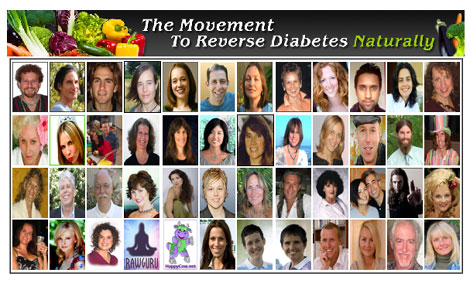
Wow, what an amazingly informative week here at Pure Jeevan. We've been featuring some great "My Raw Story" installments focusing on diabetes reversal via raw foods (and have more to come!). We've also been actively trying to encourage you to step forward and join the movement to reverse diabetes naturally.
Why are we dedicating an entire week to diabetes?
- 8% of the US population has diabetes. That s 23.6 million adults and children. 17.9 million are diagnosed. 5.7 are undiagnosed.
- There are 57 million people with pre-diabetes in America. That s 19.3% of the population!
- Heart Disease & Diabetes: Adults with diabetes have heart disease death rates about 2 to 4 times higher than adults without diabetes.
- ... and MANY more alarming statistics. See our diabetes page for more!
Many individuals have no idea that diabetes can not only be reversed via a raw food diet, but a person's life can be filled with health and vitality again. This Saturday, April 25 (Wendi's birthday!), is Reversing Diabetes Naturally Awareness Day. Together, we can spread this important and life-changing news.
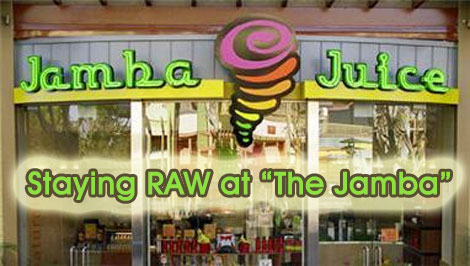
As a follow-up to yesterday's McDonald's-bashing post, I thought I'd post another perspective -- namely, that not all chain smoothies are bad. I can't claim to have tried them all, but I can report with confidence that, for raw most foodists, a trip to Jamba Juice can be awesome!
Here's part two of Wendi's travelogue from Sedona:
After leaving ChocolaTree Cafe, and interviewing the lovely Kelly, we went to the famous Sedona Airport vortex spot, but there was no parking, so we drove to the top of the rock/mountain and there was a farmer's market going on. We took a quick video of what was happening up there, to share on the blog. There was a cool musician playing: Vighas Kendzia, who plays piano, native flutes, sax, and more. He's from musicfromthegarden.com and I told him he'd be on our site. So, if you made it here to check out the video, welcome, Vighas! :-)
From there, we headed out to find a vortex spot that Kelly described. I'm not sure if we found the exact spot, but we really enjoyed the place we found. We ate our lunch there and it was DELICIOUS! The water, the trees, the large boulders, the fresh air...it was a very special place. We then drove to one of the more well-known hiking/vortex spots: Bell Rock.The hike in is a bit over a mile, then there is the climbing (which isn't really recommended by the park officials, but it's absolutely necessary to fully experience Sedona!). I gave KDcat some space to explore the area a bit on her own, as this was a very special time for me a few years ago. There is a certain energy and cleansing that happens when visiting Sedona. If any of you are going through changes in your lives, or feel like there is a shift that needs to happen, I highly recommend visiting Sedona for a few days. KDcat felt some powerful personal healing, which didn't surprise me at all. It's a place I'd love to visit every few years, or so, as it definitely holds some sort of healing energy. Maybe it's just the views, or the peacefulness of being away from everything. Whatever it is, I highly recommend visiting Sedona and climbing around on the rocks!
Some of you know about my love of Sedona, AZ, especially those who were following the Pure Jeevan blog a few years ago. It was a visit to Sedona in 2008, for a Raw Spirit Festival, that my life dramatically changed once again. This time it wasn't the food that was healing me, but it was related to the raw food lifestyle. I felt healed on many levels while there in Sedona, surrounded by the beautiful red rocks, cool and sandy earth beneath my bare feet in contrast to the warm sun on my skin, and embraced by a vibrant, loving community of like-minded individuals.
There's a certain magic to Sedona, if you believe in such things (well, I suppose it's there even if you don't believe). ;-) ?For me, I believe that we can many times find scientific reasons to explain much of the magic in this beautiful world, but that doesn't have to diminsh the experiences we have. Sedona is known for its powerful vortex energy, which has a way of stirring up our own energy systems and bringing about healing, balance, awakenings, etc. ?Is this energy measurable through science, or is it more metaphysical in nature? I don't know and to be honest, it doesn't matter to me. There were life-altering changes that took place while I was in Sedona in 2008 which rippled out beyond me and touched the lives of those very close to me, as well.Here's a quick video of a Sedona Farmer's Market and a clip of KDcat and I at an area we claimed to be flowing with vortex energy, even though it wasn't necessarily one of the more touristy vortex destinations.
Read more: Sedona Farmer's Market and Lunch at a Vortex with KDcat
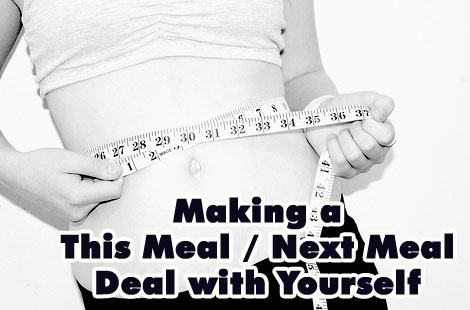
Wow, could this really mark 800 raw food blog posts ! ?We must be obsessive orthorexic raw foodies to have achieved that level of focused health editorial journalism! Post #800 deserves to be something really useful (not that the others aren't or do not deserve this), so we'd like to pass along a fun idea. I guess all of that talk of Donald Trump yesterday got me thinking about making deals. We make deals with others, of course, but I think we also sometimes can make them with ourselves.
I'm so glad to be out of the corporate business world these days, but I did pay attention while there, and perhaps even learned a thing or two. Today's post is related to that in a way. You see, I was once at a sales training seminar when the speaker advised following a "this job / next job" strategy with clients. What that means in business is that, when you're in the middle of one job working for someone -- say, for example, you're a printer working on a brochure for a company -- you would make a point of saying something like, "Hey, this brochure is going great. I was wondering what else is coming in the near term so that we can make sure to be ready for it."
Rawbin Rescues Turtle
I had a fantastic time at the 2008 Green Festival in Washington, DC. My wonderful friend, Rawbin, picked me up last Thursday and we had a nice drive back to her place in Maryland. She lives in an almost magical setting with wooded areas, horses, a goat, chickens, dogs, and cats! KDcat will not want to leave when she visits Rawbin someday. Above is a video of Rawbin rescuing a turtle that was in the middle of the road near her home.

Is low fat more expensive? When I was eating a lot of nuts and seeds, in the back of my mind I kept saying, "Someday you'll eat less of these nuts and seeds, and you'll save a lot of money." I really believed that to be true because organic, raw nuts and seeds are outrageously expensive.
For one hundred days, I'm transitioning to a lower fat raw diet. I'm down to fats only in the evening, and for the next ten days those fats will only come from avocados, young coconuts, and possibly some hemp seeds. If I'm not hungry for the fat, however, I'll go without it. That hasn't been the case yet, though. By dinner time I'm ravenous and wanting to eat heavy, dense foods to calm the hungry beast in my belly. Even though I've been including some fats in the evening, I'm eating significantly less than I normally would if not doing this challenge. So, I've been eating more fruits and vegetables to get the calories I normally received from nuts and seeds.

Brutal Honesty. 100% Transparency. Unedited Feedback. Absolute Truth. ... How often are we treated to these things by those we know? How likely are we do conduct ourselves with these ideals in mind?
Propriety. Politeness. Decorum. Political Correctness. ... How often do these conventions in others prevent us from knowing what others think of us? How often do these conventions in ourselves restrict our own words when directed at others?
Read more: The Gift of Honesty: The "Crazy" Life of Raw Foodists

I have enjoyed including information about new people, companies, and sites here in our blog for you to meet each Tuesday. Today, however, I want to do something a little bit different. Instead of someone or something being introduced to you, I'd love for YOU to introduce yourself to ME!
Take the time for ME to meet...

We have two events scheduled for this weekend and we are looking forward to both of them! The first is a Raw Food Potluck Meetup. I haven't decided what I'm creating, yet. So far I'm thinking I'll make either an apple pie or some beet noodles with alfredo sauce, but I know how things usually go when it's time for me to prepare something special. I usually feel like I don't want to make what I had planned, and I search around in the fridge to see what pops out at me. I almost always go by what I'm inspired to create at that moment. So, who knows what I'll end up making. I'll try to take pictures of my creation as well as pictures of the other raw food dishes that others bring.
This will be our first raw food potluck. When I first went raw it was something I was doing special for myself, by myself, so I didn't join any of the raw food meetups and didn't want to make it a group activity with my friends.After two years of raw (a little over one at 100%), I've done (and continue to do) what I needed for myself.Now, I'm ready to share my experiences with everyone and to be an active member of the raw food community.So, I'm looking forward to the raw food potluck tomorrow!? You are welcome to join us at the potluck if you are in the area!
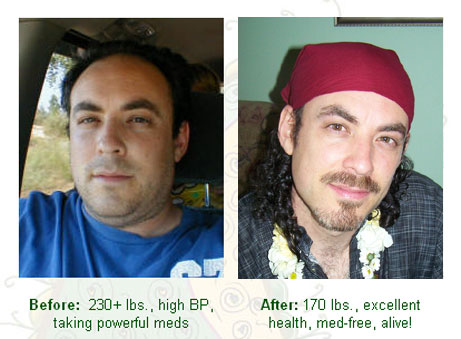
Jim here... Sorry for being away for so long. We've got SO much going on these days, it's mind-boggling! More on that later, as I have something in mind already for today...I should start by clarifying that I've been basically raw for almost 4 years now (high-raw, you might say). During the first nearly-two years, I still ate meat from time to time. Actually, I still ate (and drank) almost everything from time to time -- sugars, processed foods, alcohol, you name it -- only less than I did before, and within the context of a dietary intake consisting of a significantly higher percentage of living foods. In those early years, I'd estimate I was averaging 75-90% raw. Not bad ... I definitely experienced improvements in my health!
 The big change in consciousness didn't follow until two years ago. (This is an interesting point because, as you can see, I wasn't "ready" for a bigger change for two years into eating a lot of raw foods!) I suppose the difference was that, during the early years, I was pretty much raw by default rather than by conscious decision. As Jules said in Pulp Fiction, "... my girlfriend's a vegetarian. ?Which more or less makes me a vegetarian..." Yeah, that was my case back then, too, although I certainly grew into it (and am thankful that I did).
Read more: Reflecting on Two Years of an Exclusively Raw Die