Know Any Literary Animal Lovers?

Hi there PureJeevan readers! We wanted to let you know that Jim's new novel CHROO is available on Amazon. It's a crazy adventure involving a billionaire heiress, her Chihuahua BFF ("Chroo") and a host of human and animal characters. Find out more on Amazon! Here are some links:

Last week for Take the Time Tuesday, I introduced you to a resource for meeting others in your local community. Today, I'd like to introduce you to an amazing place to meet others all over the world who are interested in raw foods!
Take the time to meet...
Guess what's pulling into Pittsburgh tomorrow evening? Here's a hint (if you don't already know after reading the title of this blog post!):
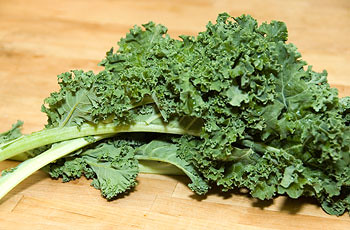
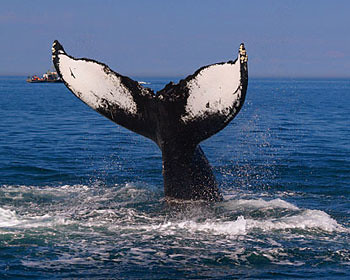
Read more: The Kale Whale Kickoff Event: Kevin Gianni in Pittsburgh!

I've already posted the recipe for this, but I wanted to talk about the orange pudding a bit. Since going raw, I've become a mostly intuitive eater. Whatever I feel like eating is what I eat. This usually means I am eating the same food for an extended period of time until I feel drawn to something different. Lately it has been the orange pudding.
I've been starting my mornings with a large bowl of it. If Jim is making lunch then I'll eat the salad or nut dip that he makes, otherwise it's orange pudding again. Then, if I didn't eat a salad during the day I usually have a salad for dinner and...a dessert of--you guessed it!--more orange pudding.
Jim here... An unusual occurrence prompted this post, and I'm unsure as to whether it's significant. I've talked about some of my favorite non-raw items before -- things that were tough to leave behind as I embarked upon this raw foods journey. I think I covered pizza in a relatively recent post.
Corn chips were another. In fact, after Wendi went 100% raw and I more or less began to follow her dietary choices, I clung to corn chips for dear life for quite a long time. I began eating a LOT of salsa in those days. Sometimes, that would be all I'd eat for lunch -- just an entire jar of salsa and a bag of corn chips (though, by then, I'd at least usually buy the organic ones and, quite often, a baked variety of chips as well).
When I finally decided I'd be better off transitioning to an all raw lifestyle, I figured my love affair with corn chips had come to an end. Farewell beautiful chips, I thought. I'll never forget our delicious crunchy time together. And that was that. I never looked back.
But then, at a local raw foods pot luck, I met a raw chef who had more or less perfected a raw corn chip recipe. Could it be , I thought. Has this delicacy returned to me after all, as though via some sweet culinary destiny? Ahh, my friends, that was a glorious day. Chips and salsa had returned to me in an enlightened raw form. I could enjoy them once again, guilt free. And enjoy them I did -- usually using a local shop's "Peruvian Purple Corn" (a living, sproutable, dried corn product).
Alas, fate stepped in once again. "Thou may partake of these crisps any time thou wishest," fate boomed. "Yet, in order to do so, thou must prepare them thine self using thine Vitamix and requiring an enormous flax-sticky mess with extended clean-up time, and thou must have parchment paper available at all times, and thou must exercise great care and patience in using your Excalibur, for these chips must dry for many an hour before ready."
Yeah, it was a bit of a chore to produce them. So, as the novelty of chip making and eating wore off, I slowly decreased the frequency of going through the messy, time-consuming hassle of preparing them. Until yesterday, it had been literally months since I made a batch. But... we'd ordered a few pounds of the corn from Natural Zing lately, and I found myself with some extra time the other night. So...
Now, I'm going to pause for a minute for a tangent on digestion. I know a great majority of people, it seems, complain of various digestive disorders. As a result, we have many raw foodie specialists schooled in the nuances of food combining. Oddly, I never paid much attention to these discussions, nor offered input on these matters, because they simply weren't relevant to me.
In fact, I likened my own digestive system to some kind of nuclear powered garbage disposal. It didn't matter what I ate; digestion wasn't a problem for me. So, for example, I'd routinely finish off heavy meals, and then follow them with a huge slice of juicy watermelon (a major no-no according to common wisdom). It just never bothered me.I always joked that, even though I'd been raw for ages, I could still probably go eat a Big Mac (not that I would) and be unaffected by it.
So powerful was my stomach acid that, admittedly, I sometimes privately *worried* whether this might mean something was wrong with me. I mean, shouldn't some of the things I was eating make me sick? Was it "good" to not be made sick by what is generally regarded as poor food combining choices? Do people commonly suffer from problems of efficiency as well as deficiency ? I still do not really know the answer to these questions, and suspect the answer is rather complicated, anyway. Fortunately, it doesn't matter now because...
Something finally made me sick!? I'm laughing now about that, but I spent most of the evening in terrible stomach pain after having over-indulged in some of those (in)famous raw purple corn chips.
So, what happened ? That's an interesting question for me. Here are some possibilities: (1) Perhaps my hyper-active digestive system *was* in fact a problem, and now it's beginning to normalize. Perhaps, had I been healthier all along, I would have been made sick by some of my food choices, but now my health is improving!? (2) Perhaps it's a fluke and I simply shouldn't have eaten mass quantities of corn and flax so late at night. (3) Perhaps my body is improving in its ability to communicate with me, and/or that I'm getting better at listening, and that the message here is that corn is not something my body gains nourishment from -- at least, not in this dried-reprocessed-redried form. After all, some leading raw food authorities, like Gabriel Cousens, aren't fans of corn (even fresh corn!).
Oh sure, there may be other explanations (e.g., "a bad batch of corn"). But, I'm actually most interested in #3, above. Even though this is an extreme example (more intense than it needed to be), I'd like to think that I'm getting better at knowing what I'm being nourished from and what I am not. I'd like to think that this is a latent sense that can be developed, much like our ability to know things by feeling and intuition rather via pure rationality all the time.
But, with food, I think it's a matter of inventorying your physical sensations head to toe, and also as a whole. How is the food you're eating making you feel? Do you feel satisfied or still hungry? Do you feel light or is the food sitting kind of heavily? Do you feel energized or dragged down? How's your mental clarity? Do you feel spacey or more grounded? Do you feel noticeably happier or more sad than before? How are all of these things mapping out over time? Is your weight moving in a positive direction for you? Are your illnesses improving? Food is medicine, after all; it has all of these effects and many more!
For now, I think I can safely check purple corn off of my own personal list of foods that make me feel good. I suspect my old assertion about "being able to eat a Big Mac without any side effects" no longer applies -- and maybe this is a good thing. I think perhaps it signals some progress in my journey toward optimal health.
In any case, I think this kind of purposeful introspection is healthy, and something we should all strive to do more often.How about you? Had any similar experiences? What have you learned from them?
Original Comments
Below, we have included the original comments from this blog post. Additional comments may be made via Facebook, below.
On April 15, 2009, wrote:

Jim here... Many people write to us asking whether we own pets and, if so, whether they are raw, too. Well, I wish I had a straight answer for you, but I think the answer is better told via a dedicated blog post.
As I'm writing this, part of me is tempted to include this post in our "My Raw Story" series. You see, Julia (pictured above) had some serious health issues just after we adopted her from a local rescue shelter, and we're still relatively early-on in our attempt to understand and reverse these issues.

Today I am thankful for the small things in life that often go overlooked. I'm thankful Jim made some sweet dessert last night when I wanted it. I'm thankful KDcat is having a fun time with some of her friends right now. I'm thankful that: the trash collectors just picked up the garbage (we don't produce a whole lot since going raw); the older woman across the street has started smiling and being nice to KDcat; the sun is out and the snow is melting; I have another computer job to work on for some income.


To keep all of you inspired while we are away, we've asked some
remarkable individuals to share their raw food stories with you. Enjoy!
Jim here... Exactly one month ago today, I announced my intention to do a month-long trial of a low-fat raw vegan protocol largely based on the well-known 80-10-10 diet. I posted a half-way point update on May 15th, and now here we are at June 1st already. So, are you ready for the thrilling conclusion
As I've stated before, I went into this experiment rather hard-core, with one full week of zero overt fats, and then gradually introducing a few richer ingredients (although keeping within the 10% fat ceiling). I found much of the past month to be an exercise in restraint and self-control, similar to the issue many people face when going raw while the rest of the family is still eating cooked foods.However, it got significantly easier as time passed.
Read more: Jim's Low-Fat Raw Vegan Month Concludes. Now What?!

Jim here... Yesterday I promised to hypnotize you, so here it is (below). This is something I published elsewhere long ago, slightly modified. Interestingly, in the original version, I'd made reference to various cooked food items -- for example, describing the smell of fresh-baked muffins as comforting. Well, as pleasant as that smell may be to everyone, I just thought it would be odd to include it here on a blog devoted to raw foods.
I think, by the way, that next week I may post a piece on aroma and how it dovetails with raw foods. I'm sure there are interesting things to write about that topic. For now, I'll simply point you to the funny hypnotism picture, below. While it characterizes hypnotism as a sort of mystical power wielded over another's true will, that's definitely not the case. As you'll see, the text below is really just a very innocent, very calming, relaxing suggestion. Read it seriously and see if you aren't relaxed and happy afterward. Have a great weekend!
 Wow, I'm having a tough time keeping up with our fearless travelers! I thought I'd break their San Francisco adventures up into FOUR smaller posts made from Wendi's personal travelogue. I'll try to address everything they did chronoligically. There will be a video in this posts, videos in the next post, and a picture set at the end! Here's what she had to say about their first stop in Frisco:
For our San Francisco/Berkeley visit, we first met up with a college friend, Pete Guinosso, at Cafe Gratitude. It was fun catching up, and Pete treated KDcat and I to our meals. While at the table, I labeled Pete as the "Quote Man" because he had a fantastic book of quotes he has been collecting. He periodically read from it as our conversations brought specific quotes to mind. It was a beautiful collection of poems, which Pete said is his second book and is filling up quickly.
Cafe Gratitude lived up to its reputation of having a great vibe with pleasant servers and fantastic raw foods. I wondered, however, why there isn't a dish called "I am Love." (There is a drink called "I am Loved," but I was interested in one that claimed I AM Love. Maybe they'll come up with one for my next visit!) After leaving Cafe Gratitude, I have to admit I wasn't overly grateful to find a $40 parking ticket waiting on the rental car. OUCH! We kept the car parked there (since it was already ticketed), and Pete showed us around the Berkeley shopping area. It was a fun stroll on a beautiful sunny, California day.

It's day three and all is going okay. I seem to have a bit more energy since it's not all being sapped trying to digest complex meals. The last time I did mono mealing, I received countless emails from Pure Jeevan members who were concerned I was doing something unhealthy. Eating simply for nine days, however, is not unhealthy.
 Did you know the body doesn't need a full range of vitamins and minerals at each and every meal? Somehow many of us were taught that each meal needs to be a complete balance of vitamins, minerals, proteins, fats, carbohydrates and that just isn't the case. What the body needs is a well-rounded diet, overall, to be in a balanced state. If, over the span of a month or two, you've consumed a variety of fruits, vegetables, nuts, seeds, and sprouts you will find that you've met just about all of your nutritional needs.