Know Any Literary Animal Lovers?

Hi there PureJeevan readers! We wanted to let you know that Jim's new novel CHROO is available on Amazon. It's a crazy adventure involving a billionaire heiress, her Chihuahua BFF ("Chroo") and a host of human and animal characters. Find out more on Amazon! Here are some links:
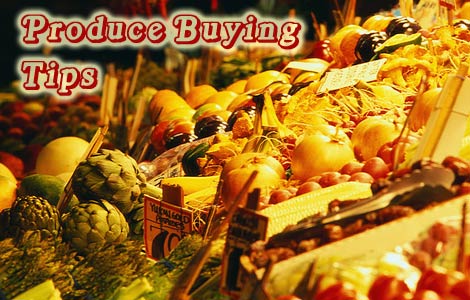
Jim here... I'd like to mainly talk about organics today, but thought I'd wrap that subject into a longer, rather quirky piece on ranking produce on some sort of a scale that would indicate how awesome (or awful) it is. See what you think...
Have you ever thought of arranging produce into a sort of "heirarchy of quality"? Well, I'm not going to attempt to do that here, but I would like to discuss the concept for a moment in order to at least explain what I'm getting at. While I've not yet attempted to do this exercise, I nonetheless occasionally envision a large chart or something that conveys my feelings about how I personally rank the quality of fruits and vegetables I put into my body. This all probably sounds vague, so let me share some examples.
Read more: Pure Jeevan's "Produce Buying Tips" Series, #2: Buying Organics

Every week I introduce you to some companies or individuals I think may be interesting to you. This time, I want to intoduce you to some handy calculators that will help you monitor your daily intake of nutrients.
Take the time to meet...


Jim here with another exciting installment of Weird Wednesday. (What, you thought that just because Wendi is out of town this week, we'd have no Weird Wednesday )
In any discipline, I think it's important to consider the entire argument in taking a stance on a given issue. Examine each issue from both sides (pro and con) -- and then make the best choice you can. That makes sense, right?

I'm makin' nothing today, or for the next eight days! Think of all the time I'm saving myself by consuming only mono meals for nine days. What will I end up doing with that extra time? So far, today, I've spent a long time outside soaking up the sun's beautiful rays that I've missed far too much this Winter. I have no idea what the rest of this mono journey is going to be like, but I'm up for the adventure!
I've started a little journal on my desktop to track my nine days of mono meals, so I'll share what I've written from time-to-time. Here's what I have, so far...

We're here to inspire you...that's our overall focus here at Pure Jeevan. So, when we ask you what you'd like us to do more of, less of, or to consider doing here on the blog ... we take your responses to heart. Of course, it's impossible to please every single person since we all have different personalities and needs. However, we'll always do our best to create a balance in order to inspire as many individuals as possible.
Below are suggestions for what some of you'd like to see happening here on the blog, along with some responses from us. If you have more suggestions, please send them our way anytime. We read everything that comes in and will always give your suggestions serious consideration.
Jim here... Today Wendi is busy preparing for a multi-day activity that I'm sure she'll be writing about later this week. So, I thought I'd field a question we received recently (one directed specifically to me). We do receive a good deal of questions at our Raw Food Diet Question In-box (at Questions [at] PureJeevan.com), so feel free to send any in that you may have, and we'll definitely get to them all here in time. In any case, one reader writes:
As drawn as I am to a raw diet, being mostly cooked vegan right now, I can't help but come up against this each time: Since produce is, after all, mostly water, what did you eat while transitioning that didn't lead to shoving in lots of bread, potatoes, etc. Do you just eat lots and lots of, say, oranges, at one go? This has always been my raw downfall. I'm sure the answer is very simple.
Wow, this is a great question, and one with many possible answers! To begin, let's recognize that this isn't a question from a "SAD diet" eater. ?Being a vegan, alone, takes significant learning and (often) self-discipline to accomplish successfully. It's also, in my view, an excellent dietary and lifestyle choice for many people, regardless of whether they ever decide to try a raw foods diet. So, this question is rather advanced.
Jim here... It's been nearly half a year since we posted a long meditation on living patiently, noting the unique, sometimes-at-odds dovetail that exists between (1) experiencing the zen of patience and (2) living the electrically charged life of raw foods. While we're STILL living with the same patience we talked about, I have to admit there have been times when we've been in not-so pleasant touch with some real frustration about getting our home sold and finally moving on to all of the exciting stuff we have planned for us and for you.
Wendi and I are absolutely ecstatic about taking our raw foods message to the next level -- and not just "next level" meaning more a few more blog posts and videos, but a true quantum leap in terms of our immersion into this world and commitment to advocating the lifestyle. It just gets a little tough, even when practicing patience, to be kind of stuck in the starting gate.
Read more: Pure Jeevan Heads Out of Town: Raw Roadtripping Vids to Come!

We don't always announce birthdays of friends and family here. But this particular individual is an integral part of the raw food community and we want you all to meet her!
Today is the birthday of the radiantly beautiful Penni Shelton! For those of you who don't know Penni, she's an incredible woman; she's got a heart of gold and is filled with love and compassion. She has been a loving friend of Wendi and member of the Pure Jeevan family for a very long time.
Read more: Penni Shelton: Raw Food Community Builder and Supporter!
 As we promised yesterday, we're featuring a wonderful (and LONG!) video interview today with the incredible John Kohler of Santa Rosa, CA. You may be familiar with John from some of his popular web sites, most notably his "Living and Raw Foods" community site at www.RawFoods.com. Below are parts one, two, and three of Wendi's interview. They're roughly 10 minutes each. (That's a lot of time, I realize, but at least check out Part 1 if you're short on time, as it offers an amazing look at John's front yard.)
Wendi said she was at a loss for words when interviewing John at his home (and you'll soon see why!), because what he has done on his 1/10th of an acre lot is *phenomenal*. He told Wendi off the video that it's all a matter of trial and error--finding what grows easily and well, and working with those plants the most. If something takes a lot of effort, or is difficult to easily grown, he skips it and focuses on what can give the most yield for the least work. Almost everything grown on John's land is edible!
PART TWO:
PART THREE:
The video of John's garden and the pictures (see yesterday's post) are enough to inspire ANYONE to plant even a small garden for themselves! WOW!
John has a lot going on, including a monthly potluck. Wendi and KDcat happened to be in town on the night of the March potluck, so Wendi was invited to speak at the event. It was a nice, laid-back group of people, Wendi said, and they sat at a long table talking about the raw lifestyle, health issues / concerns, what children are fed in school, and so much more -- a really nice group of people, Wendi said, noting she'd love to visit them all again. To connect with John Kohler is pretty easy. He's on the internet at:
- RawFoods.com -- John's main community site
- GrowingYourGreens.com -- John's YouTube channel
- BeRaw.com -- Santa Rosa Meetup Group
- RawHealthExpo.com -- Annual Raw Foods Conference
Once again, we d love to thank our generous trip snack sponsor, Natural Zing, for helping us to make this possible on our budget!

Original Comments
Below, we have included the original comments from this blog post. Additional comments may be made via Facebook, below.
On March 19, 2010, wrote:
fantastic, thank you so much Wendi, very informative, what a guy and energy bomb he is, hope you are well again, you seem so
love to you

One reason I keep going on and on lately about raw desserts and raw ice creams is best conveyed with an example. ?Here are the ingredients in Cool Whip, a commonly available whipped topping:
- water
- hydrogenated vegetable oil (coconut and palm kernel oils)
- high fructose corn syrup
- corn syrup
- skim milk
- light cream
- less than 2% of:
- sodium caseinate
- natural and artificial flavors
- xanthan and guar gums
- polysorbate 60
- sorbitan monostearate
- beta carotene (color)
Wow, I had a chemistry set in 5th grade that had a lot of things that sounded like some of those items. It's actually mind-boggling to envision the industrial processes necessary to produce everything on that list -- not that it's entirely possible to do so. After all, among the list of ingredients are "natural and artificial flavors." Ever wonder what, exactly, those are?
Read more: Natural and Artificial Flavors, and a Raw Whipped Cream Recipe

Every Autumn I proclaim that it is surely the best season of all. Then, without fail, every Spring I find myself feeling and saying the same thing. How can any season be better than this time of renewal, rebirth, and unlimited potential for beauty to spring up in front of your eyes with every glance?