Know Any Literary Animal Lovers?

Hi there PureJeevan readers! We wanted to let you know that Jim's new novel CHROO is available on Amazon. It's a crazy adventure involving a billionaire heiress, her Chihuahua BFF ("Chroo") and a host of human and animal characters. Find out more on Amazon! Here are some links:
I received an email from one of our lovely Pure Jeevan family members. Joanne is subscribed to our mailings and she received the ice cream cake recipe I had created for Jim back in January. Well, take a look at what she did with the recipe! It's LOVEly!

Hi Wendi!I took Jim's birthday cake recipe to the next level.
I've received countless emails over the past few days, thanks to Kevin Gianni's video (below) about the potato pancakes I made for he and Annmarie when they were visiting. In many of the emails you were thanking me for the free eBooks, but some of you had questions (and even some concerns) about sweet potatoes. I've answered you all individually, but I thought it might be a good idea to spend some time discussing the sweet potato a little more. Here's the vid, and then I'll include some of the questions I was asked:
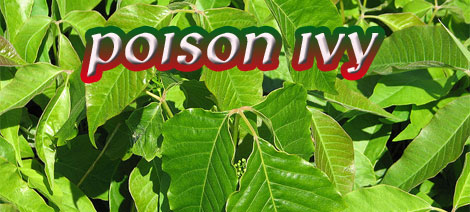
Jim here... Well, I may have lived 100% raw for nearly one year now (and mostly raw for a few additional years), and I have definitely witnessed the reversal of many physical ailments during that time, but I can say with certainty that, if raw actually cures people of allergies, it looks like I still have a ways to go before reaching that milestone. Here's a snippet from an article I published a few years ago in a book:
I believe I was roughly 12 upon learning of my allergy to poison ivy (the hard way, naturally). By age 14, I'd heard all of the poison ivy folk lore and "wisdom" out there -? that sensitive people like myself can inadvertently contract it via smoke from a nearby brush fire, that ingesting the plant's concentrated essential oil can reverse one's sensitivity to outbreaks (even, some said, to the point of complete immunity), that scratching spreads the rash, that scratching does not spread the rash, that going to get the shot and the steroids makes it fade more quickly, that calamine is best, that it's not, et cetera.

As a follow-up to yesterday's McDonald's-bashing post, I thought I'd post another perspective -- namely, that not all chain smoothies are bad. I can't claim to have tried them all, but I can report with confidence that, for raw most foodists, a trip to Jamba Juice can be awesome!

Jim here... Many people write to us asking whether we own pets and, if so, whether they are raw, too. Well, I wish I had a straight answer for you, but I think the answer is better told via a dedicated blog post.
As I'm writing this, part of me is tempted to include this post in our "My Raw Story" series. You see, Julia (pictured above) had some serious health issues just after we adopted her from a local rescue shelter, and we're still relatively early-on in our attempt to understand and reverse these issues.
Jim here... Today Wendi is busy preparing for a multi-day activity that I'm sure she'll be writing about later this week. So, I thought I'd field a question we received recently (one directed specifically to me). We do receive a good deal of questions at our Raw Food Diet Question In-box (at Questions [at] PureJeevan.com), so feel free to send any in that you may have, and we'll definitely get to them all here in time. In any case, one reader writes:
As drawn as I am to a raw diet, being mostly cooked vegan right now, I can't help but come up against this each time: Since produce is, after all, mostly water, what did you eat while transitioning that didn't lead to shoving in lots of bread, potatoes, etc. Do you just eat lots and lots of, say, oranges, at one go? This has always been my raw downfall. I'm sure the answer is very simple.
Wow, this is a great question, and one with many possible answers! To begin, let's recognize that this isn't a question from a "SAD diet" eater. ?Being a vegan, alone, takes significant learning and (often) self-discipline to accomplish successfully. It's also, in my view, an excellent dietary and lifestyle choice for many people, regardless of whether they ever decide to try a raw foods diet. So, this question is rather advanced.
Hi there, lovely Pure Jeevan family members!
It's so sweet that many of you are concerned about us, wondering where we are and what we are doing since the blog has been quiet for quite some time. We feel very loved! *blows kisses to everyone*
Well, our trip to Portland, Oregon, went well. We bought the fixer-upper home that will eventually house Pure Jeevan, and did some preliminary work on it (it's a *true* fixer-upper and is going to require *a lot* of work and investment). A few times during our stay in the new home, Jim and I both looked at each other, wild-eyed, wondering what we had done. Following one's intuition can be a bit scary at times, but we've learned over the years that things always work out for the best and that these sometimes scary, unknown times are what help us grow and learn in ways we had never imagined.

Welcome to Pure Jeevan's "Juice-a-Day Jamboree"! You're probably wondering, "What IS Pure Jeevan's Juice-a-Day Jamboree, anyway "? Well, it's simple:? It's an ongoing, informal, loosely organized "event" centered around juicing. Think of it as an interim step between (1) any kind of diet or lifestyle, from SAD to full-on raw, that does not include much regular juice, and (2) an all out juice feast where that's ALL you'd consume for a period of time. Basically, we're saying, "Let's just make this simple and accessible for everyone. Let's just make a goal to simply drink more fresh juice!"
Wendi and I have been thinking a lot about incorporating more juicing into our lives lately (which is something we've done off and on over the years but never stuck with long-term). One thing holding us back from doing it more often is the time requirement. When we juice, it usually takes a half hour or so from start to finish. I know it doesn't seem that complicated, but I suppose it's just the whole process of setting up the juicer, washing and peeling the produce, juicing it, setting the juice aside while we clean the juicer, doling out the juice into glasses, cleaning up the mini-mess that makes, and then sitting down to actually enjoy the juice.
Here's an older post, from August 2008, about modifying one's diet to experiment with attaining even greater health. ?I know the before/after pics, alone, are inspirational enough to live a raw vegan lifestyle!
*blows kisses to everyone*
========================

What's Valentine's Day without a little "Smooth Love," right ??Here's how we created this simple, creamy delicious, smoothie:
- Start with the water and flesh of one young coconut. We had one left over, still nice and fresh, from our recent trip to the Florida Keys (more raw food videos and posts coming soon from that trip!).
- Add three to four oranges, peeled (and de-seeded if necessary)
- Add two to three large bananas
- Add 12 ounces of frozen strawberries (or to taste)
- Add a small handful of raw almonds
- Add a bit of raw agave nectar or a few dates, if you have them.
Blend in your high-speed blender until smooth ... and share with a loved one! Happy Valentines Day, everyone!

Finally, some super news to share!? On Monday, after a l-o-n-g wait, Wendi finally had her appointment with a actual LLMD. (That stands for "Lyme Literate Medical Doctor."? If this and the news of Wendi's Lyme Disease is new to you, check out this post.)
I'll cut straight to the good part: Her prognosis is excellent! Yes, she's still in a world of pain and misery at the moment, but he believes (based on her blood work and her symptoms) that we've caught this early enought to fully eradicate the Lyme. (At least, that's how I understand it. I'm actually not clear on whether Lyme is ever 100% eradicated, or if it's just forced into dormancy or irrelevancy. Perhaps Wendi can clear that point up later.)