Know Any Literary Animal Lovers?

Hi there PureJeevan readers! We wanted to let you know that Jim's new novel CHROO is available on Amazon. It's a crazy adventure involving a billionaire heiress, her Chihuahua BFF ("Chroo") and a host of human and animal characters. Find out more on Amazon! Here are some links:
I love this video, in which Wendi interviews our new Portland-based realtor, Bill Futrell. It's a nice interview, but I love the way Wendi's enthusiasm for raw foods rubbed off on Bill almost immediately. There's even a moment in here in which Bill starts talking about Natural Zing. We thought for sure everyone would think we put him up to that, but he did it absolutely spontaneously! So, thanks Bill for helping to support our Snack Sponsor. Anyway, here's what he had to say about Portland, about where we'll fit in, and about his first exposure to raw foods:
One thing I can tell you for sure: Portland is WAY more expensive than Pittsburgh. A year ago, I invested a ton of time reading about low-cost cob houses, straw-bale construction, Earth-ship homes, homes fashioned from "obtanium," thatch roofs, off-the-grid systems, igloos, you name it -- anything DIY-oriented. (Okay, well not igloos; that was a joke. Even though igloos are probably pretty neat-o.) I'm sure we'll get to many of those types of projects one day still. But for now, as you can see, we're going to put down roots in a really great city out West. We're doing it with intention, though, and in harmony with our mission to help ourselves and others obtain the highest levels of health and happiness.
Correction: I said "Lenuria" a number of times in this video, but it's actually Lunaria! In any case, we wanted to share some additional description for this plant. Here's a quick paragraph from Wikipedia:
Lunaria is a genus of flowering plants in the family Brassicaceae, native to central and southern Europe. It includes two species, Perennial honesty and Annual honesty. They are widely grown as ornamental plants in gardens, and have become naturalised in many temperate areas away from their native habitat. In the language of flowers, it means Sincerity and Forgetfulness. ...The common name "Honesty" arose in the 16th century, and it may be due to the translucent seed-pods which are like flattened pea-pods and borne on the plant through winter. In South-East Asia, it is called the "Money Plant," and in the United States as "Silver dollars," because its seed pods have the appearance of silver coins.
Guess what's pulling into Pittsburgh tomorrow evening? Here's a hint (if you don't already know after reading the title of this blog post!):
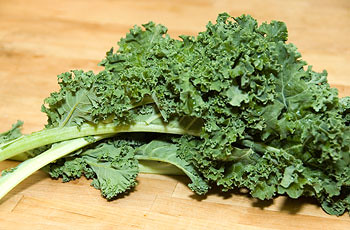

Read more: The Kale Whale Kickoff Event: Kevin Gianni in Pittsburgh!

I want to admit something to all of you: Sometimes I still cry because of how people treated me when I was obese. Because I stuffed all of my "negative" emotions deep inside my entire life, it's going to take some time to fully release them. I'm working on it, however, and making tremendous progress with healing myself on all levels. I'm not telling you these things so you'll feel sorry for me, however. I'm telling you because I am thankful for all the pain I endured. It shaped me (in more ways than just my physical appearance) into the person I am today.
Even though it sounds strange, and somehow wrong to feel this way, I'm thankful that I was obese. I'm thankful for all of the experiences during my life, even the extremely painful, traumatic ones. Maybe if I was a different kind of person I would wish that those things didn't happen to me. However, I am using those experiences in positive ways. They've helped me understand people even better, and to understand myself on a deeper level, as well. When people reach out to me it's not only because I'm an approachable person, it's because they sense that I understand them--and they're right. I DO understand them. I understand you. My experiences, coupled with my gift of empathy, help me relate to you in a way that maybe not everyone else is able to do.

Today we wanted to do something fun and a bit unusual. We raw foodies are a creative bunch, so we? thought, "Why not profile a handful of raw musicians !" Sounded like an interesting project, as we've all heard of at least a few raw foodist musicians out there. So, here are a dozen raw musicians to get you started -- that's right, FOURTEEN wonderful raw musicians!? (Since when does a dozen equal fourteen? Well, we figure that cooked foodies have their "baker's dozen," which everyone knows is thirteen.We figure: Why be outdone by the cooked food world, eh? So, we're redefining things a bit!)
Anyway, some of these bands/musicians are internationally famous; others are names you may not have heard before. We asked some of our friends to suggest raw musicians for today's post and we were surprised with the number of musicians mentioned! All those listed below are reportedly raw (or, in the case of whole bands, at least one or more of the members are raw foodists).Please note that this is by no means a complete list.
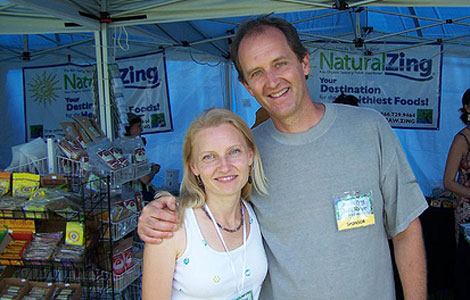
... just a quick interruption of "Crazy Week" to do two things:
1. Congratulate Natural Zing on their 8th year in business!
Wow, is it really Episode 3 already? How time flies! Remember way back when we started this informative, informational, nutrition-oriented "Know Your Food" series? Seems like ages ago, doesn't it? (Oh, wait... It WAS ages ago. It's just taken us a while to get up to speed with this video stuff!) Anyway, here's the video, followed by some camera/video editing news -- oh, and of course some highly urgent celery information. (Okay, it isn't really urgent at all; we just needed to add a dash of drama.) So, see what you think. You might even learn a thing or two about our stalky green friend.
Not TOO bad, right? We're getting to our goal of roughly 3-minute episodes. Of course, this is still one of our first attempts, shot last Sunday. We thought it was decent enough to not entitle it "salvaged" as we did the previous installment.

Wow, with literally years of raw food coverage under our belts here at Pure Jeevan, we don't think we've ever devoted an entire post to fermented foods. Well it's high time we do, don't you think ? Check out the video and then we'll discuss it further...
I started jumping up and down last night with excitement when I received a call saying that the bellydancing class I've been wanting to take at Khafif Studios has an opening! Yay!!!

(This will be my teacher, Berna!)
