Know Any Literary Animal Lovers?

Hi there PureJeevan readers! We wanted to let you know that Jim's new novel CHROO is available on Amazon. It's a crazy adventure involving a billionaire heiress, her Chihuahua BFF ("Chroo") and a host of human and animal characters. Find out more on Amazon! Here are some links:
Here they are!! Images from the 3-Day Raw Food Spiritual Ashram Retreat! There were more taken by the ashram staff; once they are sent to me, I'll include those, as well.
Page One: Guests
Page Two: Raw Food
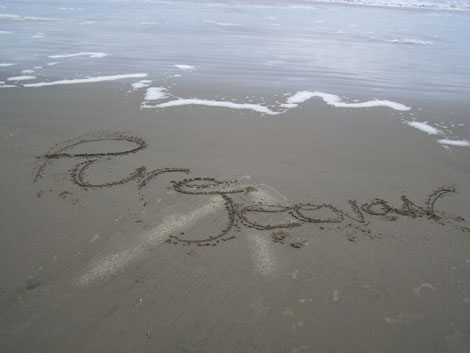
Wow, Pure Jeevan is officially coast-to-coast now! That picture, above, is our name written in the Pacific sand. Surely, there's an apt metaphor here, if only I felt moved to make one. Instead, why don't we take a look at what Wendi wrote about this, and see if a life-lesson doesn't spring to life! Her remarks, written for Pure Jeevan readers:
So, the ideal place on paper (Corvallis) wasn t seeming quite like the perfect place for us that we thought it would be. It s an amazing little town, with a lot going for it. If someone is looking for a totally hip, laid-back, creative, educated group of people living in a small town with no unsavory extremes as far as cold and heat, then this is the place for you. For us, however, we now realize that we ve grown to love all that comes with living in a larger city. Corvallis is fantastic, but now we realize we need a larger city.
Read more: Perusing the Peacefully Percussive Pacific, Pure Jeevan Ponders Portland

Next weekend I'll be at the Green Festival in Washington, DC. helping Natural Zing at their vendor booth (I'm completely in love with Natural Zing because of their honest business ethics and commitment to having the highest quality products available---and the president is a truly beautiful individual). My dear friend RawBin will be picking me up next Thursday for a RAWsome weekend and I'll fly back on Monday!
Here's a list of some Green Festival facts from their Web site:
I receive many questions from our readers, and I am very happy to respond. I truly love helping others, but I don't do it just for them.When I was younger, many times I thought I was performing selfless acts of kindness whenever I'd help others. However, now I realize I am experiencing pleasure by helping others. I find it very rewarding, as though I am fulfilling my purpose in life.
Do you know what your life's purpose is? Do you believe there is such a thing These aren't rhetorical questions; I'm really interested in hearing your response. Well, I've known my life's purpose (actually, I have more than one) from a very young age, but it wasn't until recently that I began living it more fully. My purpose in life is to love others---to connect with others through an immensely deep and genuine love.One way I've found for spreading my love and realizing my purpose is by helping others.
When I answer questions for our readers, I speak from my heart. I think it's important to realize, however, that the answers we receive from others are *their* answers to similar questions. Maybe their answers will work for us, but maybe they won't.I've stressed this many times, but it never hurts to repeat it: Listen to others, hear what they have to share, but mostly listen to your own inner voice. We all have the answers deep within ourselves, even if we can't always hear them very well.
Read more: Life's Purpose and Reader Questions: Emotional Eating

Every Tuesday we introduce an individual or business that may be of interest to our readers. Our introductions vary from those that will help support your body, mind, spirit, or emotions. This Tuesday we are pleased to introduce an individual who brings a holistic view to her work and nourishes your body, mind, spirit, and emotions on all levels.
Take the Time to Meet

As some of you already know, along with regaining my physical health I've also been working on every other aspect of my overall health and being. I don't just want a healthy body---I want the whole package (vibrancy and bliss inside and out, in every way possible).
One area of my mental health that has been slow to heal is my self confidence. I continue to work on it in many ways and have made some tremendous progress over the past year, or so. I feel worthy of so much more than I ever did before.Many people never doubt their self worth---they have a good sense of who they are and assume that others see them as they are, as well.
Read more: Thankful Thursday: We Like It Raw and Dhrumil Purohit
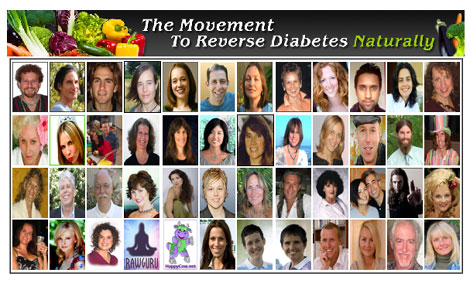
A few weeks ago, we hosted a Diabetes Awareness week here at Pure Jeevan. This was our contribution to the larger Reversing Diabetes Naturally movement that we blogged about. We wanted to let you know that the package of bonus materials offered to people who purchase the Simply Raw DVD is quite amazing! (See this post for details.) We reviewed all of the materials ourselves, and it's just a ton of great information.
The original deadline for receiving the free bonus materials was the end of April. However, the deadline has been extended through Friday, May 8. So, if you know anyone who has diabetes who could benefit from either the ?Simply Raw? documentary and/or the companion film, ?The Ultimate Enyclopedia of the Raw Food Listyle," simply point them to http://tinyurl.com/pj-diabetes.
Read more: Two Days Left for Raw Food Bonus Materials for RDN Movement
I was reminded about a video I saw some time ago, after seeing a similar video on my dear friend Bunny's blog. What you are about to see is AMAZING!!
Take the time to meet...
Here it is, the new year. I've never been excited about the end of one year and the beginning of the next, but this time it's different.So many things have changed in our lives here at Pure Jeevan, bringing us to this point in time--a time that we are ready for and fully embrace. This year is going to be RAWmazing!
Many plans and projects have been started over the past few years, and this is the year that will see many of them fully blossom. The beauty of these projects is that they are about so much more than just us, or just you, our lovely readers. Our mission is to help as many people as possible to wake up from a life that's only partially being lived.We believe there are many tools that can be used to fully wake up and embrace life; one of them is eating a raw food diet. We raw foodists know that there is a lot more to life than what we've been taught to believe and expect, and many of us are helping others learn this beautiful fact. We are shaking up many of the core beliefs on which most of us have based our lives. I strongly believe that many of us in the raw food movement can say: We Are The Ones! We are the ones who are here to make positive changes, to help others fully embrace life, and to have fun, fun, fun! Why waste even one more day of your precious life doing something you don't enjoy doing? It's time to have fun, to feel the love that exists within and all around us, and to help others experience the same! So, are you in ?Do you want to join us on this grand adventure of creating a blissful life for not only ourselves, but for the rest of the world, as well?
Read more: Acknowledging Changes and Growth: 2008 / 2009, Part 3
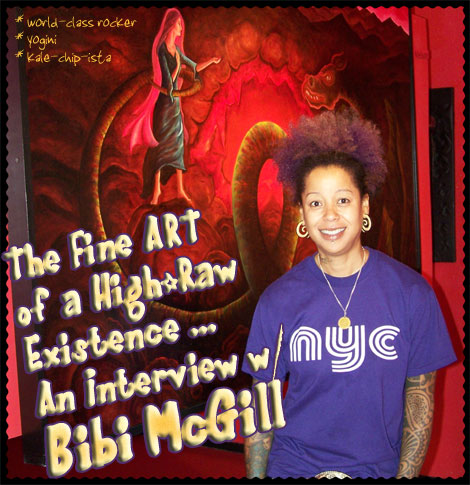
Hi there, Pure Jeevan family! ?Jim here... A few weeks ago, I'd been reading about Bibi McGill, the guitarist and musical director for Beyonce. It was a fascinating piece (linked to below, actually) and, to my complete surprise at the time, touched on her fairly serious interest in raw foods -- and, wouldn't you know, she also lives right here in sunny Portlandia!
Soon, I realized that I'd seen her name around town before -- and Wendi did, too! There are these absolutely addictive kale chips, you see... (We like to get them at our local food co-op from time to time because they're truly something special.) ?But, until recently, we didn't piece it all together -- that one person manages to produce this distinctive brand of raw snacks, teach yoga classes here in Stumptown, AND somehow also tour the entire globe as lead guitarist ?for world-class acts like Beyonce and Pink!

As you can see from yesterday's post, Pure Jeevan keeps extremely busy during the year. What's up for 2010? Let's just say... more amazing information, inspiration, education, motivation, and cutting-edge health features! This post will be considerably shorter than last year's counterpart. In January 2009, we ran a 3-part series on looking back and looking ahead. While that was super-productive from a planning perspective, a few important points come to mind as we ponder the same issues once again: