Know Any Literary Animal Lovers?

Hi there PureJeevan readers! We wanted to let you know that Jim's new novel CHROO is available on Amazon. It's a crazy adventure involving a billionaire heiress, her Chihuahua BFF ("Chroo") and a host of human and animal characters. Find out more on Amazon! Here are some links:

Jim here with another exciting installment of Weird Wednesday. (What, you thought that just because Wendi is out of town this week, we'd have no Weird Wednesday )
In any discipline, I think it's important to consider the entire argument in taking a stance on a given issue. Examine each issue from both sides (pro and con) -- and then make the best choice you can. That makes sense, right?

Welcome to Makin' It Monday, Guest Raw Chef edition. Today, Dave Sokulski of www.BirchCenter.com and www.FoodUnderFoot.com gets a little silly while making some delicious raw cacao treats! Enjoy the video:
THE TOUR IS COMPLETED! For pictures, videos, and commentary about their adventures, check out the Trip Dashboard!!

For those of you who've been following our plans for a few years, you know we've been preparing for a cross-country tour for a long time. The plans have expanded, contracted, changed dramatically, but the core of the idea has always been there: we plan on relocating to a new city and we need to find the right place for Pure Jeevan to settle. In order to do that, a big cross-country tour is in order. So, the exciting news is that we're leaving in a couple of weeks to check out some of the cities/towns we're thinking might be a perfect fit for Pure Jeevan! The sad news is that all of us can't make the trip. Jim will be holding down the fort here in Pittsburgh (i.e. the house still hasn't sold and he still needs to keep his corporate job so we can pay the mortgage).

Brutal Honesty. 100% Transparency. Unedited Feedback. Absolute Truth. ... How often are we treated to these things by those we know? How likely are we do conduct ourselves with these ideals in mind?
Propriety. Politeness. Decorum. Political Correctness. ... How often do these conventions in others prevent us from knowing what others think of us? How often do these conventions in ourselves restrict our own words when directed at others?
Read more: The Gift of Honesty: The "Crazy" Life of Raw Foodists
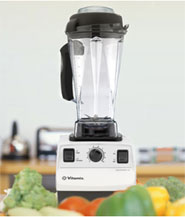 Hey there, everyone! Thanks for visiting Pure Jeevan. We want our welcome article, for now, to be this article on Vitamix blenders. There are certainly a few essential elements (e.g. good knives, cutting boards, a good food processor, etc.) to any raw food kitchen, and one of them is an awesome high-speed blender. Yes, there are many great blenders in the world, and yes there are a few decent top-of-the-line models on par with Vita-Mix. But, at the end of the day, our recommendation is the Vita-Mix (and yes, it's better than Blendtec, in our view). Here's a crazy video Jim did a while back for a Vitamix contest:
Note: That "free shipping" code, below, is no longer active. We'll let you know when we get a new free shipping code. For now, we hope you enjoy the video. :-)
We purchased ours 15+ years ago, and have subjected it to at least daily use (if not many times per day most of the time!) -- and it's still going strong. If you don't understand why a Vita-Mix is different from even a high-end blender from a department store, it's basically the sheer power. These things can pulverize pretty much anything -- time after time, without blowing out the motor. For example, you can make ultra-thick, healthy, raw ice creams day after day all summer long, and the machine will keep on working for years (and, in our case, we're almost ready to say "decades").
We used to be an affiliate w/ them, and are reapplying to be one. For now, we hope you like the video, above.
Jim here with another installment of Weird Wednesday...
Throughout the year, I go through various phases of fruit preferences. Right now, it's citrus. I eat probably four large grapefruits per day (dark reds). The darker the red the better, IMHO. I can get quite disappointed when the grapefruits are listed as "ruby red" but turn out to be just regular pink ones. I've noticed that the ones I like the most have an orangish tint to them, as though they've been left to ripen on the bush a little too long. Also, the best ones I've had this year have been from Texas. So, find yourself some burnt-looking Texan grapefruits & enjoy the blood-red bitter-sweetness!
Read more: If Oranges Smell So Darned Good to You... Buy Some!
If you like raw cauliflower and fresh mint, I recommend you try this dish! Jim and KDcat don't like raw cauliflower much, so this dish wasn't a big hit with them. I, however, consumed the entire dish before the end of the day! I LOVED it!
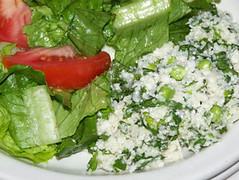
Read more: Makin' It Monday: Refreshing Cauliflower Mint Salad

Pure Jeevan is hitting the road? this weekend, heading to Chicago for some super-double-secret raw business stuff, returning late Monday. (Can't discuss it yet, but it's raw food related and ultra-cool. We'll get to it in due time, I promise.)?
Actually, it's going to be quite an interesting trip, as we have some very serious, very intense work to do in Chicago over the entire weekend, but we're not sure yet whether it'll be Wendi doing the work or me! It all depends on how Wendi feels -- and with Lyme, you just never know. So, one of us will be busy, the other largely free to explore the windy city with KDcaT and Th' Jooge.
Read more: Pure Jeevan Hitting Chicago This Weekend. Suggestions Anyone?
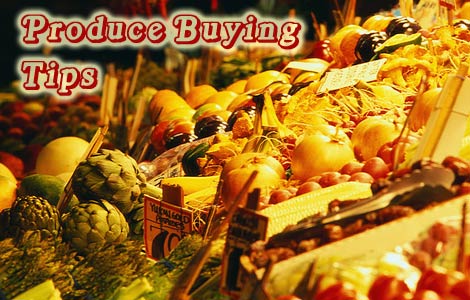
Jim here... I'd like to mainly talk about organics today, but thought I'd wrap that subject into a longer, rather quirky piece on ranking produce on some sort of a scale that would indicate how awesome (or awful) it is. See what you think...
Have you ever thought of arranging produce into a sort of "heirarchy of quality"? Well, I'm not going to attempt to do that here, but I would like to discuss the concept for a moment in order to at least explain what I'm getting at. While I've not yet attempted to do this exercise, I nonetheless occasionally envision a large chart or something that conveys my feelings about how I personally rank the quality of fruits and vegetables I put into my body. This all probably sounds vague, so let me share some examples.
Read more: Pure Jeevan's "Produce Buying Tips" Series, #2: Buying Organics
Here's a letter from Wendi to the Pure Jeevan family. I prettied it up a little with some color and graphics. -Jim

Hi there, lovely Pure Jeevan family! I'll be away from the computer for a month, working on some deep healing. It's time to go within and really hear what my body and spirit are saying.
Read more: Wendi's Taking a Break... A Peek Into How She's Been

Q. I recently read the following on Dr. Micahel Eades' (dr. protein power) blog & would appreciate your opinion:
Have you any comments on the RAW FOOD movement and particularly Dr. Cousens claim of a ?cure ?Dr. Eades' response:
I don t know anything about Dr. Cousens. I do know that people in the raw food movement seem to believe the raw foods deliver ?natural? enzymes unaltered by cooking to the GI tract to help it do its work. Problem is these ?natural? enzymes are made of protein and are denatured (the same alteration process as cooking does with heat) as soon as they hit the stomach acid. The fact that proteins can t make it through the stomach without being completely altered is why diabetics can t take insulin pills and have to get their insulin via injection. Insulin is a protein, just as enzymes are, and it can t make it through the stomach without being denatured.