Know Any Literary Animal Lovers?

Hi there PureJeevan readers! We wanted to let you know that Jim's new novel CHROO is available on Amazon. It's a crazy adventure involving a billionaire heiress, her Chihuahua BFF ("Chroo") and a host of human and animal characters. Find out more on Amazon! Here are some links:

To help keep all of you inspired, we ve asked some
remarkable individuals to share their raw food stories with you. Enjoy!
This recipe is an adaptation of one from "Rawvolution", by Matt Amsden. As of this point in time, "Rawvolution" is my favorite recipe book. Most of the recipes are high in sodium and fat, but very satisfying for those who are used to eating cooked foods.
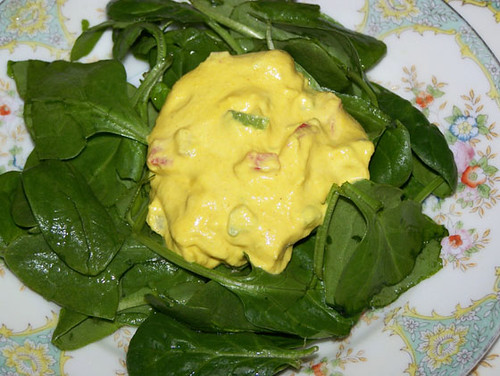
Egg-less Egg Salad
Jim here... Here's part two of a video of Wendi showing how to make raw pasta. (If you did not view part one yet, click here to go there now.) She, with the help of her friend Melissa (of Food Under Foot), prepared a beautiful platter of pastas and some sauces that we all enjoyed when I returned home yesterday for lunch.
We hope this video shows you even more how fun and delicious eating raw foods can be!

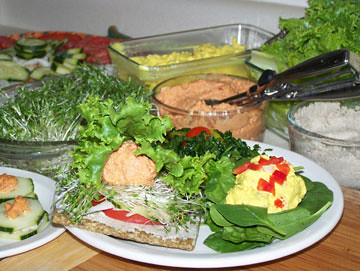
I'm still working on the dishes that will be served at the upcoming 3-Day Raw Food Spiritual Ashram Retreat (only 2 spots left!). Today, I worked on the Sandwich Fixin's that will be served for lunch on one of the retreat days.
Wow, could this really mark 800 raw food blog posts ! ?We must be obsessive orthorexic raw foodies to have achieved that level of focused health editorial journalism! Post #800 deserves to be something really useful (not that the others aren't or do not deserve this), so we'd like to pass along a fun idea. I guess all of that talk of Donald Trump yesterday got me thinking about making deals. We make deals with others, of course, but I think we also sometimes can make them with ourselves.
I'm so glad to be out of the corporate business world these days, but I did pay attention while there, and perhaps even learned a thing or two. Today's post is related to that in a way. You see, I was once at a sales training seminar when the speaker advised following a "this job / next job" strategy with clients. What that means in business is that, when you're in the middle of one job working for someone -- say, for example, you're a printer working on a brochure for a company -- you would make a point of saying something like, "Hey, this brochure is going great. I was wondering what else is coming in the near term so that we can make sure to be ready for it."
Thanks to Bitt, yesterday, for pointing out that one possible misinterpretation of yesterday's post (on celebrity weight loss) could be that "thin = healthy." I'm sure that, while there are countless wonderful benefits to being a famous actor, one of the less wonderful aspects of that life must be the pressure to remain young, thin, attractive, etc. It would seem realistic to me to assert that, additionally, women are held to even more objectified standards than are the men out there (although, in fairness, note that 6 of the 11 stars profiled in the Yahoo feature linked to yesterday were in fact men).
In any case, the post's intention was never to imply that one's weight is necessarily the best indication of one's overall health. After all, we all know thin people afflicted with serious health challenges.

I'm excited about something that one of my friends has been working on. Melissa is gifted in so many areas, one of which is wild edible identification. She recently told me she was working on something that would help a lot of people and I was excited about her new project. Well, now it's ready to be shared with everyone!
Take the time to meet...

 Here's the next component in our raw taco recipe -- the guacamole. This is Wendi's favorite component! Enjoy!!!
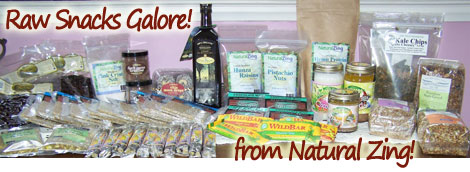
Well, Wendi and our daughter, KDcat, are headed out this evening on a train for their cross-country tour. They didn't seem so sad to leave ... maybe it's because of the bounty they're taking with them! Check it out in the banner above as well as the snapshots below! (I've included a list at the end of many of the products.)
Natural Zing has been Pure Jeevan's favorite online source for all of our raw food supplies. They have been very supportive of Pure Jeevan for over a year, and they continue to amaze us with their love and generosity. You'll be hearing more about Natural Zing during the tour, because they're Wendi and KDcat's official snack sponsors for the trip!

It's always a journey.
That's basically my post today, boiled down into four words. From all I've read, from all of those I've talked with / emailed / interviewed, and certainly from all I've personally experienced, this is a key concept that, in my view, it's best to come to terms with as soon as you can.
(Note: This is a closely-related piece to an earlier post ?entitled "Practice Is Your Key to Going Raw." I'll include a link to that article, below.* This one focuses more on recognizing your current level of progress.)
These days, I spend most of my free time cleaning up our fixer-upper home in Portland, so I haven't been going to the gym or regularly running as I had in the past. ?Hopefully, the house work is sufficient physical activity for me -- it sure does generate an appetite most days!