Know Any Literary Animal Lovers?

Hi there PureJeevan readers! We wanted to let you know that Jim's new novel CHROO is available on Amazon. It's a crazy adventure involving a billionaire heiress, her Chihuahua BFF ("Chroo") and a host of human and animal characters. Find out more on Amazon! Here are some links:


We now have two more raw food snack companies sharing some of their goodies for the retreat gift baskets! A special thank you go out to:

When I first decided to try a raw food diet again (I had sampled it for about three months a few years before going completely raw), I wanted to do it in a way to prove that it either does or doesn t work. The best way to do that, I figured, was through consistent blood tests. So, that s what I did. I have continued to document my path to health with regular blood tests. Many of you know that the results have been remarkable. My dramatic shift in weight is the most obvious to others, but there were equally impressive changes going on inside my body, as well.
It has been about a year since my last blood work was done, so I knew I should schedule an appointment to get the testing done soon (since I want to keep the tests somewhat yearly). I tend to always put the testing off, however. As much as I m curious about the results, the truth is that I m terrified of needles. Over the past few months, I was continuing to put this yearly testing off, but something has spurred me to get it done sooner than later.
Read more: Raw Food and Measurable Health: Does Wendi Have Lyme Disease?

I'm fairly sure that we've covered how to *open* a young coconut (also known as a Thai coconut). It seems like each raw food site has a video and/or article about that. I think it's actually a commandment in the Official Raw Foodism Bylaws somewhere: "Thou shalt show everyone how to open a coconut."
But *selecting* them... that's something that's not often covered in-depth. It's an advanced topic -- super-advanced, even. So, are you ready to learn the secrets?
Read more: How to *Select* a Young (Thai) Coconut at the Store
Note: This entry is not meant for our regular readers. Search engines are directing people to our page when they enter "mono and headaches" and I want to take this opportunity to reach out to those who may not know about this amazing lifestyle the rest of you already know about! ;-) Plus, I want to help them with their headaches.
Mono and Headaches: Looking for Help
Mononucleosis (Mono) is a common viral illness. When children develop mono, it is usually not obvious since it seems like a normal cold. When teens and adults develop mono, however, the symptoms are much more severe. Most individuals will feel better within about three weeks, but fatigue can continue on for about three months! Who wants to feel ill that long? Who wants to feel tired for MONTHS ! Who wants to suffer from such severe headaches ! Not me, that's for sure.

Read more: Mono and Headaches: This Entry is Not For Our Regular Readers

I realize we keep teasing everyone with vague yet bold talk of some new rawsome health frontier we're pursuing. We'll definitely get to discussing all of that later this year sometime. ?In the mean time, though, we may occasionally run an article or two that reflects a bit of our experimentation.
Lately, Wendi and I have been drawn to a similar style of eating -- although for different reasons. ?You see, we've both been on a real kick to simplify lately. For Wendi, this reflects more of an intuitive response to her diet. For me, it's more of a response to all of the experimentation I spoke of.

How does the following menu* sound for your Thanksgiving meal
Nut Loaf, Apple un-stuffing, Mac Mushroom gravy,

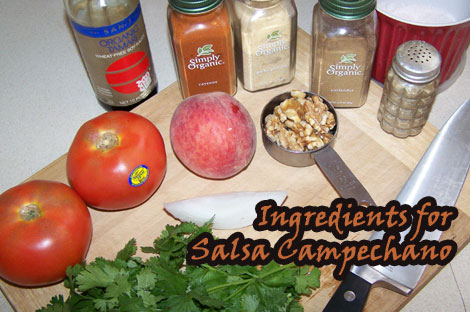
For today's Makin' It Monday feature, we'd like to present "Salsa Campechano." We'll have to admit, though, that we do not speak Spanish. So, we have to give some credit to Google's online language translator. When we went to name this recipe, Wendi suggested that this is a "manly" dish (since I created it). However, we didn't find the perfect Spanish word to fit the recipe.Then, considering the walnuts in the recipe, Wendi suggested that perhaps "hearty" was a better adjective. Google returned the Spanish word campechano for this, and we immediately thought: Yes!, that sounds just perfect!? So, here's an amazing recipe for you. It's a hearty salsa recipe, but I actually like to eat it as a soup.

A month has gone by since my last health update. At this point, I consider myself healed of lyme disease! In the past I asked the lyme specialist doctor if there's a way to test to see for certain the lyme is gone, but he said there isn't. So, I go on my inner wisdom, which tells me that it's gone and now I simply need to continue healing from all that the lyme brought with it.
We're still not comfortable sharing what we've been learning and doing to help move my body into an even healthier state, but it's obviously working. I've been able to go back to daily living, for the most part, without much assistance at all. I've organized the house again (Jim and KDcaT were busy caring for me and the house wasn't the top priority for the past half a year), caught up on all of the laundry, responded to all of my email that had been piling up, and I've been able to be more social again. The biggest improvements are that I can now prepare my own food without experiencing any pain, and I can dress myself with only minimal assistance at times! BIG improvements!
So, did you think we'd forget about Makin' It Monday during Wendi & KDcat's big cross-country tour? Absolutely not! ?While in Salem, Wendi filmed Kerry Matson demonstrating one of her favorite raw recipes -- heck, one of our favorites, too! I'd have to say that raw apple pie is one of the classic raw dessert recipes. Everyone interested in raw should know how to make this! (And anyone who tastes it will soon be interested in raw!)
Read more: Makin' It Monday Guest Raw Chef Edition: Kerry Matson Makes Raw Apple Pie
[caption id="" align="aligncenter" width="500" caption="Perfected Raw Vegan Potato Pancake Recipe!"]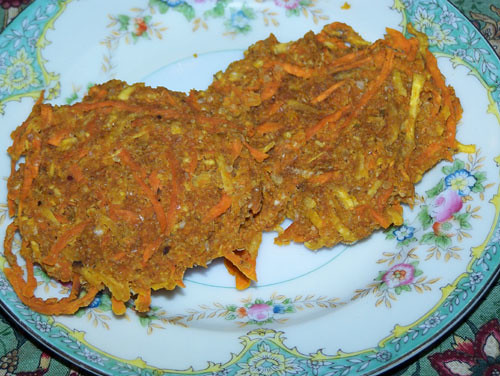 [/caption]
I've done it, I've done it, I've DONE IT!!!? I've perfected a recipe for raw vegan potato pancakes! My friend Melissa shared her potato pancake recipe with me and, like always, I had to play around with it (I rarely go by a set recipe). Had it not been for her original recipe, I wouldn't be writing this post! So, thanks, Melissa!!
In the next day, or two, I'm going to type up the recipe and send it out to all of our subscribers. So, if you haven't signed up recently for either our newsletter or the two free eBooks, do it soon! In addition to the potato pancakes recipe, I'm going to share another amazing recipe I created for Jim's birthday this past weekend: Raw Vegan Ice Cream Cake!! YUM!

Hi Everyone. It's Friday... Let's have some fun!? For today's blog entry, I thought I'd post my submission to the recent video contest held by the Vita-Mix company. They were looking for a new spokesperson, and offered a $10,000 prize for the best video. I didn't make the final cut, but did have a good deal of fun making this short video. Hope you like it:
Read more: Fun-Filled Friday: Jim's Entry into the Vita-Mix Promotional Contest