Know Any Literary Animal Lovers?

Hi there PureJeevan readers! We wanted to let you know that Jim's new novel CHROO is available on Amazon. It's a crazy adventure involving a billionaire heiress, her Chihuahua BFF ("Chroo") and a host of human and animal characters. Find out more on Amazon! Here are some links:
Thanks to Bitt, yesterday, for pointing out that one possible misinterpretation of yesterday's post (on celebrity weight loss) could be that "thin = healthy." I'm sure that, while there are countless wonderful benefits to being a famous actor, one of the less wonderful aspects of that life must be the pressure to remain young, thin, attractive, etc. It would seem realistic to me to assert that, additionally, women are held to even more objectified standards than are the men out there (although, in fairness, note that 6 of the 11 stars profiled in the Yahoo feature linked to yesterday were in fact men).
In any case, the post's intention was never to imply that one's weight is necessarily the best indication of one's overall health. After all, we all know thin people afflicted with serious health challenges.
... just a quick interruption of "Crazy Week" to do two things:
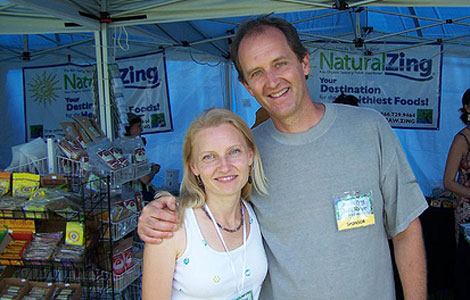
1. Congratulate Natural Zing on their 8th year in business!

Today's Jim's birthday!
This photo is from Saturday night. We had a sleepover birthday party to celebrate Jim's big day. The Pure Jeevan home was filled with loving friends, amazing raw food dishes, and vibrations from some fun group drumming!
Happy, happy birthday, Jim! May all your wishes come true and your life always be filled with health, love, laughter, and friendships! I love you!
As you read this, calming violins open a familiar tune and that sweet mellifluous voice of Etta James soon enters your mind: "At laaaaaaaaassssst. My looooove has come along....." Great tune, right ! Well, it's appropriate here because, at LAST, here's the long-awaited Episode #9 of Know Your Food! That's right, friends, today we're going to explore the wondrous FIG in all of its sweet, soothing glory. One taste and happiness blossoms within you, washing over your entire being... We only wish that the following video was as professionally rendered as this paragraph of evocative prose... (but, we promise we'll get there one day).
In case you missed the actual nutrition info in that video (what little there was, LOL), here's the transcript:

You know about raw foods, I know about raw foods, and we both know people who know about raw foods. It seems like more and more people know about this lifestyle than ever before -- and that's absolutely true! But, it's still true that, on the whole, the average person on the street knows almost nothing about it. As such, if you're a raw foodist, you often find yourself in situations in which you're explaining it to people. (Obviously, as raw foods bloggers, we're more than happy to do so, of course!)
Amid all of these explanations to new friends and new readers, it's not too uncommon to hear people scoff at the idea in one way or another. Common objections include things like:

If you like raw cauliflower and fresh mint, I recommend you try this dish! Jim and KDcat don't like raw cauliflower much, so this dish wasn't a big hit with them. I, however, consumed the entire dish before the end of the day! I LOVED it!
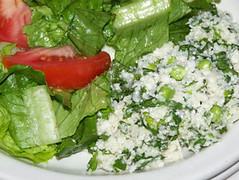
Read more: Makin' It Monday: Refreshing Cauliflower Mint Salad
The other day I made a recipe from "Rainbow Green, Live-Food Cuisine" by Dr. Gabriel Cousens. I modified his recipe a bit and what resulted was amazing. Perhaps the original recipe tasted even better, but this is what I did with it.
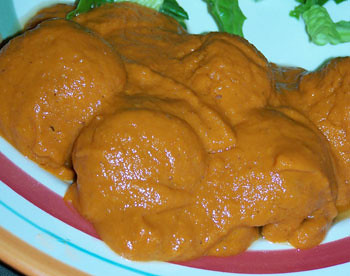
This is my version of a beanless hummus. One of my close friends adores the taste of Israeli Hummus and she thinks this tastes just like it. So, try it for yourself and let me know! Jim will eat this if he doesn't see me using the zucchini (he doesn't like the idea of eating zucchini for some reason). :-P
Hummus
3 cups of zucchini (peeled and chopped)

Every day I receive countless emails filled with questions about the raw food diet, my own success with reducing nearly 100 pounds and regaining health, and pleas for help by many who feel like they've hit bottom and there's no way up. Some emails have me in tears, because I can completely relate to what many of you are going through. I feel your pain, frustration, desperation.
One thing I've always been good at is listening, truly listening to what others are saying (and being an empath allows me to know what some are saying, even when they many times aren't verbalizing it). Another thing I've always been good at is intuitively knowing how to help others who are asking for advice. Jim used to joke that he wanted me to go into business running an advice column because ever since he's known me, I've been the person everyone comes to for help and advice. So, when I receive so many emails asking for help, it feels natural for me to reach out and connect with those needing help. It's what I do best well, that and spreading love!

In this video, Wendi talks with Leela Mata, spiritual leader of the Peaceful Valley Ashram, about her experiences with the raw food diet and a bit about a cob oven structure that was built on the ashram property. This is part 2 of a 5-part series featuring Peaceful Valley Ashram.
Read more: Leela Mata Discusses Her Experiences with Raw Foods

Wow, today is a really special day: Jay Kordich's 86th birthday! There must be millions of stories of how Jay has touched the lives of people in enormously positive ways. Here's ours...
Back in the early 1990s when we moved to the Washington, D.C., area, Wendi got a job in Arlington, Virginia. When she walked into work one day, one of the other workers there was absolutely glowing. So, she asked the woman, "Do you have a new boyfriend or something ?!!"