Know Any Literary Animal Lovers?

Hi there PureJeevan readers! We wanted to let you know that Jim's new novel CHROO is available on Amazon. It's a crazy adventure involving a billionaire heiress, her Chihuahua BFF ("Chroo") and a host of human and animal characters. Find out more on Amazon! Here are some links:
I love this video, in which Wendi interviews our new Portland-based realtor, Bill Futrell. It's a nice interview, but I love the way Wendi's enthusiasm for raw foods rubbed off on Bill almost immediately. There's even a moment in here in which Bill starts talking about Natural Zing. We thought for sure everyone would think we put him up to that, but he did it absolutely spontaneously! So, thanks Bill for helping to support our Snack Sponsor. Anyway, here's what he had to say about Portland, about where we'll fit in, and about his first exposure to raw foods:
One thing I can tell you for sure: Portland is WAY more expensive than Pittsburgh. A year ago, I invested a ton of time reading about low-cost cob houses, straw-bale construction, Earth-ship homes, homes fashioned from "obtanium," thatch roofs, off-the-grid systems, igloos, you name it -- anything DIY-oriented. (Okay, well not igloos; that was a joke. Even though igloos are probably pretty neat-o.) I'm sure we'll get to many of those types of projects one day still. But for now, as you can see, we're going to put down roots in a really great city out West. We're doing it with intention, though, and in harmony with our mission to help ourselves and others obtain the highest levels of health and happiness.

Let's stay sharp by learning about brain power! Did you know that the less exercise your brain receives through reading, learning new things (like you do here on our blog!), playing games, and contemplating puzzles the more it is likely to become weak and not serve you well into your centenarian years? Scientists have been trying to figure out ways to improve the brain's function and have learned a lot, but are still uncertain what causes Alzheimer's Disease, or any other form of Dementia.
If you ve ever known someone who suffers with a loss of mental capabilities, you know how sad and sometimes scary that can be. Last week, Jim posted a blog that touched a bit on the subject of Alzheimer s Disease. He wrote in that article, ?I want better than just a small chance that I ll live healthfully for a full lifespan. I want to stack the aging deck in my favor. ?Eating a healthy, raw food diet is something Jim was hoping to use in order to stack the deck in his favor of a life free of memory loss and full of vibrant health.

Hi there, everyone!
We've been getting a lot of emails and comments about two subjects since we posted our itinerary, so we thought we should respond in a way to help answer the questions/concerns that maybe more of you may be having as well.

Just a few brief thoughts for you this Weird Wednesday...
Of all the species on this Earth, it's weird that no other animals besides people cook their food. Similarly, of all the species on this Earth, it's weird that no other animals besides people drink the milk of other animals.
There is a certain irony that takes place when you launch a raw foods web site because, no matter how much you love and believe in what you do, no matter how solid the proof may be that the information you're providing is true and accurate, no matter how clearly it can be demonstrated by analyses of blood tests or tons of "before and after" photos that this lifestyle heals the human body, you're still pretty much bound by legal best practices to include a full disclaimer on your site. And, as much as you just write it once and kind of forget about it, it's always there. For practical reasons, of course we understand all of that. But beyond all of that, there's an implied message that "only a medical doctor" really knows what's best for you.
Well, in fact, we DO recommend working with a competent health professional. But what we do not endorse here is simply accepting whatever that professional has to say without question. So, the operative word would be "competent" in that recommendation.
I received an email from one of our lovely Pure Jeevan family members. Joanne is subscribed to our mailings and she received the ice cream cake recipe I had created for Jim back in January. Well, take a look at what she did with the recipe! It's LOVEly!

Hi Wendi!I took Jim's birthday cake recipe to the next level.
Rawbin brings healing laughter and an unusual gift to unwell Wendi Dee.
Are raw foodists invincible to the common cold? I have to admit that I kind of assumed that was the case. If it's true, at what point does the invincibility kick in? I've been raw for over three years (over two at 100%) and yet the past few days have found me overcome with sneezing, sore throat, runny nose, and fatigue.
My first thought, once my throat started to hurt, was: "Did I eat anything different recently that I'm reacting to in a negative way " But, nothing had changed.My diet is relatively clean, with the exception of the times when I consume too much nut dip. So, when the sneezing and runny nose were added to the sore throat, I knew something else was going on. I had to admit it: "I'm not invincible."

 Day 8:
Let's focus on creativity for a bit. This is an area where many men have been comfortable expressing a feminine quality, especially when done through art and music. I say many, because we all know at least a few men who were raised to believe that a strong, powerful man doesn't spend his time with such frivolous things. Instead, he works hard to earn an income to support his family. In the past, and still sometimes today, creative men were viewed as weaker and less masculine, not practical and in control. The feminine quality of creativity was, however, encouraged in women who were afforded more time for such "frivolity."
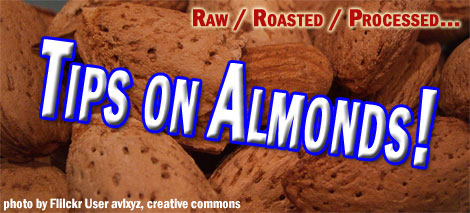
At a recent raw food meetup, I was surprised that so many raw foodies aren't aware of the raw almond controversy. Maybe most of our Pure Jeevan family members aren't aware of the fact that most almonds are not raw. It's sad, but very true. In 2006 a mandatory almond pasteurization ruling was created. The rule was passed sometime in 2007, I believe, and since then it's been near impossible to purchase truly raw almonds. Maybe pasteurized almonds don't seem like a big deal to most people.
Raw almonds are alive, yet dormant until they are soaked. Once soaked (or moistened in the springtime rains when outdoors), they sprout to begin growing into almond trees. Once soaked and sprouted, the nutritional content of the nuts change significantly. They are alive and filled with protein and so much more!
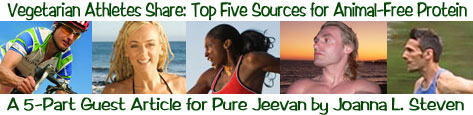
In this special five-part series, Joanna Steven uncovers where some top vegetarian athletes get their protein. Here's part three, focusing on Robert Cheeke's take on this issue.
YELLOW PEA POWDER
In the spring of 2005 this natural body builder became a champion bodybuilder - all on a strict? vegan diet. Robert Cheeke, an activist/athlete raised on an Oregon farm, went vegan when he was 15 years old and transitioned to full on vegan only two months later. Winning titles in Portland, OR and competing at the Natural Bodybuilding World Championships held in California, Robert maintains his intense mass building workout regime on a 100% animal-free diet.
Read more: Vegetarian Athletes Share: Top 5 Sources for Animal-free Protein (Part 3 of 5)

As some of you already know, along with regaining my physical health I've also been working on every other aspect of my overall health and being. I don't just want a healthy body---I want the whole package (vibrancy and bliss inside and out, in every way possible).
One area of my mental health that has been slow to heal is my self confidence. I continue to work on it in many ways and have made some tremendous progress over the past year, or so. I feel worthy of so much more than I ever did before.Many people never doubt their self worth---they have a good sense of who they are and assume that others see them as they are, as well.
Read more: Thankful Thursday: We Like It Raw and Dhrumil Purohit