Know Any Literary Animal Lovers?

Hi there PureJeevan readers! We wanted to let you know that Jim's new novel CHROO is available on Amazon. It's a crazy adventure involving a billionaire heiress, her Chihuahua BFF ("Chroo") and a host of human and animal characters. Find out more on Amazon! Here are some links:
Jim here... Happy Sunday morning, everyone!? We don't normally post on weekends, but we're sharing this video as a special gift for my mom on Mother's Day.As Wendi likes to say, "Every day is mother's day!"? But, I do like to do something a little special for my own wonderful mom. So, check out this video of a recipe Wendi (mostly) and I created for her. If you remember my reaction to the soup we made recently, it may not surprise you to hear me say that this sauce is the "best #$%^&*^%! sauce I've ever tasted!"
We're typing up and formatting this recipe for Pure Jeevan family members (you know, those who subscribe to our mail list). So, once it's ready, we'll be adding it to the queue of mailings we sent out to keep everyone inspired. This recipe is a keeper!

So it's time to continue that discussion on the aforementioned fringe one percent -- those people who will not accept your conscious intention to pursue your own health via this path. Please keep in mind during this discussion that we're only discussing just that one percent, not people in general. So, this is, I hope, relatively rare.
To begin, I'd like to stress a few points:
Hi Everyone! It's been a while since we've run a "My Raw Story" feature. So, here's one from my good friend Chris Paris, who I met and hung out with at the Raw Spirit Festival this past summer. I think you'll like his take on raw, his before & after pics, and the personal topics he covers such as the role raw foods played in his spirituality. -Jim

?
All this week we're continuing to feature a variety of answers to the question "Are Raw Foodists Crazy" from various friends of Pure Jeevan. If you're just now tuning in, please read the back story and introduction to this, as posted on Monday.But, for now, let's continue with posting more of the excellent responses sent in! Enjoy!! :-)
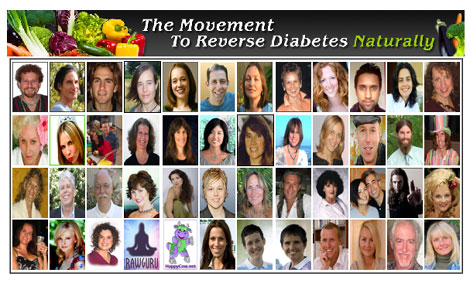
A few weeks ago, we hosted a Diabetes Awareness week here at Pure Jeevan. This was our contribution to the larger Reversing Diabetes Naturally movement that we blogged about. We wanted to let you know that the package of bonus materials offered to people who purchase the Simply Raw DVD is quite amazing! (See this post for details.) We reviewed all of the materials ourselves, and it's just a ton of great information.
The original deadline for receiving the free bonus materials was the end of April. However, the deadline has been extended through Friday, May 8. So, if you know anyone who has diabetes who could benefit from either the ?Simply Raw? documentary and/or the companion film, ?The Ultimate Enyclopedia of the Raw Food Listyle," simply point them to http://tinyurl.com/pj-diabetes.
Read more: Two Days Left for Raw Food Bonus Materials for RDN Movement

Sixteen years ago today, our beautiful KDcat (now called Bailey) was born!! Happy, happy birthday to Bailey. We hope ALL your wishes come true and you continue to shine your bright light and express your creative talents for the rest of us to enjoy!

In some wonderfully literary sense, there must be some kind of unique metaphor that could be constructed around the process by which cabbage turns to kimchi. Personal growth is not always easy, as any success technologist will surely tell you; ?there's a lot of doubt and oozing and off-gassing involved -- and yet, the final product is surprisingly pleasing to the palate.
Yes, it's time for us to update you on our first-ever kimchi experiment. If you want the short version:? I believe we have been successful! For those of you with a few more minutes, I'll share some of the lurid details. Highlights of our experiment included:

On August 31st, my project will be finished enough to present it as a
GIFT TO THE ENTIRE RAW COMMUNITY!?

Welcome to Pure Jeevan's "Juice-a-Day Jamboree"! You're probably wondering, "What IS Pure Jeevan's Juice-a-Day Jamboree, anyway "? Well, it's simple:? It's an ongoing, informal, loosely organized "event" centered around juicing. Think of it as an interim step between (1) any kind of diet or lifestyle, from SAD to full-on raw, that does not include much regular juice, and (2) an all out juice feast where that's ALL you'd consume for a period of time. Basically, we're saying, "Let's just make this simple and accessible for everyone. Let's just make a goal to simply drink more fresh juice!"
Wendi and I have been thinking a lot about incorporating more juicing into our lives lately (which is something we've done off and on over the years but never stuck with long-term). One thing holding us back from doing it more often is the time requirement. When we juice, it usually takes a half hour or so from start to finish. I know it doesn't seem that complicated, but I suppose it's just the whole process of setting up the juicer, washing and peeling the produce, juicing it, setting the juice aside while we clean the juicer, doling out the juice into glasses, cleaning up the mini-mess that makes, and then sitting down to actually enjoy the juice.
We're super excited to devote the rest to the week to featuring a variety of answers to the question "Are Raw Foodists Crazy " If you're just now tuning in, please read the back story and introduction to this, as posted yesterday. ?But, for now, let's get on with posting a few responses. We have at least 10 different ones to share this week, from a number of friends of Pure Jeevan. Some are short, humorous quips, others longer essays. Enjoy!! :-)

Pizza Delivery at Pure Jeevan s home ! Yep, and it s not raw pizza, either. Maybe sometime in the not-so-distant future we ll be able to order delicious, life-giving raw pizzas for delivery to our home, but that time hasn t come. Even if it was possible today, I have a feeling we d still be ordering the greasy pizza that s going to be arriving here later today.
 You see, today is KDcat s 14th birthday. As much as she knows about health, nutrition, and the harms of consuming dairy, she has made a decision that she wants to order a pizza for her birthday and have it delivered. When she told me of her birthday wish, a very big part of me wanted to review how unhealthy such food is, but the other part didn t want to bring guilt to her decision of eating pizza on her birthday. I know she completely understands about foods and health, especially about how harmful dairy can be for her body. She was determined to have pizza, so I d rather she enjoy it than to eat while feeling guilty about it the entire time.