Know Any Literary Animal Lovers?

Hi there PureJeevan readers! We wanted to let you know that Jim's new novel CHROO is available on Amazon. It's a crazy adventure involving a billionaire heiress, her Chihuahua BFF ("Chroo") and a host of human and animal characters. Find out more on Amazon! Here are some links:
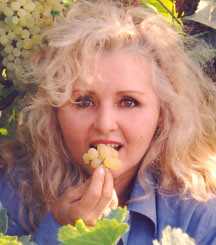
If you are in the Pittsburgh area this weekend, you are in for a real treat! Rhio will be visiting with us and she'll also be meeting with others during her two-part presentation for the Pittsburgh Raw Food Meetup on Saturday.You don't have to be a member of the meetup to enjoy this presentation. Below is information about the event you won't want to miss!
Two-Part Presentation by Rhio includes Dinner

Today we welcome Leela Mata from the Peaceful Valley Ashram (www.LeelaMata.com) for another episode of Pure Jeevan's Makin' It Monday "Guest Raw Chef" edition. In this episode, Leela demonstrates how to make a delicious summertime chutney.
Since Marigolds are seasonal, and likely available only in certain areas, please consider them optional. Perhaps substitute another edible flower of your choice (and let us know if you do!). Aside from making this tasty recipe (which we later enjoyed on a salad), Leela also makes some important points about intuitive eating and intuitive recipe creation. Here's the vid:
Read more: Leela Mata Makes Mint Marigold Chutney on Makin' It Monday "Guest Raw Chef" Edition

Today I am thankful for the small things in life that often go overlooked. I'm thankful Jim made some sweet dessert last night when I wanted it. I'm thankful KDcat is having a fun time with some of her friends right now. I'm thankful that: the trash collectors just picked up the garbage (we don't produce a whole lot since going raw); the older woman across the street has started smiling and being nice to KDcat; the sun is out and the snow is melting; I have another computer job to work on for some income.


Wow, we've been getting a lot of publicity lately.(We'll be writing more about that later.) We're thrilled to be recognized for the work we're doing for the raw food community!
For those newly acquainted with Pure Jeevan, you've already found our blog (this site), and likely our main site. But, we also wanted to highlight another offering we've put a lot of work into -- the All Raw Directory. Here's a screenshot:
There's an old saying that "What Happens in Vegas, Stays in Vegas." But we're not ones for keeping secrets. So, here's the low-down on Wendi and KDcat's time in Sin City -- straight from Wendi's travelogue, once again!
 We drove to Las Vegas from California, and loved seeing the change as our surroundings became a desert. The snow-capped mountains are such a beautiful contrast in CA, but especially here in Nevada where it's so dry and hot!
This stop was longer than expected, since we decided to change our schedule a bit in order to get some more relaxing time in--and also to allow KDcat to have some fun that didn't involve raw foods or Pure Jeevan activity. ?We decided to hold off on visiting a date farm and the grand canyon (two activities we'd had planned for this leg of the trip) until Jim could do those things with us as a family. We especially missed him during this part of the trip, because he's always wanted to see what Vegas is like in person.
Read more: Las Vegas, Nevada: Relaxing Times and the Raw Scene at Go Raw Cafe
Jim here... Since we posted Wendi's two-part series on pasta-making techniques (part 1, part 2) last week, I thought I'd follow up with an additional novel use for the spiralizer -- super-delicious, blazingly fast, ultra-low-fat sweet potato chips! We've done some really great things with sweet potatoes before. (Anyone signed up as a member of the Pure Jeevan family has likely already received our prized sweet potato pancake recipe.) But, these chips are amazing because they satisfy that unmistakable urge for crunchy, healthy snacks -- and in record time. Friends, if you have a dehydrator and sweet potato on hand, you could literally be enjoying these things in under three hours. So let's get going!
As Wendi demonstrated in the videos last week, you can easily make "rounds" using the spiralizer by simply making a vertical slice throughout your vegetable prior to placing it on the spiralizer. So, if we were looking down at the sweet potato, the cut (which goes all the way down the length of the vegetable) would look like this:
Read more: Super-Delicious, Blazingly Fast, Ultra-Low-Fat Sweet Potato Chips!
 Yesterday was a ton of fun, wasn't it? Sam loves all of the comments, so if you haven't viewed her video, please do -- and let her know how much you enjoyed it!? For today, we just wanted to announce the addition of a permanent new button along the right sidebar of our blog. As you can see, it links to this post from a few weeks back when we first announced a call for guest raw chefs. There, you'll find the details on hosting a segment of Makin' It Monday, just like Sam did.
By the way, just last week, we passed a noteworthy milestone that we didn't mention -- our 500th blog post here at Pure Jeevan. That's a lot of raw foods coverage, right ! Well, we're really still getting started when it comes to the level of information and inspiration we're planning for Pure Jeevan -- so it's great to add new features like this now, as we're able to. Of course, once our home sells and we're finally able to move on to the next phase of our lives, we envision Pure Jeevan exploding with more content than ever before. What fun it'll be to be able to devote ourselves full-time to spreading the word about raw foods!
Original Comments
Below, we have included the original comments from this blog post. Additional comments may be made via Facebook, below.
Read more: Be Part of Pure Jeevan's Makin' It Monday Video Series!
Sad Update: Our friend Michelle Pierson, interviewed here, passed away in July 2016 after a kayak accident in Hawaii.
We've spent the past three days focusing on the core subject of critical importance in the raw food lifestyle -- the FOOD! However, as most people will agree, it's also about so more than "just the food." Here at Pure Jeevan, we've always made a point to stress the holistic nature of our philosophy (mind, body, spirit, emotions), and we'll certainly continue to do that.
The Raw Spirit Festivals also do a magnificent job of illustrating this point. While they do offer *spectacular* raw foods and presentations centered around raw foods, you'll also find music, dancing, yoga, and other uplifting recreational activities all day long!

Jim here... A little over a month ago, we couldn't contain our excitement about an online contest to win the best job EVER -- living as caretaker of a tropical island in Queensland, Australia, on the Great Barrier Reef for 6 months (and being paid $100k for the task!).
The deadline has come for this and, as we promised, we BOTH applied. My video was the first to be processed. So, we posted a screenshot above, which you can click to go view it (or just click here) -- and also please vote and rate it a 5!!! (I've heard that the rating system can get a little screwy on that site -- that you need to wait for it to load and maybe mouse over the rating part first. But, a 5-star rating would really help, as would the traffic, even if you don't watch the entire video.
What have we been doing lately? Well, one of the highlights would be getting the first and second stages of the All Raw Directory up and running. We have many different stages planned for the future, enhancing the directory as time permits. It's a pretty exciting project, so be sure to become a member of the directory and continually contribute to its growth. It's a fantastic resource for all of us!

This is the first installment of a new series that we plan to run occasionally here on the Pure Jeevan blog. The series is called "Raw Foods 101" (the same name as our free eBook that has now been read by more than 5,000 people around the world!). Raw Foods 101 will become the latest addition to our category list (available along the right side of our sidebar). In time, clicking on Raw Foods 101 will deliver a plethora of raw food tidbits.
So, where should we start? ... How about the topic of soaking nuts and seeds ! This is a question that comes up repeatedly in emails sent to Pure Jeevan.
Read more: Raw Foods 101: Why Should You Soak Nuts Before Eating Them?