Know Any Literary Animal Lovers?

Hi there PureJeevan readers! We wanted to let you know that Jim's new novel CHROO is available on Amazon. It's a crazy adventure involving a billionaire heiress, her Chihuahua BFF ("Chroo") and a host of human and animal characters. Find out more on Amazon! Here are some links:

Just a few brief thoughts for you this Weird Wednesday...
Of all the species on this Earth, it's weird that no other animals besides people cook their food. Similarly, of all the species on this Earth, it's weird that no other animals besides people drink the milk of other animals.
Hi everyone! It's Wendi here, back to updating the blog and giving Jim a much-needed break. ;-) He did an amazing job with all he did while we were away (his full time corporate job; assisting me with a part-time computer job; keeping the house ready for realtors and potential buyers to stop by; dealing with some sad issues around our dog, Julia; connecting with our hosts and those requesting meetups/talks across the country; catching up with KDcat and I for a bit each evening to hear how we were doing; collecting pictures/videos/notes from me to then go through and create blog posts for all of you; helping friends fix up their attic into a useable place; and so much more)! He missed us a lot, and we missed him a lot, too.
So, here we pick up from where we left off with our travels yesterday...

It wasn't easy leaving Arizona. KDcat and I both wished we had more time to play on the rocks in Sedona. But, we'll keep that for a time when all three of us (next time with Jim) can be there to experience the wonder of that beautiful place. So, it was off to New Mexico! Since our host in Albuquerque was going to be busy until the evening, we slept in a bit before leaving Arizona.
In Albuquerque, NM, we stayed in the home of the beautiful Darshanie, who was out of the country visiting her daughter and attending the wedding of her brother. I met Darshanie at the Peaceful Valley Ashram a few years ago (the same ashram where I held a raw food spiritual retreat). She's one of Leela Mata's beautiful and talented daughters, creating candles which she sells as well as offering intuitive readings [click here to learn more about Darshanie]. It was wonderful to be invited to stay with Darshanie during our travels, and I was a bit sad that she wouldn't be there when we arrived, but who would ever miss out on the chance to attend an Indian wedding ! If you're ever invited to attend one, consider it a huge honor and accept the invitation. Indian weddings are breathtakingly beautiful in so many ways.
Read more: Wendi and KDcat Visit New Mexico! Videos and Pics...
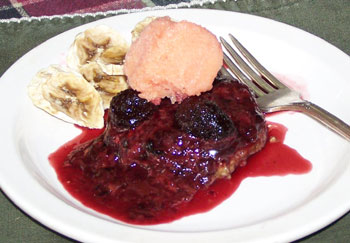
Jim here... Thought I'd post a pic from Wendi's birthday last Friday. Shown above is the "birthday cake" -- more of a birthday treat, really. If it looks decent to you, here's the recipe:
The "cake" part:

I've already posted the recipe for this, but I wanted to talk about the orange pudding a bit. Since going raw, I've become a mostly intuitive eater. Whatever I feel like eating is what I eat. This usually means I am eating the same food for an extended period of time until I feel drawn to something different. Lately it has been the orange pudding.
I've been starting my mornings with a large bowl of it. If Jim is making lunch then I'll eat the salad or nut dip that he makes, otherwise it's orange pudding again. Then, if I didn't eat a salad during the day I usually have a salad for dinner and...a dessert of--you guessed it!--more orange pudding.
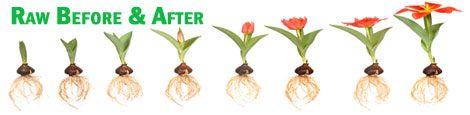
Yesterday, we covered the concept of "unsubscribing" from unhealthy practices. This was of course based on the common Internet practice of subscribing and unsubscribing to various things like newsletters and email lists. I receive quite a few of these each day, many raw foods ones and many non-raw ones. Among the non-raw, one that has been interesting to me lately is called the Art of Non-Conformity, penned by Chris Guillebeau. Basically, Chris' site chronicles his adventures in reaching his personal goal -- to travel to every country in the world! Along the way, he writes about all sorts of out-of-the-box things, as the blog name implies.
Today, he posted something that is remarkably insightful and applicable to our subject matter here, even though his context was completely different. The entry, entitled simply "Before and After," discusses the drinking water problems in much of Africa, focusing for the moment on Liberia. Atop the piece (the "before" picture) is a muddy water hole, the only source of drinking water for one village. The next picture (the "after" shot) shows a different, very happy village obtaining fresh, clean water from a newly installed well. Chris closes his article with the following quote:

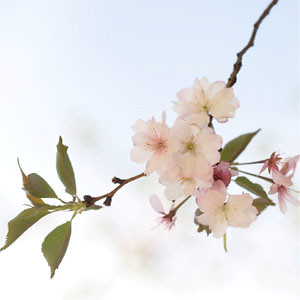
Every Autumn I proclaim that it is surely the best season of all. Then, without fail, every Spring I find myself feeling and saying the same thing. How can any season be better than this time of renewal, rebirth, and unlimited potential for beauty to spring up in front of your eyes with every glance?

On this beautiful May Day, I am thankful for creativity. We all have a creative ability within ourselves to imagine all kinds of things.In yesterday's post, about asking myself questions in order to make changes in my life, I talked about having an image in my mind of how I wanted my life to be in the near future. I was using my creative abilities to see my future as happy, vibrant, and healthy.

Jim here... About an hour ago, I purchased $68 worth of ice cream from a local supermarket. Bet you thought you'd never read something like that here, eh ? Well, don't worry -- Wendi and I haven't suddenly decided to binge on dairy products. You see, in my corporate job, I'm often the event organizer; today that meant ice cream gopher.
For some raw foodies, that scenario might seem rather cruel. You may be thinking: Isn't it tough to have to go purchase nine tubs of ice cream, two jars of maraschino cherries, two bags of marshmallows, four containers of flavored syrups, two cans of whipped cream, and numerous boxes of waffle cones ? No, it's not cruel at all. To me, it's now the same as running out for, say, office supplies.

Pure Jeevan hosts the Pittsburgh Raw Food Meetup this Sunday, November 2, at 3:00 p.m.! Click here for details and a map link. We hope you can make it. We'd love to spend time with you!
Original Comments
Below, we have included the original comments from this blog post. Additional comments may be made via Facebook, below.
 ?
?
Well, it's nearing the end of 2009, and I've been unwell for half of the year. (To make a positive statement out of that, I'll add that I've been well for the other half!) It's hard to believe so much time has gone by and about half a year of my life was spent in pain, tears, and sometimes fear (mostly in the beginning of the lyme disease). I'm definitely looking forward to the new year, to leaving this disease behind me while taking the lessons I've learned with me into 2010.
As many of you know, I was very proactive in finding a "cure" to the disease as soon as it was identified. I tried allopathic remedies (antibiotics for about three months), alternative remedies (herbal protocols, vitamin/mineral/supplemental protocols, aromatherapy techniques, healing massage, hands-on-healing, water fasting, prayer/meditation/positive visualization), and so much more. Nothing completely cured my body from the lyme bacteria that seems to have spread throughout my body and found favorite spots to multiply (particularly in my shoulders and arms).
Read more: Wendi's Health Update: Cooked Food Experiment and Great News!

"Hey there... I know you have a daughter about the same age as mine. Recently a friend at school told [my daughter] about the things animals go through to become our food and it has sickened her to the point where she wants nothing to do with meat except 'maybe' fish sticks.I'm so not against this in any way but my concerns are her eating enough other foods to balance out the vitamins and nutrients she got from meat so that it doesn't affect her health or learning development."
Above is part of a letter Jim received from a Pure Jeevan member. The letter was really three separate questions about the raw food diet in regards to (1) nutrition and development, (2) financial stress, and (3) group living. Since my response was getting quite long, Ive split up the questions and answers. Below is my response to the nutrition and development concern. Tomorrow, Ill address financial stress and group living when eating a raw food diet.
Read more: Teen Going Vegetarian: Nutrition and Development Concerns (Part 1 of 2)