Know Any Literary Animal Lovers?

Hi there PureJeevan readers! We wanted to let you know that Jim's new novel CHROO is available on Amazon. It's a crazy adventure involving a billionaire heiress, her Chihuahua BFF ("Chroo") and a host of human and animal characters. Find out more on Amazon! Here are some links:

We're loosley going to be picking up some of the ongoing themes we used to cover here on the blog. For the Take the Time Tuesday theme, we asked our readers to take the time to meet or learn about an individual, product, company, etc., that we think may be of interest to you. For today's entry, I'd like you to:
Take the time to meet...

According to Mike Adams of NewsTarget.com:
"Many Florida oranges are actually dipped in an artificial orange dye in order to make them more visually appealing. It's the same dye that's been banned for use in foods because of cancer risk."

Jim here... A few months ago, I was in our local food co-op's juice bar. I'd ordered an apple juice and had cringed when I saw the barista chop up four Granny Smiths and nonchalantly toss the whole lot, seeds and all, into the juicer. That juice was for someone else. So, when my order came up, I politely requested that he cut the seeds out -- a request he reluctantly granted, although not without showing considerable annoyance. My thinking was: Hey, those seeds contain cyanide! Why would I want to consume that, even in small amounts
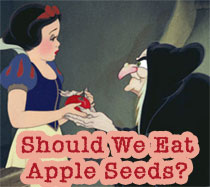 But then... Have you ever known anyone who died from eating apple seeds? ?I know I haven't. Also, after mentioning this to a few people I know, I found that a number of them regularly ingest apple seeds. And, well, they're still living. So, is there any truth to the rumors? And, should we be concerned at all about this?
Read more: Should You Juice the *Whole* Apple, Seeds and All?
Some of you who are new to raw foods may be happy to learn that there are festivals for individuals interested in the raw foods lifestyle! They are a fantastic opportunity to meet like-minded friends. For those of you who attended the Raw Spirit Festival in 2008, seeing images from that event may stir the magical memories you collected while there.
Below is part one of a two-part guest piece by Rawbin Anderson, in which she recounts her 2008 Raw Spirit Festival J.O.B. experiences of working in the kitchen. Rawbin is now the Raw Spirit Festival East Coast Manager and can be reached at Rawbin [at] rawspirit.com.
?
Read more: A J.O.B. (Joy of Being) at the Raw Spirit Festival (Part 1 of 2)

Last time on Raw Foods 101 we answered the question, "Why should you soak nuts / seeds before eating them."? Naturally, many readers then asked the next logical question, "How LONG should I soak them before eating " Great question!
Don't forget:? You're soaking the nuts and seeds to "wake them up" as would happen in nature. When seeds are soaked in the springtime rain, they wake up and begin to sprout. When this happens, the nutritional content of the nuts and seeds changes (they become an even greater powerhouse of nutrients).
Read more: Raw Foods 101: How Long Should You Soak Nuts / Seeds Before Eating Them?

To help keep all of you inspired, we ve asked some
remarkable individuals to share their raw food stories with you. Enjoy!

We may never fully comprehend the mysteries of life and death. One thing is for certain, however, with both we experience tremendous amounts of emotion.
At this moment, we are experiencing extreme sorrow after the still birth of our niece, Elizabeth Marie. She was named after my mother who died a few years ago. During this period of tremendous grief, we will be spending time with my dear sister and her family, offering our love and support.

I know this is our Fun-Filled Friday post, but I have to admit that most of today isn't going to be all that much fun. But, this weekend should be very enjoyable! We have some very special guests arriving tomorrow for a SUPER SPECIAL evening tomorrow night! Leela Mata, a beautiful spiritual teacher, has offered to visit my home and hold Satsang here. One of her extremely talented students, Devaki, will be joining her (and bringing a harmonium to play at Satsang!).

EXCITING ANNOUNCEMENT!
Kevin Gianni Wants to Meet
Pittsburgh Raw Foodists This Saturday!
UPDATE: Location is set for my home in the South Hills
Kevin and Annmarie Gianni will be in Pittsburgh for the Steeler's game on Sunday. They'd love to meet Pittsburgh raw foodies while they're here! So, if you can make it to meet up with them, let Wendi Dee know as soon as possible. We'll either be meeting at the East End Food Coop (if I can reserve the space at the last minute) or at my home (South Hills/Brentwood). Please respond by Friday at 5:00 p.m. about your availablity.

Jim here... A little over a month ago, we couldn't contain our excitement about an online contest to win the best job EVER -- living as caretaker of a tropical island in Queensland, Australia, on the Great Barrier Reef for 6 months (and being paid $100k for the task!).
The deadline has come for this and, as we promised, we BOTH applied. My video was the first to be processed. So, we posted a screenshot above, which you can click to go view it (or just click here) -- and also please vote and rate it a 5!!! (I've heard that the rating system can get a little screwy on that site -- that you need to wait for it to load and maybe mouse over the rating part first. But, a 5-star rating would really help, as would the traffic, even if you don't watch the entire video.

Jim here... This post is for anyone who has turned to raw foods in an attempt to become healthy -- to lose weight, lower cholesterol, to lower blood pressure, to beat diabetes, or perhaps to overcome something even more serious. Let me ask you something (rhetorically): Have you ever, in your journey toward optimal health, looked at someone else -- someone else who eats "worse" than you do, yet who appears outwardly more healthy -- and thought, "Why is it so hard for ME and yet so effortless for that person "
Have questions run through your mind such as: ?How can that other person eat all of the wrong things, and yet look healthy? ?Why is it that I eat better than most people, and yet I'm the one facing a health problem Why is it that some people go raw and their issues clear up so quickly, and yet here I am still not feeling and looking 100% healthy? Why is it that physical health is not always bestowed on those who really deserve it?