Know Any Literary Animal Lovers?

Hi there PureJeevan readers! We wanted to let you know that Jim's new novel CHROO is available on Amazon. It's a crazy adventure involving a billionaire heiress, her Chihuahua BFF ("Chroo") and a host of human and animal characters. Find out more on Amazon! Here are some links:

I'm not sure I'm getting enough carbs 'cuz I eat very little grains or beans and I am always worried of overdoing fruit.
Well, rest assured that if you are consuming enough calories with your diet, and not exclusively eating fats and proteins, you are most likely getting enough carbohydrates. Carbohydrates exist in just about anything you can eat. By simply eating enough food during the day, you can easily meet your body's carbohydrate requirements.
There are two classifications of carbohydrates: simple and complex. Grains and beans fall under the complex category, while fruits fall under the simple category.
Read more: Am I Getting Enough Carbs Without Beans and Grains?
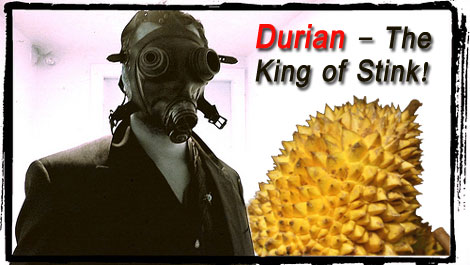
We tried it in the past, this most unusual fruit. While in Chicago recently, we decided to give it one more try! You see, the first time we tried it we were ... let's just say "not big fans" of the infamous durian. (Here's an episode of Kevin Gianni's Renegade Health Show, shot in our home, documenting that day.) It's a stinky fruit to most, although some claim to enjoy the bizarre odor (which is sometimes described as dirty sock and propane gas smell). If you can get past the smell to give it a taste, you'll be greeted by a taste as strange as the odor. Wendi describes it as a sweet onion pierogie, but each person seems to have a different opinion about this odd fruit.
In this current video our raw friend Debbie Gedayloo-Bennett, whom we met in Chicago, jumped at the opportunity to hang out for a bit of a durian experience. Debbie is on the pro-durian side of the fence that divides those who love and those who hate the alien-like fruit. Wendi was still sitting on the fence, not making up her mind after the initial taste with Kevin and Annmarie. Jim was adamantly sitting far from the love side of the fence, refusing to even attempt approaching the pro side. Debbie was a pro in opening this spiny fruit, so she agreed to open it while on video so that we could share the experience and knowledge with all of you.
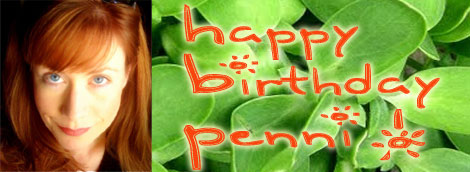
We don't always announce birthdays of friends and family here. But this particular individual is an integral part of the raw food community and we want you all to meet her!
Today is the birthday of the radiantly beautiful Penni Shelton! For those of you who don't know Penni, she's an incredible woman; she's got a heart of gold and is filled with love and compassion. She has been a loving friend of Wendi and member of the Pure Jeevan family for a very long time.
Read more: Penni Shelton: Raw Food Community Builder and Supporter!

When I first decided to try a raw food diet again (I had sampled it for about three months a few years before going completely raw), I wanted to do it in a way to prove that it either does or doesn t work. The best way to do that, I figured, was through consistent blood tests. So, that s what I did. I have continued to document my path to health with regular blood tests. Many of you know that the results have been remarkable. My dramatic shift in weight is the most obvious to others, but there were equally impressive changes going on inside my body, as well.
It has been about a year since my last blood work was done, so I knew I should schedule an appointment to get the testing done soon (since I want to keep the tests somewhat yearly). I tend to always put the testing off, however. As much as I m curious about the results, the truth is that I m terrified of needles. Over the past few months, I was continuing to put this yearly testing off, but something has spurred me to get it done sooner than later.
Read more: Raw Food and Measurable Health: Does Wendi Have Lyme Disease?

Hi there, everyone!
We've been getting a lot of emails and comments about two subjects since we posted our itinerary, so we thought we should respond in a way to help answer the questions/concerns that maybe more of you may be having as well.

Here's some coconutty video footage from our Florida Keys excursion. First up is some footage of Randesh, from www.TheGuana.com, who obtains fresh coconuts for Charlie Wilson's Key West restaurant, Help Yourself (see yesterday's blog post).Notice that Randesh uses a proper piece of equipment -- a large machete (or cutlass) -- which makes short, easy work of opening these precious gifts of nature! In the video footage following that, you'll see how comically difficult it is to open a young coconut when you lack the proper equipment. We actually went out looking for a machete, but could only find a large chef's knife at a local K-Mart. Yep, they were sold out of machetes! (Ironically, the chef's knife -- the heaviest one the store had -- cost about $17, while plain old machetes run just $10 or so at most hardware stores. Next time we'll keep looking...)

Jim here... About an hour ago, I purchased $68 worth of ice cream from a local supermarket. Bet you thought you'd never read something like that here, eh ? Well, don't worry -- Wendi and I haven't suddenly decided to binge on dairy products. You see, in my corporate job, I'm often the event organizer; today that meant ice cream gopher.
For some raw foodies, that scenario might seem rather cruel. You may be thinking: Isn't it tough to have to go purchase nine tubs of ice cream, two jars of maraschino cherries, two bags of marshmallows, four containers of flavored syrups, two cans of whipped cream, and numerous boxes of waffle cones ? No, it's not cruel at all. To me, it's now the same as running out for, say, office supplies.

It's time for a little Phun Phriday Philosophy. (I hope you don't mind a little levity as we end this glorious week ) It just occurred to me that philosophers and self-development gurus commonly admonish against "attachments." Isn't that true ?We're attached to our egos, our possessions, our relationships. All attachments are bad, it is said. I believe one of the primary tenets (Noble Truths) of Buddhism centers on this very thing -- that our attachments cause suffering.
 Well, all of that may be food for thought. But, when it comes to food for your body, I'm here to tell you that attachments are GOOD -- especially, when we're talking about the shredder attachment for your food processor!? Oh, don't lie to me, fellow raw foodie (or raw aspirant, as the case may be): You know you've neglected this wonderful tool, haven't you? -- relegated it to some unimportant place in the back of a kitchen drawer somewhere, right ! Well, it's time to rediscover the shredder blade! Your mission, should you choose to accept it, is to reconnect with this delightful food processor attachment.
Read more: Are You 'Shred Up' With Your Food? If Not, Maybe You *Should* Be!

I knew right away that I would be filing this under our "Fun-filled Friday" bannner. Finding pawpaws is a huge treat! They're surprisingly little-known, and also very surprisingly tropical in nature. Who would think that something this delicious and exotic-tasting would thrive in so much of the non-trpoical world!? In this video, you'll learn where to look for pawpaw groves, how to identify a pawpaw tree, and what pawpaws look and taste like.
Read more: Learn How to Identify Pawpaws: Join Us on a Pawpaw Hunting Expedition!
Just a quick notice that we've posted our December 2009 newsletter. Each month, we email a link to our newsletter to all Pure Jeevan family members. (If you're not receiving that, you're mising out on a ton of awesome raw inspiration and information. You can click here to sign up -- it's free!)
We'll be back tomorrow to continue our coverage of the Chicago raw food scene. As I've been saying for a few days now, you won't want to miss these great interviews!?
Jim here... "Do I Need to Eat a Certain Percentage of Raw Foods to Call Myself a Raw Foodist " This seems to be a common question among some people interested in pursuing a raw and living foods lifestyle. I fielded such a question recently online, and thought I'd recap my own answer here, somewhat edited for enhanced clarity:
I know what raw foodism means. And, if you're here, you probably do to, or at least you're interested in it and know the basics. But, to the mainstream population, raw is absolutely unheard of, totally out of the box -- relatively speaking. So, let's begin by taking a look at who in the world has potentially heard of RAW. Let's start more broadly and then hone in.
Read more: Do I Need to Eat a Certain Percentage of Raw Foods to Call Myself a Raw Foodist?