Know Any Literary Animal Lovers?

Hi there PureJeevan readers! We wanted to let you know that Jim's new novel CHROO is available on Amazon. It's a crazy adventure involving a billionaire heiress, her Chihuahua BFF ("Chroo") and a host of human and animal characters. Find out more on Amazon! Here are some links:

I'm fairly sure that we've covered how to *open* a young coconut (also known as a Thai coconut). It seems like each raw food site has a video and/or article about that. I think it's actually a commandment in the Official Raw Foodism Bylaws somewhere: "Thou shalt show everyone how to open a coconut."
But *selecting* them... that's something that's not often covered in-depth. It's an advanced topic -- super-advanced, even. So, are you ready to learn the secrets?
Read more: How to *Select* a Young (Thai) Coconut at the Store

As some of you already know, along with regaining my physical health I've also been working on every other aspect of my overall health and being. I don't just want a healthy body---I want the whole package (vibrancy and bliss inside and out, in every way possible).
One area of my mental health that has been slow to heal is my self confidence. I continue to work on it in many ways and have made some tremendous progress over the past year, or so. I feel worthy of so much more than I ever did before.Many people never doubt their self worth---they have a good sense of who they are and assume that others see them as they are, as well.
Read more: Thankful Thursday: We Like It Raw and Dhrumil Purohit
We all know what "greens" are in general. For example, no one questions whether lettuce, kale, spinach, or chard are greens. But on the other hand, all of those items *are* also clearly green in color. With that in mind, what would you make of the following two questions I (Jim) recently pondered -- tagged as "reader questions" so they're easily found in the future by other equally inquisitive people ;-) -- that seem bizarre, but are really quite interesting?
1. Are non-green greens (e.g., purple kale) still considered greens2. Are vegetables with green skins (e.g., cukes, zucchini) considered greens? (After all, they're green!)
Thank you, thank you, thank you! Today for Thankful Thursday, we wanted to say a special THANK YOU to our readers. It means so much to us that you come to visit our blog. With every new comment (both here on the blog and through email) it fills us with great happiness!
Is there something you'd like to see more of here on our blog? Something you'd like us to discuss? We know you are looking for more recipes, since you've told us (be sure to check out our recent posts where we've linked to some fantastic sites offering recipes!). What else would you like to read about or have us share with you?
This video is nearly 10 minutes long (sorry, we'll aim for shorter ones in the future), but shows a full process for making a delicious, spicy nut dip. From there, we show two options for making the sandwich -- one using dehydrated raw bread, another using lettuce as the wrapper. I wanted to add that the packaged raw bread used herein is from Love Force, a great company that has provided sponsorship support to Pure Jeevan in the past. Here's a link to their site in case you're interested acquiring some of their bread or finding out where it's sold. (It's very good, as are their raw organic energy bars!)
Read more: Video: Jim from Pure Jeevan Makes Nutdip / Raw Sandwiches!
Jim here... As you're probably aware, Sunday marks the summer solstice here in the northern hemisphere. While the Pure Jeevan family certainly includes many raw foodies living in the southern hemisphere (*nods to our friends in Oz and beyond currently heading into winter*), the majority of our readers will equate Sunday with the official kick-off of much longer, much hotter days. So, we'd like to provide some topical, tropical inspiration for you.
How do you feel about heat Personally, I used to *hate* it. I thought I knew what real heat was, too, having grown up in St. Louis where the summers can be brutal. But, Wendi and I traveled to India once (so far!) and, wow, THAT was real heat. I clearly remember standing on an airport tarmac in a place called Trivandrum, just 8 degrees north of the equator, almost in shock over how hot it was there.
 On March 6, Wendi and KDcat arrived around dinner time at their next location, Grants Pass. We've known their hosts as online friends, so it was a real treat to meet them in person. Rebecca Leaverton, her hhusband Dominic, and their twins Aubrey and Sebastian live in a beautiful home in one of the more beautiful places W&K have visited in Oregon (and that's saying something, as EVERY location in Oregon has been absolutely beautiful). Grants Pass is surrounded by the most breathtakingly gorgeous mountains, close and ever-present no matter where you are in the city. If we ever do decide that city living isn't for us, Wendi said she'd love to live in the mountains surrounding Grants Pass!
Here's some video... In the first clip, Wendi shares a raw traveling trick she came up with -- kind of a high-energy, super-fast sandwich. Then Rebecca (aka SuperfoodGirl -- from www.SuperfoodGirl.com) demonstrates one of her favorite pieces of kitchen equipment, the V Slicer. (Wendi loved it and says we need to save up and get one when she returns from the trip.) And then we couldn't resist a few moments of footage of Rebecca's twins out exploring the kale and wheat grass in? theback yard.
Read more: Grants Pass' Great People, Giant Peaks, & General Pleasantry



Welcome to Day One of "Dressings Week" here on Pure Jeevan. After finding out that KDcat took it upon herself to film a segment of "Makin' It Monday, Guest Raw Chef Edition," I decided that we should probably spend an entire *week* focusing on salad dressings.
Read more: Makin' It Monday Guest Raw Chef Edition: KDcat Makes Orange Pepper Cilantro Dressing

Hey everyone! It's nice to be more or less back in the swing of things again after an unexpectedly long stay in Chicago last week. You know, staying an extra three days on a trip isn't so bad, though. I imagine that if we had known that we were staying six days instead of three, we probably would have packed way too much. So, there are definitely advantages to unexpected happennings!
Anyway, here's another look into a Chicago-area raw food restaurant. This time, we were able to sit down with the owners, Danny & Kathy Living. The video starts with some footage of some gourmet raw dishes (a raw burrito, a raw falafel, and a raw dessert), and then gets into the interviews.
Read more: Pure Jeevan Visits Borrowed Earth Cafe, Interviews Amazing Owners Danny & Kathy Living!
Jim here... Yesterday, Wendi toughed it out and typed up a lengthy health update (a painful process for her -- trust me!). So, for the rest of this week, I'm going to fill in here (letting her get back to her resting and healing) and share a few interesting stories related to this Lyme adventure. But first, I wanted to add that today brought some great improvements in Wendi's condition. She was able to do a physical movement (wrapping a towel around her head) without pain for the first time in months. So, we really think those antibiotics are starting to kick in.
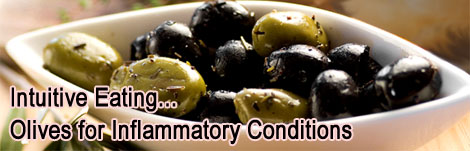
Today's topic is intuitive eating. I'm certain we've covered this many times on the blog here. So, rather than explain what it is again, I'll just share an intresting example. Basically, while dealing with these Lyme symptoms, Wendi experienced a serious craving for olives.