Know Any Literary Animal Lovers?

Hi there PureJeevan readers! We wanted to let you know that Jim's new novel CHROO is available on Amazon. It's a crazy adventure involving a billionaire heiress, her Chihuahua BFF ("Chroo") and a host of human and animal characters. Find out more on Amazon! Here are some links:
Sad Update: Our friend Michelle Pierson, interviewed here, passed away in July 2016 after a kayak accident in Hawaii.
We've spent the past three days focusing on the core subject of critical importance in the raw food lifestyle -- the FOOD! However, as most people will agree, it's also about so more than "just the food." Here at Pure Jeevan, we've always made a point to stress the holistic nature of our philosophy (mind, body, spirit, emotions), and we'll certainly continue to do that.
The Raw Spirit Festivals also do a magnificent job of illustrating this point. While they do offer *spectacular* raw foods and presentations centered around raw foods, you'll also find music, dancing, yoga, and other uplifting recreational activities all day long!
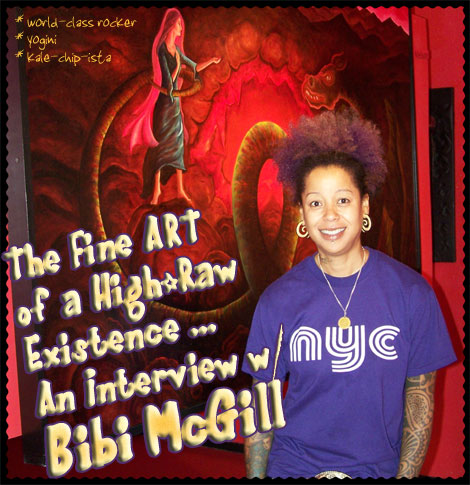
Hi there, Pure Jeevan family! ?Jim here... A few weeks ago, I'd been reading about Bibi McGill, the guitarist and musical director for Beyonce. It was a fascinating piece (linked to below, actually) and, to my complete surprise at the time, touched on her fairly serious interest in raw foods -- and, wouldn't you know, she also lives right here in sunny Portlandia!
Soon, I realized that I'd seen her name around town before -- and Wendi did, too! There are these absolutely addictive kale chips, you see... (We like to get them at our local food co-op from time to time because they're truly something special.) ?But, until recently, we didn't piece it all together -- that one person manages to produce this distinctive brand of raw snacks, teach yoga classes here in Stumptown, AND somehow also tour the entire globe as lead guitarist ?for world-class acts like Beyonce and Pink!

To keep all of you inspired while we are away, we've asked some
remarkable individuals to share their raw food stories with you. Enjoy!
Aren't these videos wonderful? Today we have yet another special Raw Spirit interview for you -- the mega-talented Markus Rothkranz. What can I say about Markus? He's a true inspiration, a man who truly lives by his heart and inspires thousands of others on a daily basis. He's actually very tough to interview because he's so interesting and self-actualized, you really just want to hang and chat with him (but then you remember that you're on film and you should probably get back to asking questions that people will appreciate).

I'm going to be including questions and answers more often on the blog, since we've had a lot of emails from many of you saying you found last week's Q&A helpful and fun to read. I have many questions I've been saving to share with others, and more come in daily. Don't be shy if you have a question about anything that you think I'd possibly be able to help you with. Simply send me an email asking, and I'll reply to you personally. Questions that I feel might have a more general interest may be shared here on the blog (with the questioner being anonymous).
[Please email questions to me, rather than post them here on the blog: WendiDee [at] PureJeevan.com.]
To help keep all of you inspired, we ve asked some
remarkable individuals to share their raw food stories with you. Enjoy!
My Story of Conquering the Myths of My 50+ Body
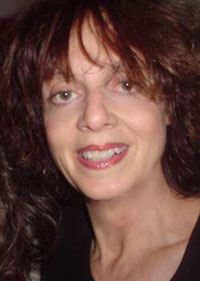 I ve been eating 100% live/raw food for a little over eight months now, and I believe it all started? well.... hmmmm? let s see. Last summer I was determined to do something once and for all about the weight that I put on since I turned 50, six years ago (well, almost seven years now ). It seemed that no matter how much I exercised or how much I ate ? or didn t eat ? nothing stopped the onslaught of impending bulk. Each year added a few more pounds until I hardly recognized myself! What happened? Who was I? Where did this strange body come from? I decided I needed to take this foreign body by the horns and wrangle it back into submission. Actually, I was gentler than that, but the determination was there.
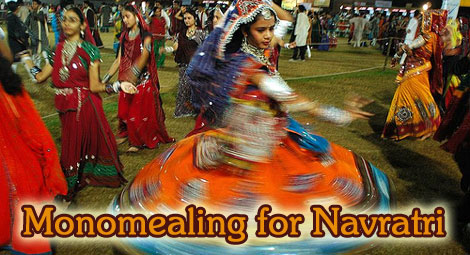
Happy Navratri!
You haven't been hearing much from me (Wendi) lately, for a variety of reasons. Over the next few days, I'll be celebrating Navratri and posting here on the blog at the end of each day. In my posts, I'll be sharing some of what has been going on with me and why you haven't seen much of me around, as well as comments on my celebration of Navratri.

Today we welcome Shea Lynn Baird from Monday Night Live. As you may recall from a few weeks ago, Wendi and KDcat visited with Shea and her husband Stephen during their 2010 Trip. While there, they all attended a raw food meetup, and Shea brought a wonderful Thai salad. She shared this delicious creation with all of you in this special guest raw chef edition of Makin' It Monday, below:
Jim here... Wow, how awesome is it that today's Makin' It Monday falls just one day after Mother's Day -- and that we had ?a very special guest edition ready to post featuring ... ?my awesome mom! ??!!! ?I love my mom so much ... she's the best mom ever! And you'll love watching her demonstrate how to make 100% raw hummus. Mom might be 100% Italian, but she makes a pretty mean 100% Lebanese raw hummus, which is a pretty popular dish in my family. Here's the vid!
Read more: Makin' It Monday Guest Raw Chef Edition: Jim's Mom Makes Raw Hummus!
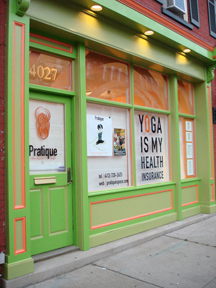 This morning as I was driving from the beautiful Carnegie Mellon University campus to a business meeting outside the city, I had to take a detour at one of Pittsburgh's many bridges. It was a little frustrating because I had hoped to arrive at my destination early enough to grab a green tea at a coffee shop. But, these little delays happen. I'm glad this one did, though, because I soon passed a small yoga studio (called Pratique) where an interesting window decal hangs. It reads: "Yoga is my health insurance."
Many kudos to the clever people at Pratique who apparently crafted this catchy and spot-on message. While this is a raw foods site, not a yoga site, the message is equally apropos here. It essentially means, in my view, that we all have the opportunity to profoundly affect our own health and well being.
In our family, we're currently facing the realistic prospect of taking a literal approach to this concept, dropping formal health coverage! Quite literally, we feel that maintaining a health plan is (almost) a complete waste of money. I'm not posting this to start a debate as to whether those who follow a healthy diet should or should not buy into a plan. (I know all of the related arguments already: Yeah, but what if you cut your arm and need stitches Save that for Facebook or, at least, some other time.) I'm more concerned with reiterating one of our key messages here at Pure Jeevan -- our unwavering ?conviction that physical health and diet are tightly connected. Wendi knows this, I know this, our child knows this, YOU know this... But why doesn't everyone acknowledge it?


We now have two more raw food snack companies sharing some of their goodies for the retreat gift baskets! A special thank you go out to: